Kintsugi experience and masterclass: Authentic Kintsugi using maki-e techniques
Kintsugi — authentic Kintsugi using maki-e techniques — is the sophisticated art of breathing new life into broken ceramic ware. It is not an attempt to restore an object to its original state; rather it is a means of highlighting its chips and fractures as a record of its history.
The philosophy of wabi sabi (beauty in imperfection) is central to the art of Kintsugi, an aesthetic sensibility that recognizes beauty in imperfection and the patina of age. Genuine Kintsugi uses the decorative Maki-e lacquering technique. This involves gluing the damaged pieces with kokuso-nori (Kokuso Urushi Glue), allowing them to dry, and then polishing them flat. Then, a layer of black lacquer, a natural resin-based coating, is applied. After drying, it is smoothed using polishing charcoal for the sumitogi (charcoal polishing) stage. This process is repeated at least eight times. Next, lacquer (E-Urushi) is applied, over which pure gold powder is sprinkled. After thorough drying, it is polished to complete the maki-e.
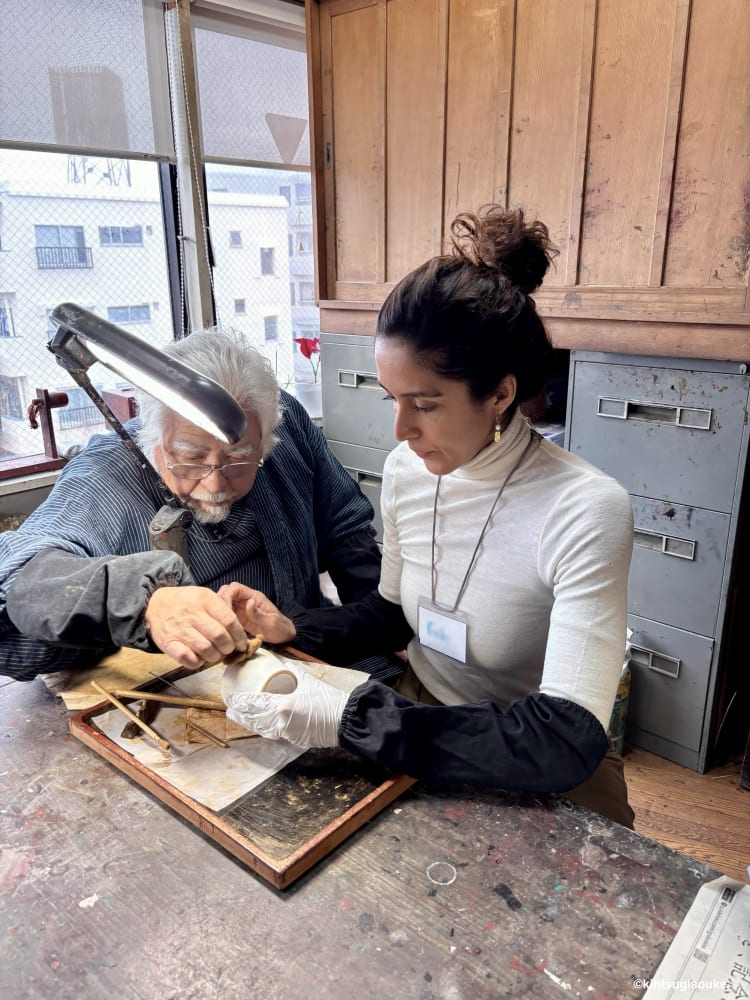
Master Showzi Tsukamoto has a career spanning over 50 years, and his talent has been recognized via numerous awards and exhibitions around the world. He offers hands-on courses at his atelier in Tokyo, where you can learn the basic techniques of Kintsugi and the philosophy behind the art. Choose from a one-day Kintsugi experience or a 6-day or 12-day Kintsugi master class.