

Discover Niigata: Crafted by Nature, Perfected by Time
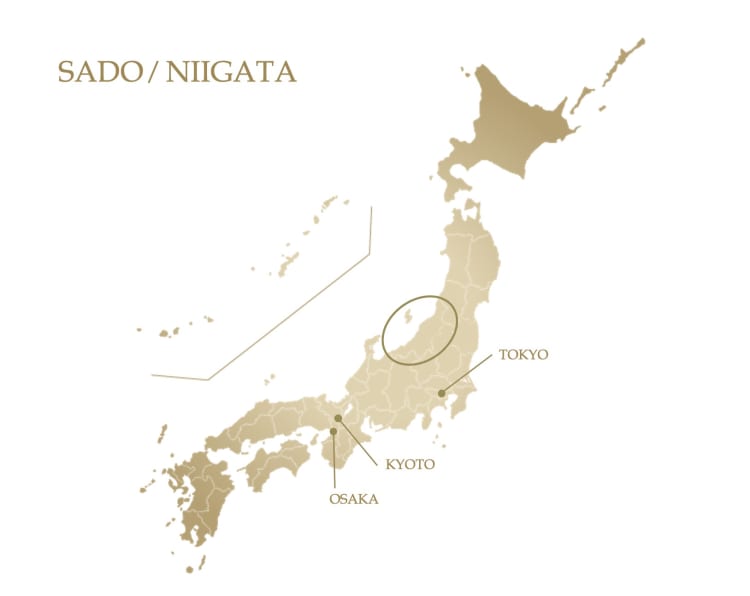
Located almost directly north of Tokyo on the Sea of Japan, Niigata and Sado Island are best understood as the natural outcome of a landscape where mountains, rivers, sea, and snow converge. Formed by the immense compression between the Eurasian and Pacific plates, the Echigo Mountains and the twin mountain ranges of Sado rise like deep wrinkles in the earth, shaping both climate and life.
Each winter, some of the world’s heaviest snowfall blankets these ridges, quietly storing water that will later flow into rivers, paddies, and lagoons. When spring arrives, that meltwater nourishes vast rice fields, feeds sake breweries, and sustains wetlands rich in wildlife, creating a continuous ecological cycle that connects mountain peaks to the Sea of Japan.
From this natural rhythm emerges a culture rooted in the blessings of land and snow. Rice and local sake flourish through pure meltwater; rustic villages and farmlands preserve a way of life tuned to the seasons; and cuisine unites mountain and sea.
Historic sites such as the Sado Gold Mine and terraced rice fields recognized as a Globally Important Agricultural Heritage System speak to human ingenuity, while the Echigo-Tsumari Art Triennale, the metalwork of Tsubame-Sanjo, hammered copperware, Mumyoi Ware pottery, and vibrant festivals reveal a living, evolving creativity. Together, these elements form the core experience of traveling through Niigata and Sado—a place where nature and culture are inseparable.

Mountains, Rivers, and Sea: Living with the Blessings of Earth and Snow
Niigata and Sado invite travelers to experience how nature and daily life are woven together by an enduring cycle of snow, water, soil, and sea. Few places in the world receive snowfall as deep and consistent as this region, which is often-described in Japan as the “snow country.”
Together, “accumulating snow,” “flowing meltwater,” “ripening rice,” and “abundant seas” form a continuous cycle that shapes both food culture and everyday life in Niigata and Sado—a living harmony between people and their environment.
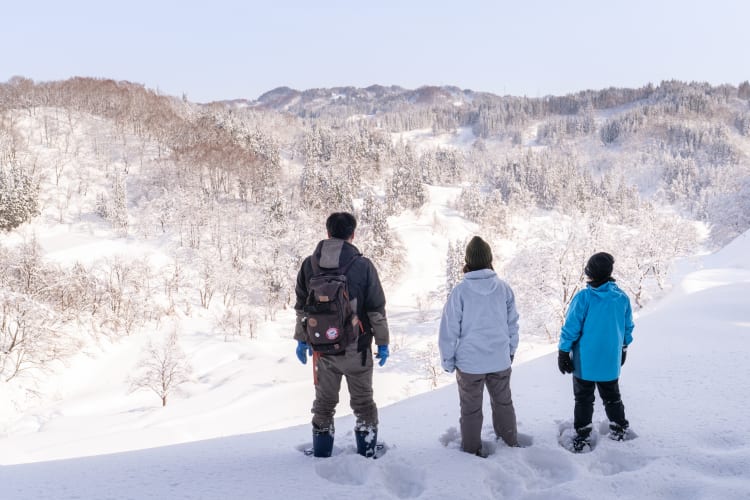
Winter Terraced Rice-Paddy Trekking
This natural rhythm is best understood through experience. In coastal port towns, sushi and kappo cuisine showcase seafood drawn from the cold, nutrient-rich Sea of Japan. Offerings such as fatty yellowtail with melt-in-your-mouth texture, or tender, sweet-tasting snow crab match superbly with local sake whose clean taste reflects the purity of snow-fed water.
In the rustic countryside, hearty regional dishes made with mountain vegetables, rice, and fermented foods are enjoyed alongside small-batch brews, creating pairings that express the land’s seasonal character. Each meal becomes a quiet lesson in how “abundant seas” and “ripening rice” depend on what begins as winter snow.
Travel through the region traces this cycle even more vividly. At the Sado Gold Mine, visitors encounter the land itself, shaped and worked over centuries. Every three years, the Echigo-Tsumari Art Triennale places contemporary art amid fields and villages, highlighting the creativity that grows from place.
Terraced rice field trekking reveals how meltwater is guided across slopes with precision, while visits to snow cellars (yukimuro) show how deep drifts preserve food and sake in a gentle, natural cold. Sake breweries complete the story, transforming snowmelt and rice into liquid expressions of the land.
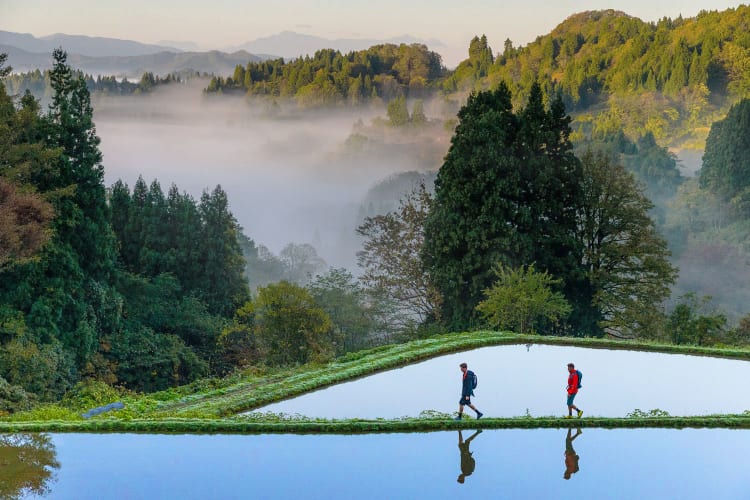
Terraced rice-paddy trekking
Snow Country Sanctuaries and Island Retreats in Niigata
With its diverse terrain of mountains, valleys, plains and coastline, Niigata offers a variety of accommodation to step away from the busy modern world and be immersed in tranquility, savoring the blessings of the land and abundant snow.
On the mainland, Satoyama Jujo is set amid terraced rice fields and rolling hills, inviting guests into a world shaped by the rhythms of agriculture and the quiet beauty of rural life. The high peaked roofs indicative of its traditional snow-country architecture shelter modern, warm wood interiors, and views of layered paddies create a sense of harmony between people and nature.
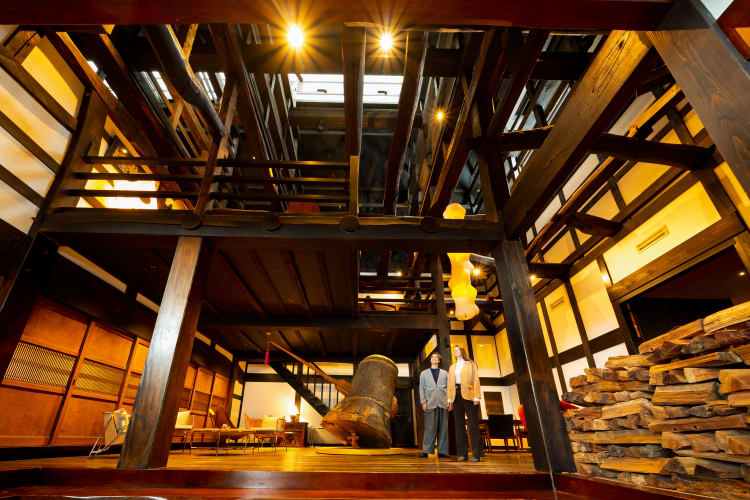
Satoyama Jujo
ryugon is a ryokan inn that received Japan’s Good Design Award for a novel renovation that combined historic buildings relocated from other areas of Niigata with a beautiful traditional Japanese garden, visible both from rooms, outdoor baths, and covered walkways around the premises. The inn’s main dining room celebrates a strong connection to fermentation culture, from local miso and soy sauce to carefully crafted Niigata sake.
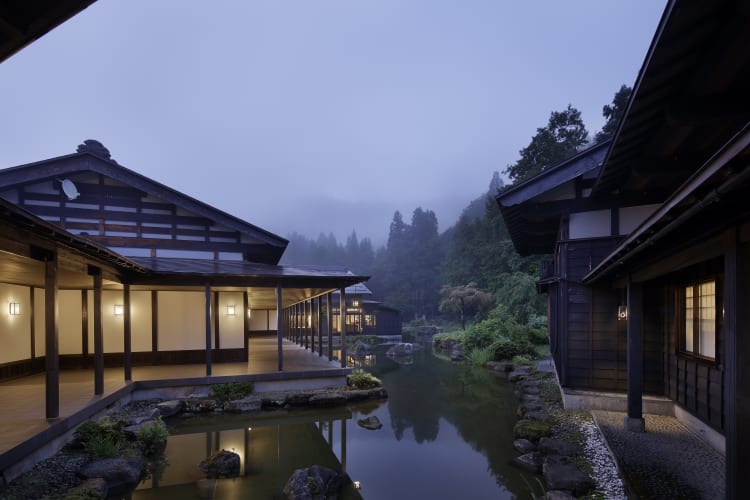
ryugon
From its clifftop perch on Sado Island, Hotel OOSADO is defined by sweeping, dynamic ocean views that change with the light, wind, and weather. In the hotel’s modern yet elegant rooms and grass-covered premises, guests are invited to slow down and immerse themselves in “island time,” enjoying the expansive horizon, the sound of waves, and a feeling of openness that connects directly to Sado’s maritime character.
Handcrafted by Land and Time: Niigata’s Rice, Sake, and Craft Traditions
Out of Niigata’s rich food culture emerged a tradition of craftsmanship in creating durable yet beautiful tools and vessels, such as metalwork from the Tsubame-Sanjo region or pottery from Sado Island.
Snow-country conditions demanded tools that were strong, reliable, and long-lasting—and generations of craftsmen answered that need with meticulous skill.
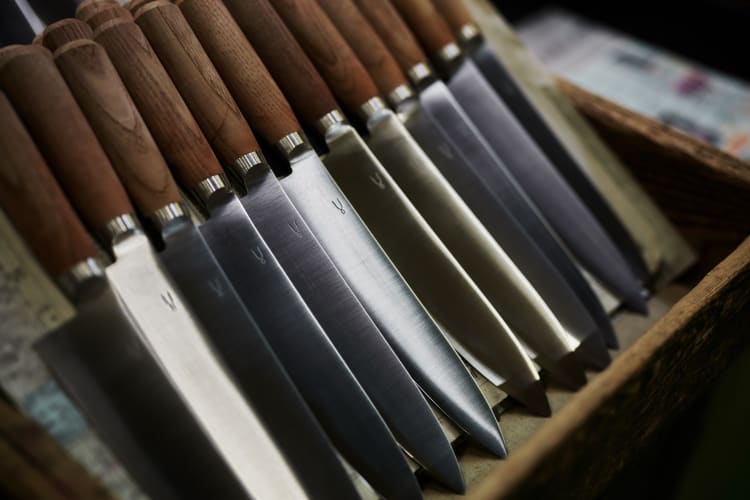
Echigo Sanjo Cutlery
From globally acclaimed cutlery and kitchen tools to the luminous hammered copperware of Gyokusendo and the razor-sharp blades of Echigo Sanjo forged knives, these works embody a balance of durability and elegance.
Complementing this metal heritage are the ceramic traditions of Sado, especially Mumyoi Ware, whose warm, earthy tones come directly from iron oxide mineral found in the quartzites of the Sado Gold Mine.

Tsuiki copperware, Gyokusendo
Together, Niigata’s metal tools and Sado’s ceramics form the unseen framework of the region’s food culture. They remind us that great rice and sake are not experienced alone; they are held, poured, cut, and served by objects crafted with equal care. To take one of these pieces home is to bring a small, enduring fragment of Niigata and Sado’s living culture into everyday life.
