

































Why travel Japan by train?
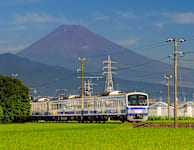
Japan’s rail system is one of the most efficient and convenient in the world. Trains are safe, punctual, and extensive, covering nearly every region—from major cities to scenic countryside.
What types of trains are there in Japan?
Local trains: Stops at all stations, ideal for short distances.
Rapid trains: Skips minor stations, no extra fare.
Express trains: Even fewer stops, may require a surcharge.
Limited Express & Special Express: Reserved seating, faster intercity travel, generally requires a surcharge.
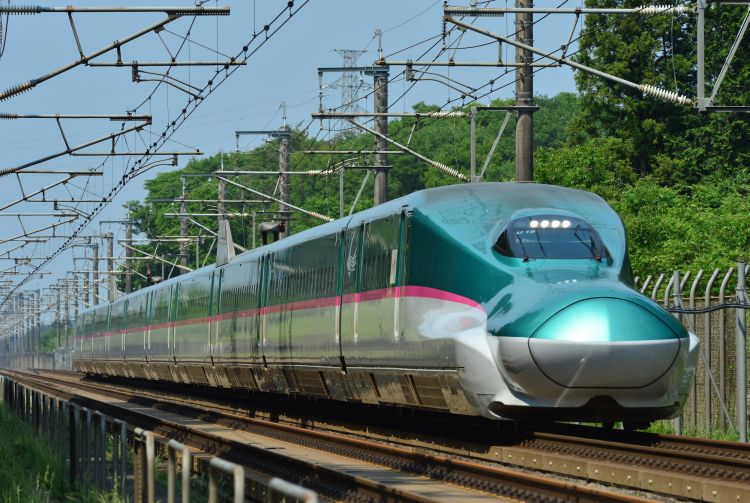
Shinkansen (bullet trains): High-speed intercity trains, with multiple lines across the country, requires a surcharge.
© JR East
What is the Shinkansen and where does it go?
The Shinkansen is a network of high-speed bullet trains connecting major cities across Japan.
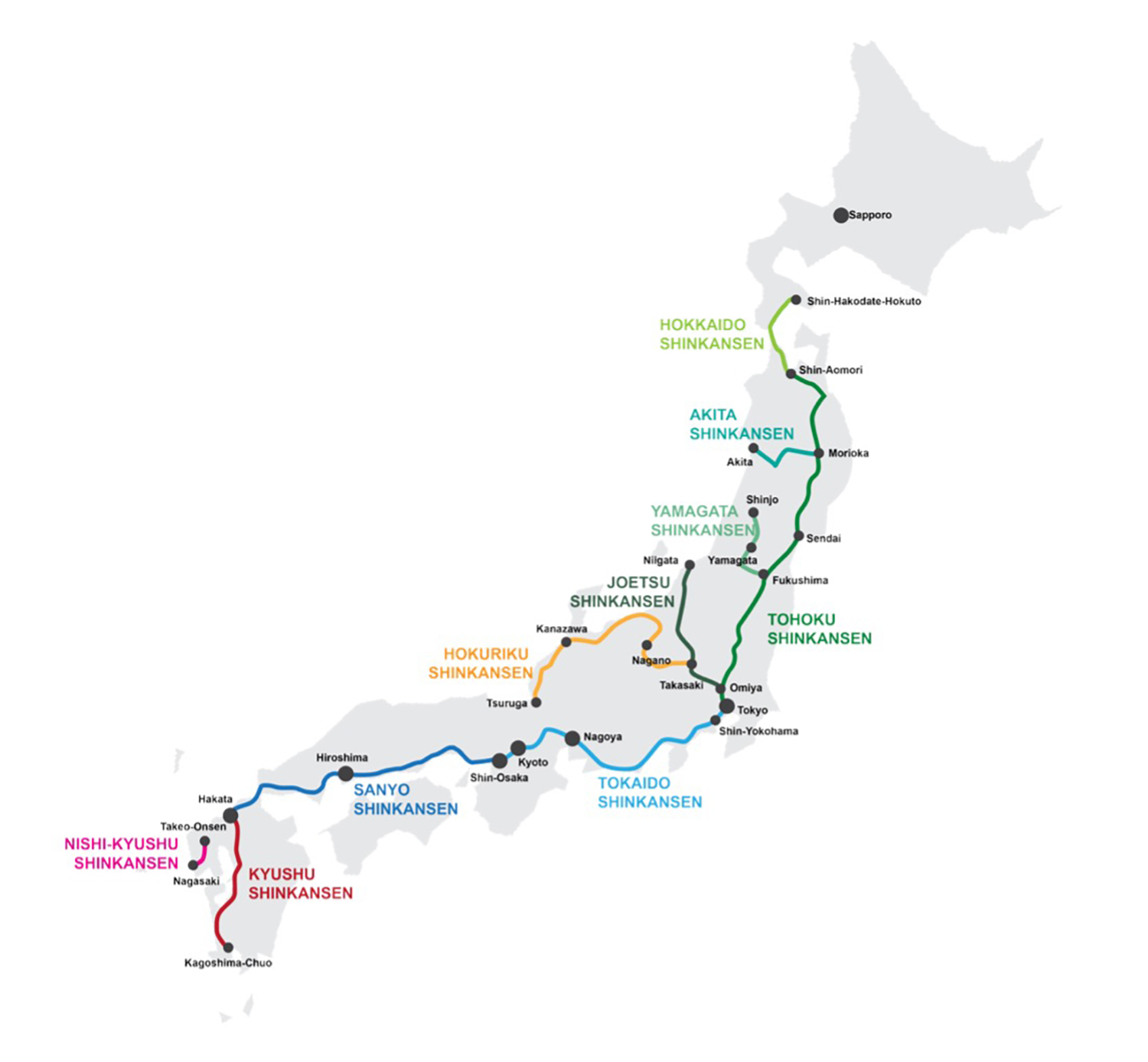
For more information on traveling via Shinkansen, click here:
https://www.japan.travel/en/plan/getting-around/shinkansen/ 

Which railway lines are convenient for visiting tourist attractions?
Japan’s extensive rail network makes it easy to explore cities, countryside, and sightseeing spots.
JR (Japan Railways Group)
Covers nationwide routes, including shinkansen and major tourist areas like Kyoto, Hiroshima, Kanazawa and Sendai.
More information: https://www.japan.travel/en/plan/getting-around/jr/
Private Railway Companies
Private railways offer direct access to many popular destinations beyond the main JR routes.
Major operators include:
Tobu – Nikko, Kawagoe
Odakyu – Hakone, Enoshima
Keisei – Narita Airport
Tokyu / Keikyu – Yokohama, Haneda Airport
Seibu / Keio – Chichibu, Mt. Takao
Meitetsu – Inuyama, Centrair Airport
Kintetsu / Nankai / Hankyu / Keihan / Hanshin – Osaka, Kyoto, Nara, Koyasan
Nishitetsu – Dazaifu
More information: https://www.mintetsu.or.jp/en/index.html
How do I get around within cities?
Most cities have extensive subway or urban train systems. These are fast, frequent, and cover most major neighborhoods and attractions.
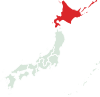
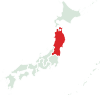
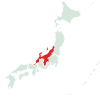
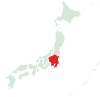
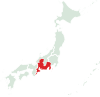
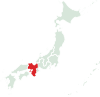
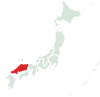
Subway Route Maps (by region):
Are there sightseeing or themed trains that are fun to ride just for the journey?
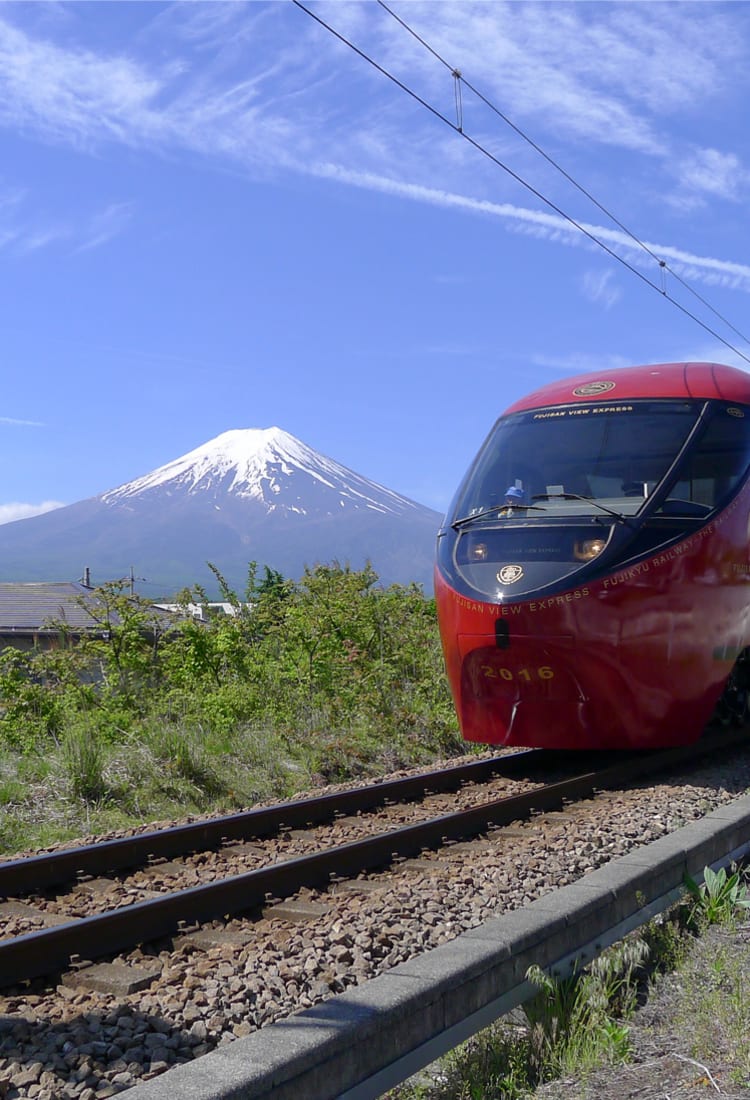
Yes, Japan offers many scenic and themed trains designed for enjoyment, with incredible views and unique onboard experiences. For more information, click here:
https://www.japan.travel/en/see-and-do/scenic-railways/
How do I pay for train rides?
IC travel cards (e.g., Suica, Pasmo, ICOCA): Tap-and-go cards valid nationwide.
Mobile IC apps: Use Welcome Suica Mobile or PASMO on compatible phones (not all overseas models are supported).
Rail Passes:
: Unlimited travel for tourists on most JR lines. - Regional Passes
: Passes for specific areas (e.g., Kansai, Tohoku).
Paper tickets: Still widely available at stations.
How can I check train timetables and fares?
You can use these tools to find routes and estimate fares. Simply enter your location and travel time to get the most convenient route and up-to-date transit information.
Japan Transit Planner (JORUDAN): https://world.jorudan.co.jp/mln/en/
NAVITIME: https://japantravel.navitime.com/en/area/jp/route/
Can I make reservations?
For local, rapid and express trains, reservations are not required.
Only shinkansen, some limited express trains and sightseeing trains require or recommend reservations. Book at JR ticket counters, machines, or online via the SmartEX / JR East app, etc.
Can I eat on trains?
You can eat on long-distance trains such as the Shinkansen and limited express services—many travelers enjoy picking up an ekiben (boxed meal) to enjoy during the journey. However, eating on local or subway trains is generally considered impolite and should be avoided.
Are trains and train stations accessible to those with mobility issues?
Most stations have elevators, ramps, and staff to assist passengers using wheelchairs, strollers, or mobility aids. Ask station staff for help at the ticket gates as needed.
More information: https://www.ecomo-rakuraku.jp/en