














Sustainable Destinations Reinventing The Japanese Hot Spring Resort Experience in Chikuma and Atami
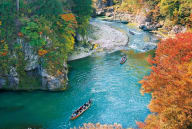
©Jukkoku toge
For those just dipping their toes into Japanese culture, mentions of the country’s hot spring (onsen) tradition is likely to conjure up dreamy images of wooden bathhouses overlooking a bucolic landscape enveloped in mist or snow. In reality, there’s much more variety to Japan’s onsen towns. While all of them are great places for enjoying a rejuvenating bath, many also offer a sense of discovery and adventure. Chikuma in Nagano Prefecture and Atami in Shizuoka Prefecture are two such exciting destinations. Chikuma is combining soaking in a hot spring with vibrant, retro-flavored nightlife, while Atami brings epic legends, mountaintop vistas, and delicious sweets to the table.
Chikuma City (Nagano)


Hot Springs, Neon Lights, and Retro Charm
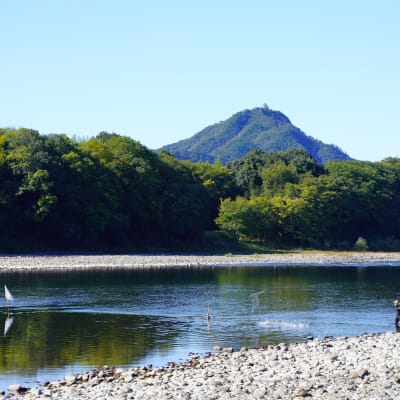
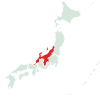
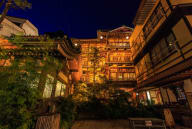
About 30 minutes south of central Nagano City by local train, Chikuma is a city of just over 50,000 residents. Its landscape is mainly defined by the Chikuma River, which runs through its center. Situated in the foothills of Mt. Kamuriki is Togura Kamiyamada Onsen, where every quiet street exudes twentieth-century charm.
Here, you’ll be bathing in nostalgia for worry-free times. It’s this yearning for simpler days—or, perhaps more accurately, simpler pleasures—that inspires Chikuma to invest not only in its hot springs, but also in after-dark experiences that evoke 1980s Japan while feeling distinctly modern.
Skin-Enhancing Springs Steeped in Sulfur
There are over 50 natural hot spring sources in Togura Kamiyamada Onsen. It’s no surprise, then, that soaking should make up a significant portion of your time spent in Chikuma. The sulfuric waters are such that bathing for even just a few minutes leaves you with silky-smooth skin—so smooth, in fact, that you won’t even need to lather body cream or oil after drying yourself off.

The skin-smoothening hot spring water of Togura Kamiyamada Onsen
Traditionally, onsen towns are destinations where travelers will settle in ryokan inns. Breakfast and dinner are often served in guests' rooms, and the inn itself usually offers amenities and on-site hot spring facilities. When you stay in Togura Kamiyamada Onsen, your accommodation is just as important as your itinerary.
Some inns have histories that span generations. One of them Kamesei, a ryokan run by American Tyler Lynch and his wife, Mari, who is the third-generation owner of the inn. Together, they saved Kamesei from becoming a parking lot, then transformed it into a relaxing destination that attracts visitors from around the world.

Enjoying a foot bath by a local convenience store
Activities in Togura Kamiyamada Onsen can look very different depending on the time of year, though some constants include public foot baths (ashiyu) that can be found in two places in the town. One is located in the parking lot of a convenience store, offering an unexpected mix of old and new.
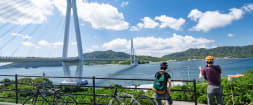
Chikuma is encouraging travelers to explore the area's attractions beyond the main hot springs district. Guided bicycle tours are offered year-round and make the perfect avenue to learn more about Togura Kamiyamada Onsen and Chikuma’s history by visiting places like the Arato Castle site and local temples.
Geisha Performances, Karaoke, and Retro Snacks Galore
Togura Kamiyamada Onsen has over 120 years of history. The development of the regional train network, among other major projects in the twentieth century, transformed it into a popular destination. At its peak, Chikuma attracted 1.4 million visitors annually. With increasing foot traffic, an interesting—and now newly vibrant—part of Togura Kamiyamada Onsen developed: its nightlife.

A geisha performance in Chikuma
© Shinshu Chikuma Tourism Bureau
In past decades, geisha were a common sight on the streets of Chikuma; there were over 400 working geisha in the local guild in the 1970s. Geisha-led entertainment defined the evenings in Togura Kamiyamada Onsen as especially lively, and nights out became essential to experience what this corner of Chikuma had to offer. While there are fewer geisha active today, Chikuma is determined to keep the tradition alive.
The Shinshu Chikuma Tourism Bureau began to revitalize geisha culture in 2021, and these efforts have proven remarkably successful. Today, visitors can again sign up for authentic geisha performances, just like 50 years ago, and Chikuma’s geisha-driven promotional initiatives were named a Green Destinations Top 100 Sustainability Story in 2025.

A “snack” bar in Chikuma
Another form of hosting has also seen a renaissance in Chikuma recently—and attracted the attention of Green Destinations in 2024, when the town netted its first Sustainability Story award.
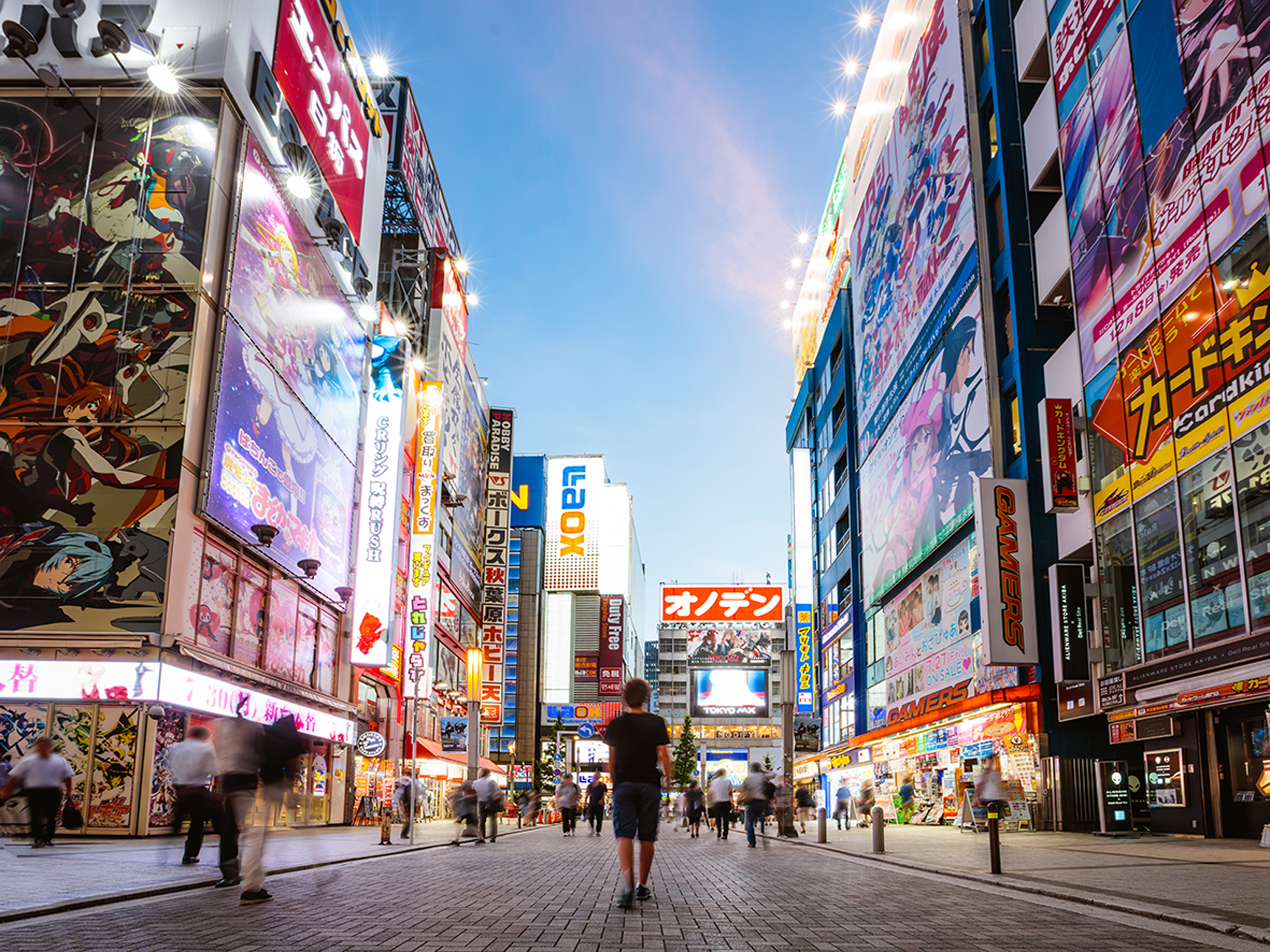
In the 1970s and ’80s, “snack” bars took Japan by storm, and Chikuma enjoyed a taste of this boom too. Referred to as sunakku in Japanese, snack bars are establishments where patrons can drink, enjoy light appetizers and snacks, and engage in conversation with the mama-san, the proprietor, all for a set fee. Karaoke, with fellow customers as your main audience, is another big part of the sunakku experience. Snack bars are characterized by their kitsch decor, and many of the snacks served are classic Japanese treats. Chikuma has well over 80 snack bars lining its neon-lit alleys.
Sustainability Spotlight

Onuma Hiroei
CMO, Shinshu Chikuma Tourism Bureau
Onuma Hiroei is leading the tourism initiatives in Chikuma, and his tireless work has been a big part of the city getting recognized by Green Destinations two years in a row. The key to promoting Togura Kamiyamada Onsen, he believes, is by promising a glimpse of a Japan that’s become unknown even to younger Japanese.
“Traditionally, geisha train with the purpose of entertaining audiences,” he explains. “We wanted people, including Japanese people, to be reminded of that.” Onuma continues, emphasizing that geisha are a vital cultural element of Chikuma. “[The culture] needs to be preserved. We’re working on finding more people who enjoy geisha shows, and, ideally, inspire a new generation to practice this traditional art.”
Onuma also works closely with snack bar owners through an initiative called NEO NEON, which aims to “update” snakku culture and introduce it to a new audience. Snack bars are part of everyday life in Chikuma, and again, Onuma stresses that this part of local culture needs to be preserved. “This is why we started with snack bars before anything else,” he says. “We started talking to the owners and asked them whether they wanted to jump onto this initiative.”
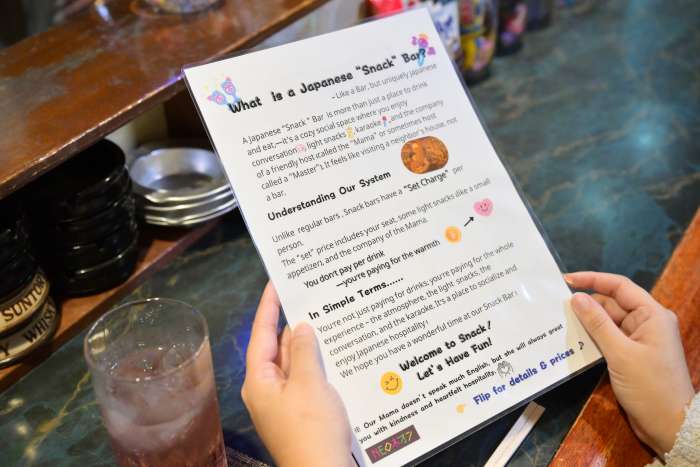
Instructions for a smooth snakku experience
For international travelers, the concept of snack bars may not be immediately apparent. To make interactions smoother and ensure all customers have a good time, Onuma’s team created a multilingual laminated sheet that bar owners can use to explain what snack bars are and how to enjoy them. Through NEO NEON, Onuma hopes to replicate the success he’s had with geisha culture, fetching snack bars new customers and providing an authentic experience that international visitors won’t find anywhere else in the world.
In Chikuma, it isn’t just the baths that are warm: local residents welcome travelers with open arms and love nothing more than to introduce newcomers to the town’s many enjoyments. Whether you choose to lounge at a ryokan, watch a geisha performance, or sing the night away at a snack bar, your visit will help keep this neon-lit onsen town buzzing.
Links
Shinshu Chikuma Tourism Bureau
Atami City (Shizuoka)

©Jukkoku toge

Where Blessed Hot Springs and Mountaintop Sweets Come Together
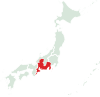
Just over 30 minutes from Tokyo Station on the Tokaido Shinkansen, Atami is an onsen town that defies expectations in the most surprising ways. It’s a destination that’s proud to offer a wide variety of terrain, from beach walks to mountain treks. It also goes beyond expectations in having activities throughout all seasons. Fireworks are not only a summer affair here; they’re held almost every month of the year, from spring to autumn and even in December.. And few know that Atami is home to Japan’s earliest blooming cherry blossom, which decorates the city in hues of pink in early January, when plum flowers also burst into bloom. But the city’s hot springs culture is even more distinctive.
An Onsen Town Favored by the Gods
Hot springs appear in the parts of the city where you’d least expect them to. First, there’s the foot bath right outside Atami Station—because of course you’d want to soak your feet first thing after a train ride. Then, there’s Hashiriyu. To see this 1,300-year-old natural source in the serene northern part of town, you’ll have to crawl through a steamy tunnel tucked behind a building by the Atami Beach Line, only to be met with literal bubbling-hot water. It gets very hot in the tunnel; expect your eyewear to fog up and moisture to sit on your clothes and skin.

Exploring the steamy Hashiriyu
There’s something special about Atami’s hot-spring water, and it may have to do with the city’s spiritual connections. One of Atami’s major shrines is Izusan, a complex with multiple smaller sister shrines along an 873-step path that stretches up the mountains, ending at Izusan Shrine Hongu. Legend goes that two dragons lie under the mountains of Atami, their bodies serpenting across the area. Their tails would meet in Lake Ashinoko in Hakone, while their heads would rest under Mt. Izu. It’s out of their mouths, ears, and nostrils that Hashiriyu, and Atami’s other hot springs, would have originated.

Dragon ema tablets at Izusan Shrine
Izusan Shrine’s emblem, which you’ll see on the ema (votive tablets) hung by the shrine’s koi pond, captures the red and white dragons, representing fire and water—heat and water, if you will—which together create the hot springs Atami celebrates.
From Seafood Street Food to Sugary Sweets
Food is of imperative importance when planning a trip, and when it comes to offering delicious dishes and snacks, Atami has more than enough options to cater to just about any kind of traveling foodie. Being so close to the ocean means that fresh seafood is on the table almost anywhere. In the northern area, meanwhile, some of the tastiest treats can be found at an altitude.
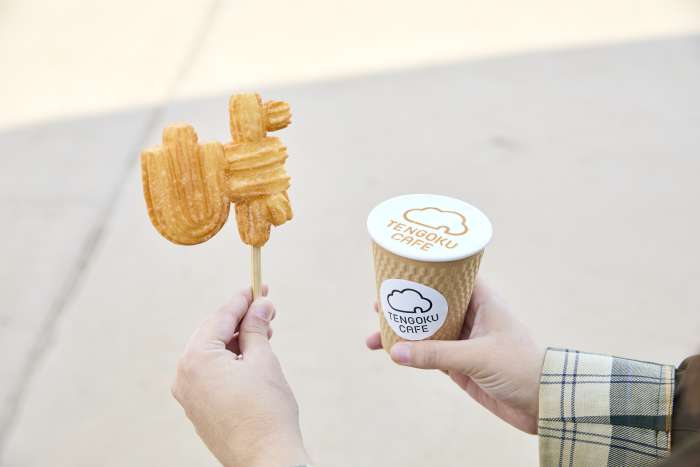
Sweet treats from Panorama Terrace 1059 at Jukkoku Pass
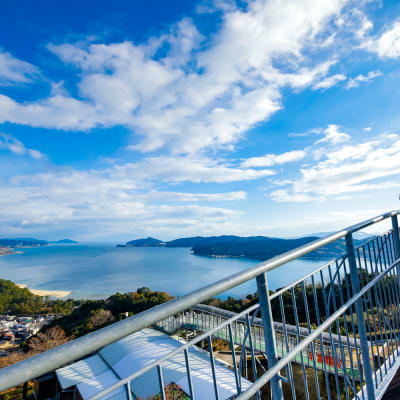
Atami has a sweet trick up its sleeve, and one that it has already established to do very well: sweets. Saccharine treats are such a local staple that you’ll even find them on the menus of secluded cafés, including Panorama Terrace 1059, located at the top of the Jukkoku Pass. Here you can order churros in the shape of the kanji character for toge (峠, “pass”) as well as a hot latte with a fun graphic printed on the foam. Enjoy your treats while taking in the views of the surrounding towns. On clear, sunny days, Mt. Fuji shows herself to the north.

A view from Jukkoku Pass toward central Atami
Exploring northern Atami reveals a calmer, more profound side of this versatile onsen town. Hidden gems such as Hashiriyu and Izusan Shrine inspire visitors to dig deeper into the area’s history and traditions, while natural attractions like the Jukkoku Pass add a sense of tranquility. Together, they point the way to a sustainable future for a long-thriving destination that nonetheless remains firmly off the beaten path for most international tourists. Enjoying the sights and flavors of the area, not to mention staying the night nearby, makes an attractive way for travelers to give back to Atami.
Sustainability Spotlight

Ueda Kazuyoshi
CEO, Atami Tourism Bureau
Despite easy access from Tokyo, fairly few international travelers make their way to Atami. “Only 5 percent of visitors are from abroad,” says Ueda Kazuyoshi, CEO of the Atami Tourism Bureau. His goal, among others, is to increase this percentage. Ueda doesn’t only think about what could bring more tourists, but also what the city can do to provide higher-quality hospitality and a better lifestyle for its citizens.
“We want to have residents involved in some of our initiatives, and we invite residents to learn more about Atami as well. We believe that by doing this, it will help our revitalization efforts further,” he explains.

Ueda also sees the potential in providing visitors, domestic or international, with more experiences outside of hot spring-hopping that are aligned with recent trends. “Recently, young people visit Atami and not just because of our hot springs. We see these young travelers eating sweets, hiking, and enjoying art and flower-viewing,” he says. “We think our strongest advantage is that there isn’t a place 30 minutes by Shinkansen from central Tokyo that is full of nature and has the same history and culture as Atami.”
Most importantly, however, Ueda mentions treasuring the sense of community in Atami’s streets and connecting visitors with locals. “We’re trying to promote activities and events that bring visitors during the week and encourage them to go beyond the main Atami Station area,” he says. “Lesser-crowded destinations benefit from travelers and residents partaking in more genuine connections.”
With its diverse attractions and proximity to Tokyo, Atami makes an ideal place to visit even if you aren’t yet a seasoned hot-spring bather. It’s the kind of destination that rewards explorers, revealing new layers of itself little by little.
Links