







































Sustainable Destinations Traversing Roads Less Traveled: Deep Dives into Japanese History in Nara and Imabari
Japan’s long and fascinating history continues to capture the imaginations of many around the world, not least thanks to popular TV series, comics, and video games highlighting themes from samurai battles to the nation’s founding myths. For travelers, one of the most illuminating ways to explore the country’s past is to visit the places where history happened—and especially locations where tradition shines through in the present.
In Nara Prefecture, the Yamanobe no Michi trail through the hills of Sakurai and Tenri takes you on a journey back to the dawn of Japanese history. Travelers are invited to trek among ancient shrines, through tranquil woods, and past monumental kofun burial mounds built for the emperors who forged the foundations of the Japanese state. In Imabari, the maritime exploits of the Murakami Kaizoku pirates come to life on the island where their medieval castle once stood.
Sakurai and Tenri Cities (Nara)


Ancient History as Part of the Everyday: An Ode to Unhurried Life
Meandering through forested foothills on the eastern side of the Yamato Plain, Yamanobe no Michi is often called Japan’s oldest road. Mentioned in the eighth-century Nihon shoki (Chronicles of Japan), it is thought to have been established as a trade route in the fourth century, around the very beginning of the country’s recorded history. Walking the trail today makes for a scenic journey into an ancient past conscientiously stewarded by generations of local residents, whose near-to-nature lifestyle lends distinctive color to the experience.
Trekking in the Footsteps of Chieftains and Poets
The most popular section of Yamanobe no Michi is the 12-kilometer trail between Omiwa Shrine in Sakurai and Isonokami Shrine in Tenri. This well-marked path through grassy hills, serene groves, and citrus and persimmon orchards is dotted with historic sites dating back to distant antiquity. Chief among these is Omiwa Shrine in the foothills of the sacred Mt. Miwa, where many hikers begin their journey. One of the oldest Shinto shrines in the country, the sprawling complex is dedicated to the deity of the mountain. A separate trail leads from the shrine to the peak, which can be climbed as a show of devotion to the deity.

Exploring the sacred grounds of Omiwa Shrine with a guide
Among Omiwa Shrine’s many sub-shrines, Hibara Shrine is perhaps the most significant. A few minutes along the trail from Omiwa, it stands on the site of what is believed to have been the first sanctuary dedicated exclusively to Amaterasu Omikami, the sun deity revered as the ancestress of the imperial family. According to tradition, these ancient places of prayer, along with Yamanobe no Michi itself, were established by the lords who ruled the Yamato Plain around the beginning of the Common Era.

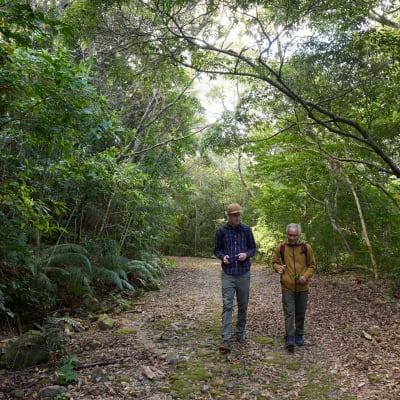
Walking the Yamanobe no Michi
Evoking the same period are stone monuments along Yamanobe no Michi that are inscribed with verses from the eighth-century Man’yoshu, the oldest extant collection of classical Japanese poetry. Many of the poems in the anthology refer to places by the ancient road, and the monuments have been set up to convey the path’s central role in inspiring writing that has endured through the ages.
A Living Community Amid Giant Tombs
The most prodigious points of interest along Yamanobe no Michi are the kofun tombs that protrude from the bucolic scenery here and there. These forested burial mounds are thought to house the remains of some of the ancient emperors who laid the groundwork for Japan’s first centralized state.
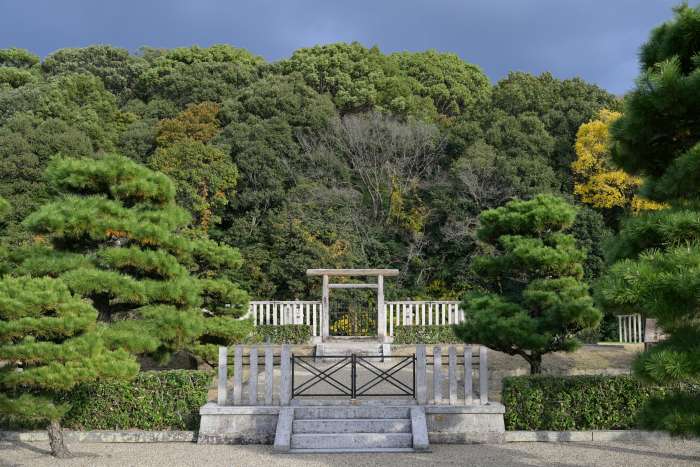
The entrance to a kofun burial mound
While the massive graves now stand as silent witnesses of the country’s formative era, a thriving local community ensures that their memory is passed on to coming generations. One of the greatest pleasures of walking the Yamanobe no Michi is the opportunity to connect with the daily lives of people living along the road, whether it’s by buying some persimmons or mikan oranges from a local farmer’s unattended fruit stand, enjoying a bowl of thin somen noodles at a trailside eatery, or sharing a magical sunset moment with fellow hikers from the top of the Nishiyamazuka kofun, a burial mound that has been carefully preserved with the understanding and cooperation of the local community.
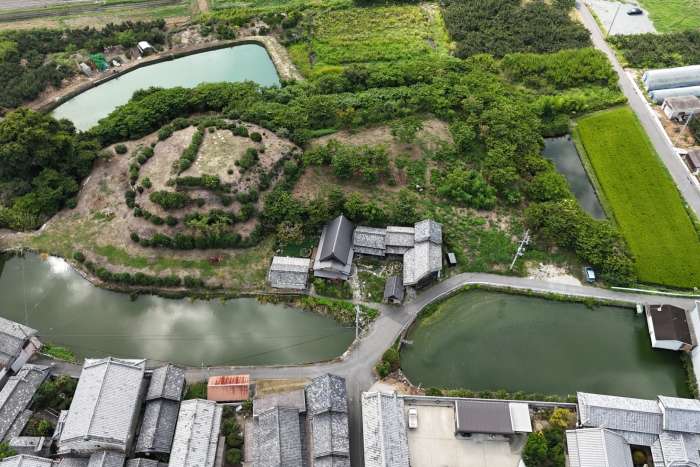
An aerial view of the Nishiyamazuka kofun
©cofunia
At the foot of Nishiyamazuka stands the stylish cofunia, a kofun-themed accommodation facility housed in a renovated traditional house. This recently opened lodge is but one result of the way in which local people have come together to create a comfortable travel experience for both visitors and residents. Nara Prefecture and local municipalities have since 2021 facilitated sustainable, community-centered tourism and the passing down of local traditions and trades to the next generation under the auspices of the Yamanobe Project. This broad regional movement has also led to the emergence of various private-sector initiatives. Walking the Yamanobe no Michi and visiting restaurants, sights, and facilities along the way enables travelers to contribute to the local community in line with these efforts, encouraging a virtuous circle of positive engagement.
Sustainability Spotlight

Katsui Keisuke
Director, Tenri Trail Center
Katsui Keisuke exemplifies the local pride and can-do spirit characteristic of the Yamanobe area. Director of the Tenri Trail Center, a welcoming oasis for hikers located just about halfway along the main 12-kilometer stretch of Yamanobe no Michi, Katsui spent decades working in the hospitality business in Tokyo and Osaka. But relocating to Tenri, he says, has allowed him to discover what makes this storied corner of Nara so special. “I now want to introduce everyone to the Yamanobe no Michi lifestyle,” he says. “It’s slower than in the big cities, and epitomizes what I like most about Japanese culture: tolerance, generosity, and dignity.”

Travelers, too, can get a sense of this laid-back abundance, says Katsui, who is on a mission to make both visitors and local residents happy to be in Yamanobe. The facility he runs is far from your typical hiking hub; in addition to an information center, clean bathrooms, and a small gallery, the building encompasses a shop stocked with artisanal products sourced from throughout the area and a refined restaurant serving hearty yoshoku (Japanified Western-style cuisine)—a style of cooking Katsui perfected over two decades in Osaka. “This is a place for anyone to enjoy,” he says, “whether you prefer to drink fine champagne at the restaurant or have a cup of instant noodles on the terrace.”
The easygoing spirit of Yamanobe isn’t just a vibe, either: it’s helping prop up the local economy, as an increasing number of people from the cities move to the area in search of a more fulfilling life—one seasoned by unique luxuries. “Where else can you casually sip a cup of coffee while gazing out at a 2,000-year-old tomb?” Katsui asks with a laugh.
Links
Imabari City (Ehime)

An Old Pirates’ Lair as a Catalyst for Cherishing Local Heritage
Pirates? In Japan? You read that right; while they may not have been anything like the famously swashbuckling marauders of the Caribbean, gangs of boat-borne raiders and traders are a part of this country’s history, too. The most prominent among these groups were the medieval Murakami Kaizoku of the Seto Inland Sea, whose former island fortress on the outskirts of the city of Imabari is open for guided visits—and is becoming a focal point for efforts to revitalize the surrounding community and convey local tradition to the next generation.
Getting the Background on Pirate Life at the Murakami Kaizoku Museum
On the journey to Japan’s pirate coast, your first stop will be Imabari, a proud shipbuilding city now known among cyclists worldwide as a key node on the picturesque Shimanami Kaido cycling route. From there, a 30-minute drive through the island-dotted landscape of the Seto Inland Sea—and above it, on towering suspension bridges—leads to Oshima.

The Murakami Kaizoku Museum
On the northeastern coast of this island, the Murakami Kaizoku Museum offers a fascinating exploration of the Murakami pirates, Japan’s most renowned family of maritime samurai. The three-story facility chronicles the rise and fall of the Murakami during the conflict-ridden Sengoku (“Warring States”; 1467–1568) period, when the lack of an effective central authority allowed groups of pirates to control trade and maritime traffic on the Inland Sea and beyond.

Exhibits at the Murakami Kaizoku Museum
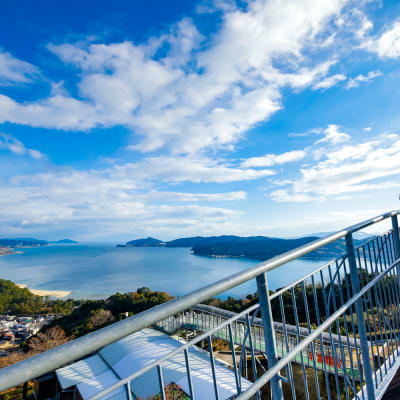
Exhibited in the main gallery on the second floor are ship models, weapons and armor, interactive maps, and excavated artifacts that provide insight into who the Murakami were and how they sailed, traded, and raided. On the third floor is a panoramic gallery that looks out over the Shimanami Kaido and Noshima, the small island where the Murakami fortress once stood.
Down on the first floor, a gift shop sells a variety of fun pirate-themed merchandise. There is also a café, but when hunger strikes, it pays to head down to the boat terminal next to the museum. There you’ll find a restaurant serving up hearty portions of super-fresh local seafood including sea bream, a regional delicacy usually eaten as sashimi marinated in an umami-rich sauce and served over hot rice.
Infiltrating the Murakami Pirates’ Fort
The boat terminal with the restaurant is also the point of departure for guided tours of the Noshima Castle site, the former stronghold of the Murakami pirates. While the trip over water to Noshima Island only takes around 10 minutes, it drives home why Noshima Castle was considered all but impenetrable during the glory days of the Murakami.
The Seto Inland Sea may look calm, but is defined by its extreme tidal shifts. For seafarers unfamiliar with the waters, the rapid currents and treacherous whirlpools of the Inland Sea can be extremely dangerous. The Murakami pirates mastered these volatile waters, harnessing them as ever-shifting natural fortifications. Their unparalleled knowledge of local oceanography allowed them to dominate maritime traffic and remain safe at Noshima Castle without having to fortify their base heavily.

Whirlpools around Noshima Island
You get to witness these swirling tides for yourself from the boat on the way back, but first it’s time to land on Noshima and walk in the footsteps of the pirates. While only the contours of the medieval castle remain today—all the structures have long since been dismantled—your guide will be able to bring the story of the island’s one-time inhabitants to life. They can point out the locations of former buildings and their purposes, elucidate on the battle tactics and weaponry of the Murakami, and share illuminating personal stories. Believe it or not, some of the Noshima guides are themselves descended from the Murakami pirates.

Exploring the Noshima Castle site on a guided tour
The local heritage guides, it turns out, hold the key not only to the Noshima site’s past, but also to its future. The tours they lead are available by reservation only on Saturdays, Sundays, and national holidays—and there are several measured reasons behind this exclusivity.
Sustainability Spotlight

Saito Yasuyuki
Chief Guide, Noshima Castle Site
Landing on Noshima Island is allowed only in the company of a specialized guide. Limiting access to the site of the former pirate fort helps preserve the island’s natural environment and historical remains. Equally importantly, the guidance requirement is a way to ensure the safeguarding of the area’s heritage within the local community. “Noshima is a treasure for us,” says Saito Yasuyuki, who has guided visitors to the island since 2014. “We have to both protect it and spread the word about it, to make sure that it’s passed on to the next generation.”
Just like his four fellow guides, Saito is a true expert on Noshima, having taken part in the archaeological excavations that were conducted on the island over a 10-year period. Now in his 80s, he’s as passionate as ever about enlightening visitors on the history of the Murakami pirates, but also recognizes the need to train a new cohort of guides. “We’re working on diversifying our group,” he says, “and engaging young people.”

In addition to being popular tourist destinations, the Murakami Kaizoku Museum and the Noshima Castle Site also receive visitors from schools and organizations promoting education with a focus on sustainable development. Seeing more and more people take an interest in the legacy of Noshima and the Murakami brings a smile to Saito’s face. “We’re pretty busy already, but do whatever we can to make time for everyone,” he laughs. “It’s great to see children and students come to the museum and find that history can be exciting.”
Participating in a guided tour of Noshima doesn’t just let you dive into tales of Japan’s most famous pirate gang; it’s also the most direct way to contribute to the preservation of a unique historic site. Reserve your spot now via the Setouchi Shimanami Leading website.
Links