
























Travel Logs A Journey of Discovery Through Takayama

Journey Theme: Experience the rich natural environment of Takayama and learn about the traditional culture and cuisine that it has nurtured.
The Hida region, with its natural beauty and long-standing artisanal traditions, is an ideal choice for delving deeper into Japan. It is a place where enduring practices are woven naturally into daily life, sustained by strong community bonds. The city of Takayama—also known as “Hida Takayama”― erves serves as the region’s central hub.
Hida lies in a mountain basin in northern Gifu Prefecture, bordered by the Northern Alps. For centuries, the long, snowy winters and mild summers have helped the development of both forestry and agriculture, shaping life in the area. This environment also nurtured a woodworking heritage, and Hida carpenters became highly regarded across Japan. In 1692, recognizing its value as a source of both timber and skilled craftsmen, the Tokugawa shogunate placed the region under direct rule.
This is my second visit. A few years ago, I came to Takayama, home to two popular annual festivals. During that trip—which was during the autumn festival—I wandered through the historic town center and the Hida Folk Village, an open-air museum of traditional buildings. But I had barely skimmed the service. This time, I’m here for a three-day deep dive into the area, exploring three pillars of its regional identity: the natural landscapes, the food and sake culture, and its history and crafts.
I arrived the previous evening, in order to make the most of my time here. The trip was straightforward and exceptionally scenic, taking about four and a half hours. I took the Shinkansen from Tokyo to Nagoya Station, then transferred to the Hida Limited Express on the Takayama Line to Takayama Station, the region’s transport hub. As I drew closer to Takayama, the scenery slowly unfolded to reveal sparkling rivers and alpine vistas—hints of encounters in the days ahead.
Day 1
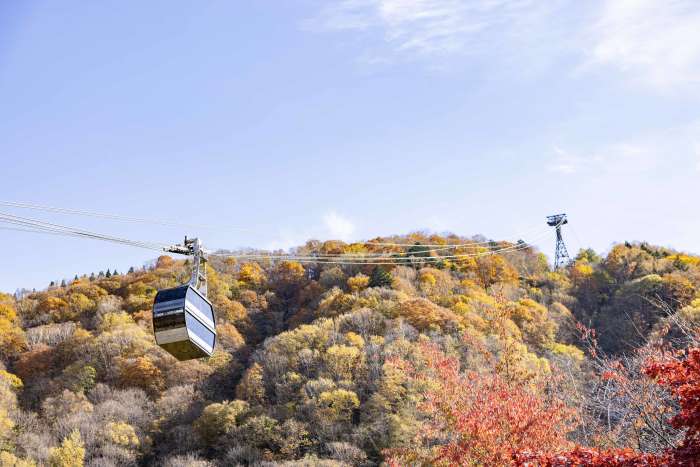

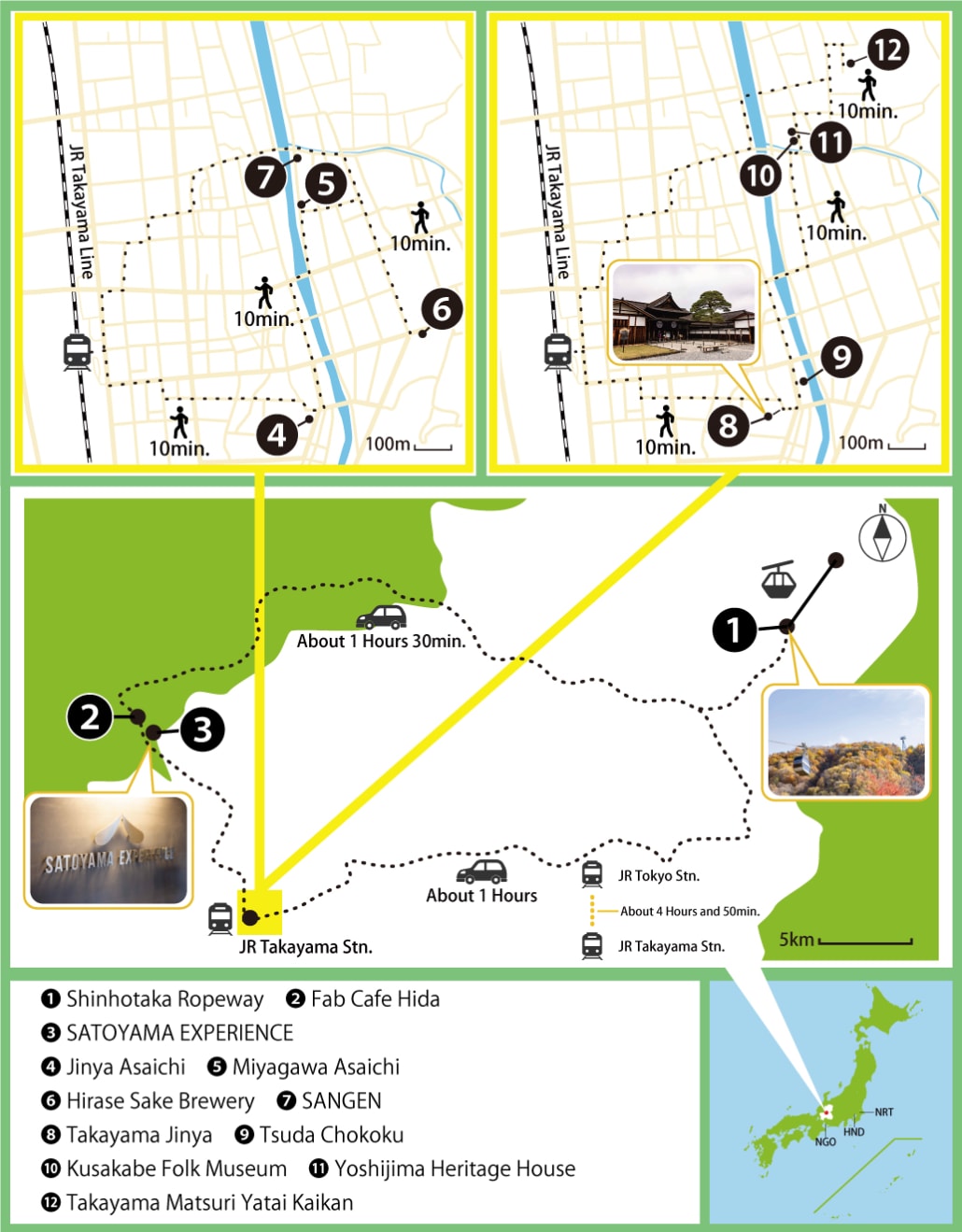
My exploration starts in Okuhida on the Shinhotaka Ropeway, where cable cars carry visitors more than a thousand meters into the Hotaka Mountain Range. The first stage ascends to Nabedaira Kogen Station, where I transfer to a distinctive double-decker gondola. Thanks to its innovative design, everyone can enjoy the panoramic views—not just those lucky enough to board first.


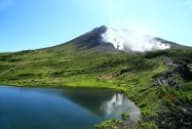
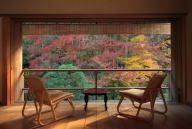
As we rise, the scenery shifts from rich autumn hues to snow-covered ridges. At the summit, an observation deck offers breathtaking views of the Northern Alps. This area also serves as the trailhead for hiking, nature walks and winter snowshoe tours.
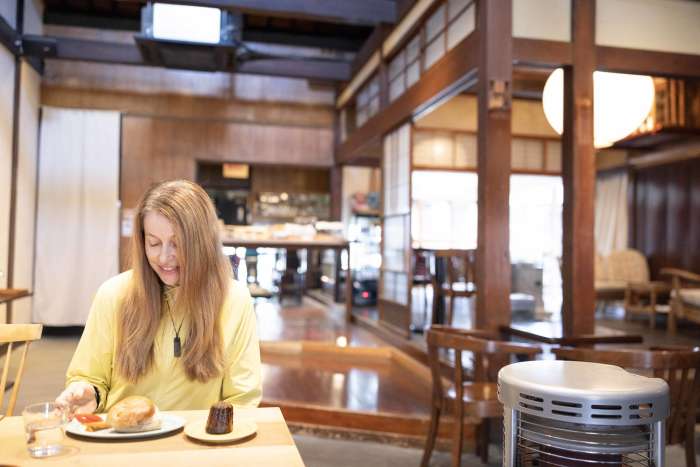

I’m feeling hungry after being out in the crisp mountain air. There are dining options along the ropeway, but I head down to have lunch in the charming castle town of Furukawa, where white-walled storehouses line the central streets. FabCafe Hida is a creative hub inside a renovated kominka farmhouse that once served as both a sake brewery and a woodworking studio. The café dishes up hearty fare made with local produce, and I choose a delicious bagel sandwich and soup set.
After lunch, I join a mountain bike tour to explore the satoyama—the rural landscape where villages, farmland and forest converge, supporting communities that have lived in harmony with nature for generations.

I meet with Ayato Saito, a guide from the first of two local companies who are showing me around Hida. Originally from Fukushima Prefecture in northern Japan, Ayato was drawn to the region by tourism job opportunities but stayed for other reasons. “The air is so fresh here!” he says. “I also love the warmhearted people and the relaxed lifestyle.”


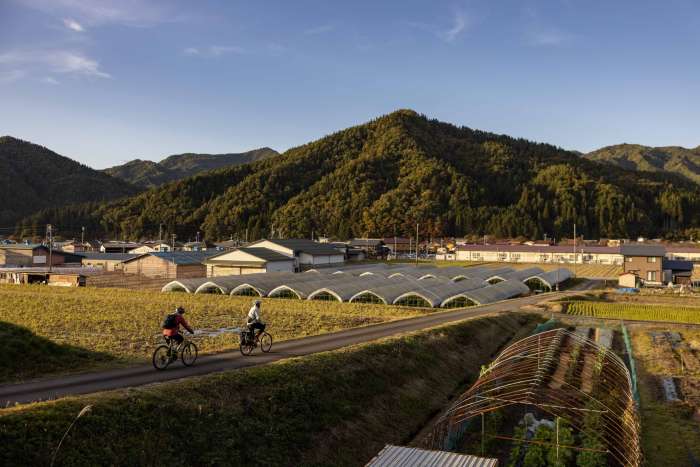

After a quick test ride, we cycle into the open countryside past lush rice fields, traditional farmhouses and shrines nestled among towering trees. We move at a relaxed pace—it’s the journey, not the destination. Ayato indulges me with a photo stop at a lovely red bridge over the sparkling Araki River. We also pause at a natural spring, where locals collect water for cooking and making tea. Drinking the cool, clear spring water, as people here have done for generations, makes the connection to the land feel immediate and real.
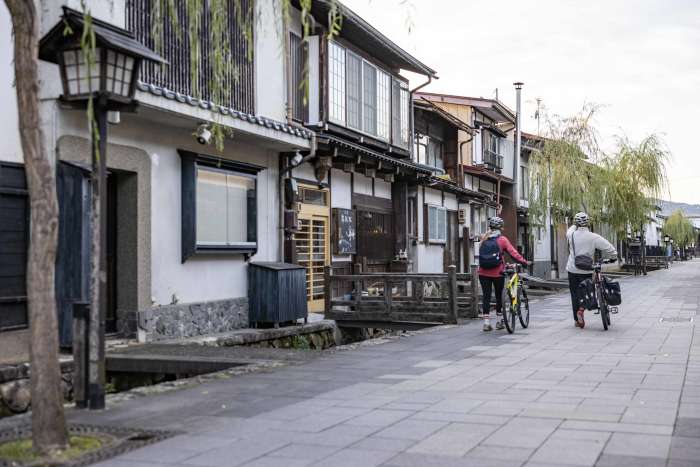

By the end of our 17-kilometer ride, I have a clearer sense of how life here is tied to the land. Spending the first day cycling through the countryside has been both refreshing and grounding, deepening my understanding of the region’s diverse landscapes and lifestyles. I check in to my hotel in downtown Takayama and head to bed early, ready for tomorrow’s activities.
Day 2

Guides from the second company are leading the exploration for the next two days. A visit to the Jinya-mae Morning Market, one of two daily markets in Takayama, is a wonderful introduction to Hida’s food culture. My guide is Misa Kono, a chef who sources many of her ingredients here. “Everything is grown by the producers themselves,” she says. “It shows how strongly this community values a direct connection between growers and consumers.”


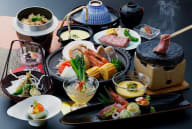
Hida Beef may be Takayama’s best-known specialty, but to my vegetarian delight, Hida offers an abundance of plant-based dishes as well. In a region with heavy snowfall, pickles were essential due to their long shelf life, and are just one example of how traditional practices continue to shape Hida’s culinary culture. Misa points out red radishes, a popular vegetable for pickling that is native to Japan. She also introduces me to the aromatic hoba leaf from the Japanese magnolia that is used in Hoba Miso: mushrooms and spring onions mixed with miso and gently heated on the leaf. The producers generously share both food samples and their personal stories, and I pick up some farm-fresh apples, homemade miso, nectarine jam and shiso pesto to take home.
Takayama has been producing sake for centuries, thanks to its pure spring water and high-quality rice. After lunch, I join guide and sake sommelier Mika Shiraishi to learn more.


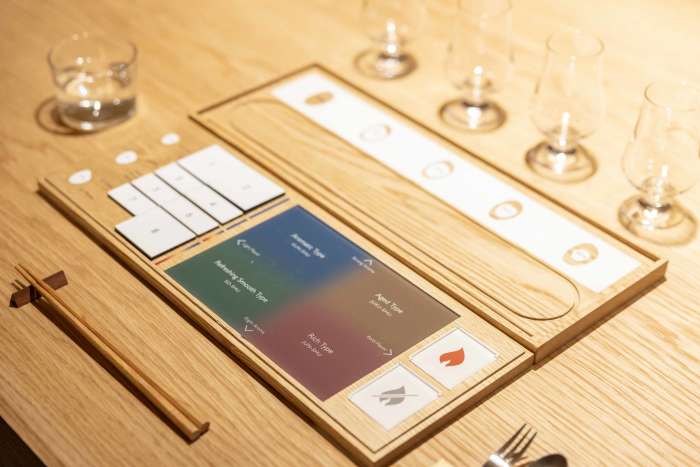


We begin with a tour of Hirase Sake Brewery, one of Takayama’s longest-running establishments, then move to SANGEN, a reservation-only private tasting room where Mika leads her sake workshops.
Even as a complete beginner, I feel I am in good hands. Mika points to the label on the first bottle. “What do you think this 60 percent means?” she asks. It’s not, she explains, the alcohol content—most sake is 13 to 15 percent—but the rice-polishing ratio: 40 percent of the grain has been milled away to reach the pure starch at its core. In its original brown-rice form, the outer layers contain nutrients that can affect sake flavor and hinder fermentation, so brewers remove them to reach the pure starch. The lower the polishing ratio, the more time, effort and cost involved.

Mika introduces me to a carefully curated selection of sake from across Japan, each with its own distinct flavor and story. Among them are brands from local breweries such as Hirase, which we visited earlier. As with wine tasting, I learn that aroma and aftertaste are key when trying sake. As I work my way through the varieties—paired with cheese and other small bites—Mika takes notes on my preferences and presents me with a personalized sake tasting card to use in the future. I come away with a clearer understanding of how to choose and enjoy sake with confidence.
In the evening, I visit an izakaya (Japanese pub), where I am greeted by the welcoming voices of cheerful staff and enticing aromas from the kitchen. The menu features regional specialties that have been enjoyed here for generations: Hida Beef, Hoba Miso and Pickle Steak (pickles sautéed with eggs, served on a hoba leaf).
Day 3


I spend my last day exploring the cultural heritage of Takayama with Mika. “One of Takayama’s greatest charms is its multilayered townscape,” she says. We begin at the Takayama Jinya, from which the morning market took its name. I had mistaken it for a shrine the day before, but it is actually the sole remaining daikan-sho (magistrate’s office) existent in Japan. When Hida came under the direct control of the Tokugawa shogunate in 1692, they appointed magistrates to rule the region from here.
Takayama prospered during the Edo period (1603–1868), and the Jinya offers fascinating insights into political and administrative life in an era when every role and responsibility was clearly defined and carefully regulated.


Mika and I walk back through the historic town center, visiting shops where craftspeople use time-honored techniques to create items for daily use. The surrounding mountains provide a rich variety of high-quality timber, and have supported Hida’s woodworking traditions for 1,300 years. We stop to watch an Ichii-Ittobori artisan carve a delicate figurine from yew wood with a handheld chisel. Another prized craft is Hida Shunkei, a lacquerware technique that showcases the natural beauty of the wood grain.
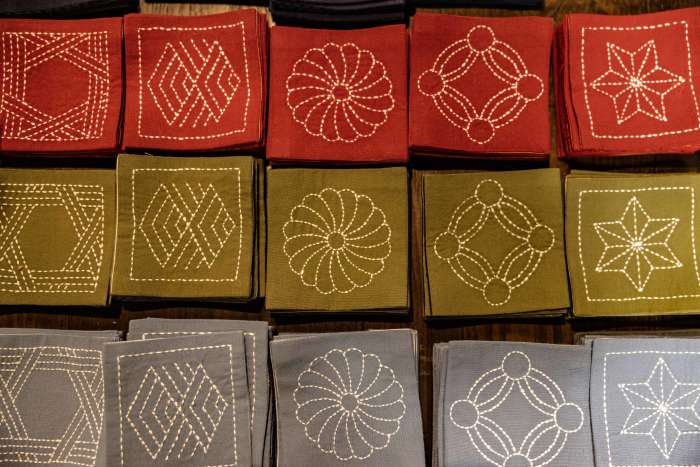

There are colorful textile arts, too. Durable and visually striking, Hida Sashiko is a form of hand-stitched embroidery used on noren curtains, bags and clothing.
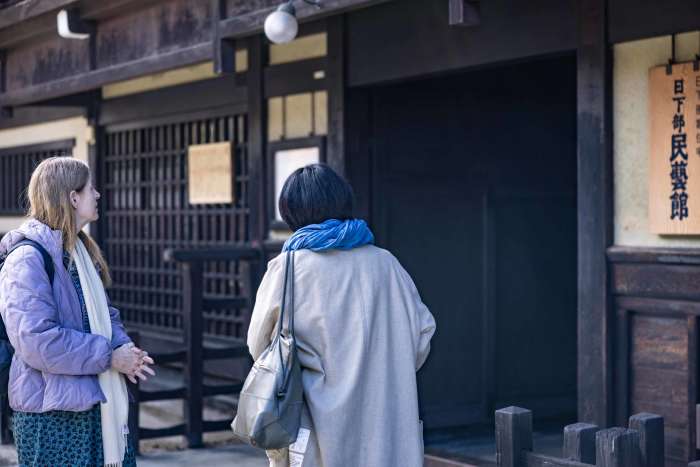


In the afternoon, we visit two beautifully preserved historic residences of prominent Takayama families. The Kusakabe Folk Museum, constructed in 1879 for the Kusakabe family by master carpenter Jisuke Kawajiri, embodies the best of Edo-period craftsmanship alongside emerging Meiji period (1868–1912) techniques. Kawajiri paid meticulous attention to every aspect of the design, from the massive exposed beams that greet visitors in the entrance down to the interior details, such as the intricately carved ranma (transoms).
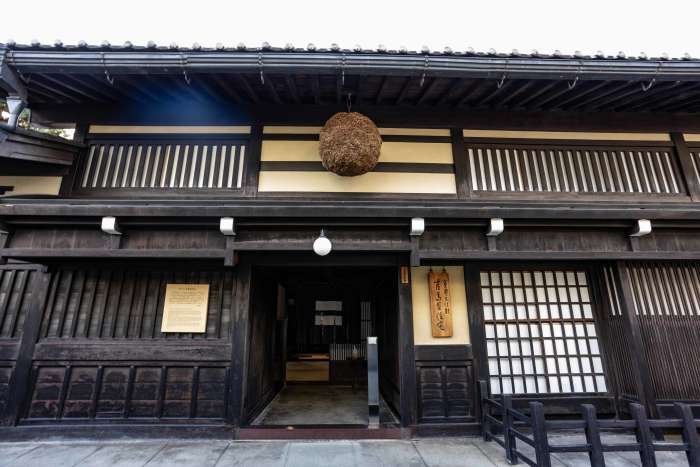


Next door is the Yoshijima Heritage House, which was rebuilt in 1907 following a great fire two years earlier. The Yoshijima family were engaged in the silk trade, finance and sake brewing. Its gracious, restrained aesthetic feels distinctly different from the bold and open design of the Kusakabe residence. A display of works by celebrated sumi ink artist Toko Shinoda, a distant Yoshijima relative, is a delightful surprise.
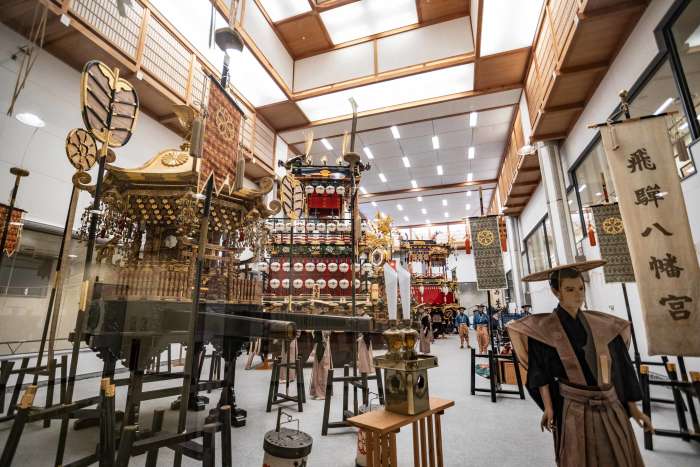

Before heading back to Tokyo, I stop by the Takayama Festival Floats Exhibition Hall. Visiting Takayama during the Spring (April 14–15) or Autumn (October 9–10) Festivals is an unforgettable experience, but seeing some of the magnificent floats up close is the next best thing After hearing the stories of Hida’s artisans and seeing their work firsthand, I’ve come to understand how the region’s natural surroundings sustained these traditions—and how their work, in turn, shaped daily life and customs.
When I travel, I usually pack as much as I can into each day, moving quickly and covering a lot of ground. That has always felt like my kind of “adventure.” Now I’m heading home with a different understanding of what adventure can mean. Each day here has built on the one before, revealing a fuller picture of the region.
I think about the small personal challenges—trying multiple varieties of sake, listening to stories of magistrates, artisans and merchants, letting guides lead the way and resisting the urge to rush. Through these moments, I have gained new perspectives.
What stays with me most are the people: the farmers proudly sharing their produce; the craftspeople carrying cherished techniques into the future; the docents safeguarding Hida’s precious historic buildings. And, of course, the knowledgeable guides who came here for work but discovered so much more in this region they now call “home.” Their passion filled in the gaps my fast-paced approach often leaves behind.
More than anything, my time in Hida has reminded me that sometimes the real adventure is not going farther, but going deeper.
Links
M&Company Inc.(Guiding and Tour Coordination)