




Before You Go: What to Know About Bears in Japan’s National Parks
The national parks include many areas that are active bear habitats


Before You Go: What to Know About Bears in Japan’s National Parks
The national parks include many areas that are active bear habitats
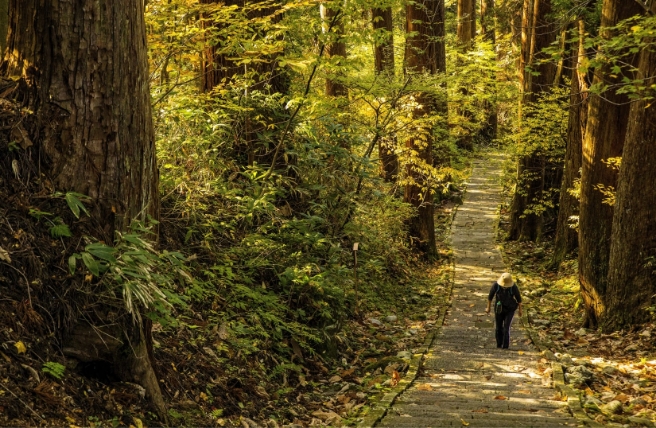
When we visit national parks, we’re entering the habitat of wild animals, including bears. While bears naturally try to avoid contact with humans, unexpected encounters do occur and can lead to dangerous situations for the unprepared.
To safely enjoy Japan’s national parks, it’s essential to have a basic understanding of bears:
① Ecology: Where bears live and how they behave.
② Prevention: What rules to follow to avoid encounters.
③ Emergency Response: What to do if you see or encounter a bear.
This page provides visitors to Japan’s national parks with easy-to-understand information on bear behavior, safety tips, and emergency protocols. Please review the information before arriving to ensure a visit that’s safe, respectful of nature, and supportive of the coexistence of humans and wildlife.
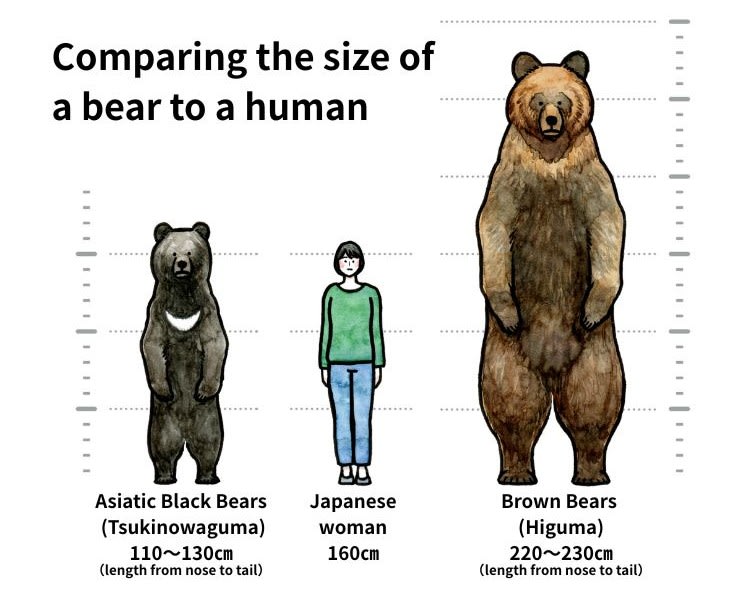
Bears are among Japan's largest terrestrial mammals. Asiatic black bears can be found in Honshu and parts of Shikoku, while brown bears inhabit Hokkaido. While timing varies by regional climate, bears are generally active from March to November and hibernate from December to February.
Found on the islands of Honshu and Shikoku, these large forest-dwelling mammals live in rich natural environments teeming with diverse wildlife. Crescent moon-shaped chest markings and temperaments vary from bear to bear. Asiatic black bears are omnivorous, primarily eating grasses and tree nuts and fruit, but they also consume insects as part of a diet that changes seasonally. They are found at different elevations depending on the season.
Brown bears are widely distributed across the northernmost main island of Hokkaido and can be black or reddish-brown, occasionally mixed with gray and ocher. Like the Asiatic black bear, brown bears are omnivorous, with a diet that changes by season but which centers on grasses, tree nuts and fruit, and insects. Home ranges vary, with females roaming from several to several dozen square kilometers of terrain and males from several dozen to over one thousand square kilometers.
Obihiro City official website: "Caution: Brown Bear Activity"
Hidaka Town official website: "Please be aware of the presence of brown bears"
Biratori Town official website: "Bear sighting information"
Niikappu Town official website: "Niikappu Town Brown Bear Sighting Information" (Japanese only)
Urakawa Town official website: "Please be aware! There have been bear sightings."
Samani Town official website: "Beware of Brown Bears!!" (Japanese only)
Shinhidaka Town official website: "Information on Bear Sightings"
Shimizu Town Official Website: "Administrative Information"
Memuro Town official website: "Measures Against Wildlife Damaging Agricultural Crops"
Nakasatsunai Village official website: "Brown bear information"
Taiki Town official website: "Brown bear sighting information"
Sapporo City official website: "Measures against brown bears"
Tomakomai City official website: "Brown bear sighting information"
Chitose City official website: "Brown Bear Information"
Noboribetsu City official website: "Beware of brown bears."
Eniwa City official website: "Brown bear sighting map 'Higuma Map'"
Date City official website: "Bear"
Niseko Town official website: "Niseko Town Bear Appearance Information"
Makkari Village official website: "Brown bear sighting information"
Kimobetsu Town official website: "Information about brown bear appearances"
Kyogoku Town official website: "Brown bear sighting information"
Kutchan Town official website: "Harmful Birds and Animals (Information on Sightings of Brown Bears, etc.)"
Shiraoi Town official website: "Animals and Pets" (Japanese only)
Tochigi Prefecture official website: "Bear Appearance (Sighting) Status" (Japanese only)
Gunma Prefecture official website: "About black bear information"
Fukushima Prefecture official website: "Fukushima Prefecture Asian Black Bear Sighting Information" (Japanese only)
Tochigi Prefectural Police official website: "Tochigi Prefectural Police Public Map" (Japanese only)
Saitama Prefecture Asian Black Bear Appearances Map (Japanese only)
Tokyo Metropolitan Government Asian Black Bear Sighting and Related Information Map – "Tokyo Kumappu" (Japanese only)
Yamanashi Prefecture official website: "Asian Black Bear Appearances Map" (Japanese only)
Nagano Prefecture official website: "Asian Black Bear Information Map" (Japanese only)
Nagano Prefecture official website: "Asian Black Bear Countermeasures: For Residents and Visitors to Nagano Prefecture" (Japanese only)
Nagano Prefecture official website: "Asian Black Bear Information Map" (Japanese only)
Gunma Prefecture official website: "Asian Black Bear Information" (Japanese only)
Niigata Prefecture official website: "Wildlife Damage Countermeasures Support Center" (Japanese only)
Nagano Prefecture official website: "Asian Black Bear Countermeasures: For Residents and Visitors to Nagano Prefecture" (Japanese only)
Nagano Prefecture official website: "Asian Black Bear Information Map" (Japanese only)
Niigata Prefecture official website: "Wildlife Damage Countermeasures Support Center" (Japanese only)
Nagano Prefecture official website: "Asian Black Bear Countermeasures: For Residents and Visitors to Nagano Prefecture" (Japanese only)
Nagano Prefecture official website: "Asian Black Bear Information Map" (Japanese only)
Toyama Prefecture official website: "Preventing Personal Injury Caused by Asian Black Bears" (Japanese only)
Gifu Prefecture official website: "Bears (Asian Black Bears) Inhabiting Gifu Prefecture" (Japanese only)
Ishikawa Prefecture: "Preventing Personal Injury Caused by Asian Black Bears" (Japanese only)
Toyama Prefecture: "Asian Black Bear Appearance Information Map: Kumappu" (Japanese only)
Fukui Prefecture: "Fukui Bear Information" (Japanese only)
Gifu Prefecture: "Prefecture-wide Integrated GIS Gifu" (Japanese only)
Kyoto Prefecture official website: "Bear Appearance Information Map" (Japanese only)
Hyogo Prefectural Police official website: "Safety and Security Map" (Japanese only)
Toyooka City official website: "Toyooka City Bear Sighting Map"
Tottori Prefecture official website: "The bear infestation situation (Beware of bears!)" (Japanese only)
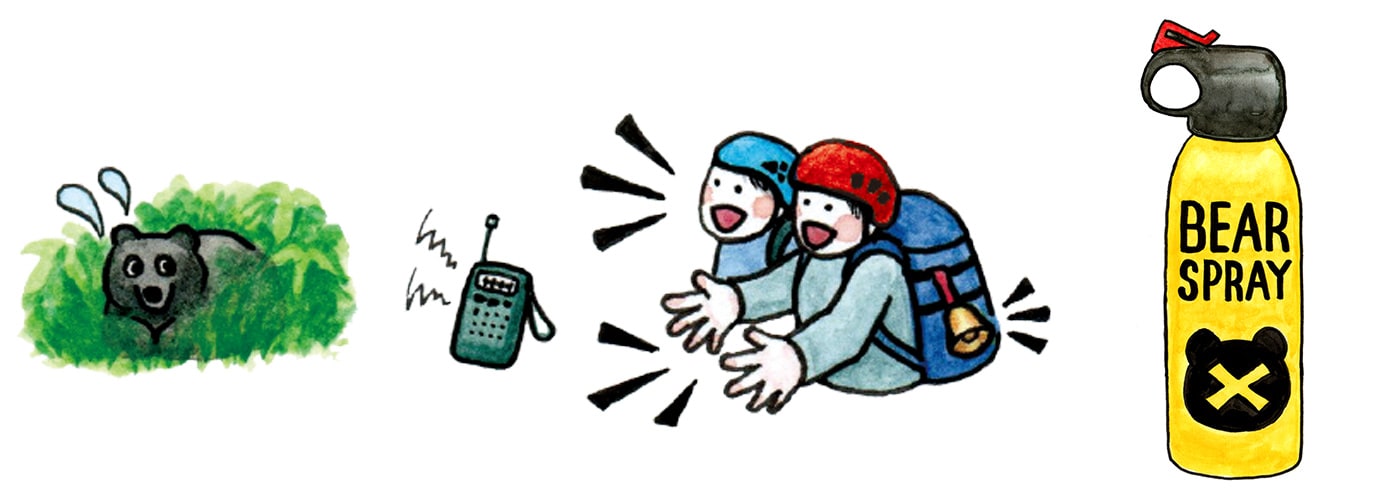
Startling or agitating a bear is extremely dangerous and can trigger an attack.
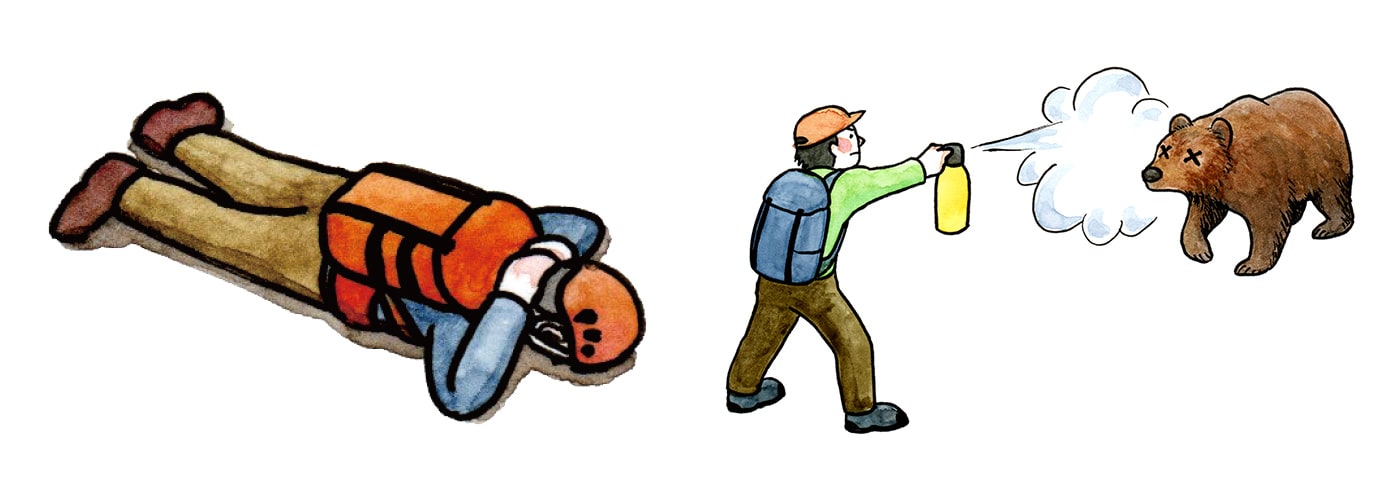
Bears may instinctively attack to protect themselves or their young. If you are considering carrying bear spray, we strongly recommend watching this instructional video on its proper use.
Illustration : Satoko Kuriya