


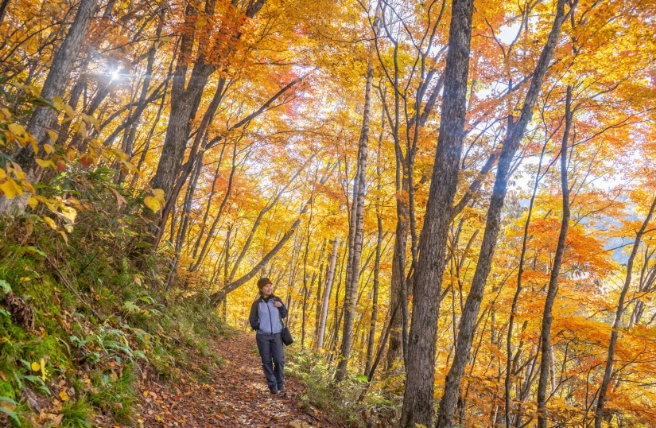


A Land Forged by Fire and Water
The Towada-Hachimantain National Park stretches across the three northern prefectures of Aomori, Akita, and Iwate. The park, a landscape shaped by volcanoes and nourished by lakes and streams, is divided into two broad areas. The Towada-Hakkoda region is famous for the sapphire-blue Lake Towada, the mossy, waterfall-lined Oirase Gorge, and the towering Hakkoda Mountains. The Hachimantai region is known for its volcanic plateaus, crater ponds, steaming earth, and expansive marshlands Together, these regions form one of Japan’s most atmospheric blends of primeval forests, serene marshlands, and dynamic geothermal terrain.
Volcanic forces shape everything here: the mountains, the vegetation, the snow, and especially the hot springs. Dotted throughout the forests, valleys, and mountain slopes are some of Japan’s most storied onsen villages, many of which have served as therapeutic toji retreats for centuries. This deep-rooted hot-spring (onsen) culture, preserved and revitalized in this region, makes Towada–Hachimantai National Park one of the most rewarding places in Japan to experience the true spirit of hot springs.
Centuries-old Tradition of Therapeutic Healing
Out of approximately 3,000 onsen resorts in Japan, only 80 are designated as National Hot Spring Health Resorts (Kokumin Hoyo Onsenchi) by the Ministry of the Environment. These are locations recognized for the therapeutic qualities of their waters and the restorative power of their natural surroundings—and their abundant water flow. Towada-Hachimantai National Park contains several of these certified locations, as the park’s geological location results in a remarkable diversity of mineral compositions.
Several things set this park apart, including the setting. Many of the onsen here are nestled deep in beech forests, perched high on remote mountain passes, or tucked beside steaming fumaroles. The sound of wind through the trees, the distant rumble of geothermal activity, and even the calming silence of falling snow all become part of the bathing experience. These environments have helped preserve a living tradition of therapeutic retreat, where the goal is not quick relaxation, but slow, holistic renewal.
Whether staying in a rustic wooden lodge, a historic inn with shared kitchens, or a small mountain ryokan surrounding by mist, visitors can immerse themselves in both nature and a centuries-old culture of healing.

The snow-blanketed entrance to Tsurunoyu, the oldest inn in the Nyuto hot spring resort, which dates back over 300 years. ©Ryuma Kanaya
The Custom of Toji, Then and Now
Toji refers to the long-practiced Japanese custom of staying for days or even weeks at hot-spring resorts as a way of restoring health. Historically, farmers and fishermen would travel long distances—with bedding and food carried on their backs—to bathe multiple times a day in mineral-rich waters believed to ease fatigue, injuries, and chronic illness. Toji was not considered a luxury pastime. It was essential self-care for people who worked physically demanding jobs.
A tojiba, or toji inn, functioned as a temporary community. Guests cooked their own meals, chatted in communal kitchens, and shared the rhythm of daily bathing. Bonds formed naturally in the warm, humid spaces of the bathhouse, where people of all backgrounds could relax in an atmosphere of mutual respect.

The kitchen facilities at Goshogake Onsen, where visitors cook their own meals according to toji tradition. ©Masato Sakuma
Although the number of traditional toji inns has declined nationwide, the northern region, especially Towada-Hachimantai National Park, remains a bastion of the culture. Inns here continue to offer long-stay plans, healing-oriented facilities, and historic bathing traditions—sometimes including konyoku, or mixed bathing.
Modern toji culture has also evolved. Many inns provide wellness programs, guided nature walks, consultation rooms for bathing guidance, even communal spaces that echo the atmosphere of the past. While therapeutic bathing remains central, the experience now includes mental well-being, connection to nature, and slow living.
Communal Mixed Bathing Heritage and Natural Therapy
Mixed bathing was once commonplace in Japan, but has gradually diminished due to shifting lifestyles and privacy concerns. In this national park, however, it remains an honored cultural tradition—most famously at Sukayu Onsen’s Sennin-buro, or “Bath of a Thousand.” Recognizing the need to adapt while preserving a beloved heritage, the Ministry of the Environment and Sukayu Onsen launched initiatives such as Yuamigi (designated modesty garments) Day, in an attempt to make mixed bathing more accessible to newcomers and international visitors. Sukayu is now one of a few inns that offer yuamigi rentals, while others have introduced women-only hours, or semi-private mixed spaces. This thoughtful blending of tradition and comfort allows visitors to appreciate the communal spirit of Japanese bathing culture while feeling safe and respected.

The large, communal Sennin-buro (Bath of a Thousand) at Sukayu Onsen features four baths with four different water sources.
As the hot springs deep in the mountains are located along rivers, beside lakes, or near mountaintops, open-air baths often blend seamlessly with the landscape. Beech leaves rustle overhead, steam rises against volcanic slopes, or snowflakes fall quietly around bathers in winter’s yukimi rotenburo (outdoor snow-viewing bath). After hiking or simply exploring the forests and marshlands, few experiences are as soothing as soaking in warm, mineral-rich waters that have flowed from the earth for centuries.
At many inns, the healing experience continues at the dinner table, where guests enjoy regional dishes crafted from local vegetables, river fish, mushrooms, and mountain herbs.

Visitors can experience volcanic forces up close with a walk on the Goshogake Nature Research Trail.
Notable Toji Retreats
Sukayu Onsen in Aomori Prefecture is one of Japan’s most famous toji retreats, and among the first designated as a National Hot Spring Health Resort. Known for its strongly acidic waters, it maintains an Onsen Therapy Consultation Room, staffed by professionals who advise visitors on bathing schedules and health benefits. The inns centerpiece is the iconic Sennin-buro (“Bath of a Thousand”), a large communal bath built entirely of cypress, with four different water sources feed a vast, steam-filled hall. Generations of guests have bathed together here, creating a truly communal culture. Directly behind the inn, walking trails lead into the beech forests and wetlands of the Hakkoda Mountains, making this inn a perfect base for hiking and sightseeing.
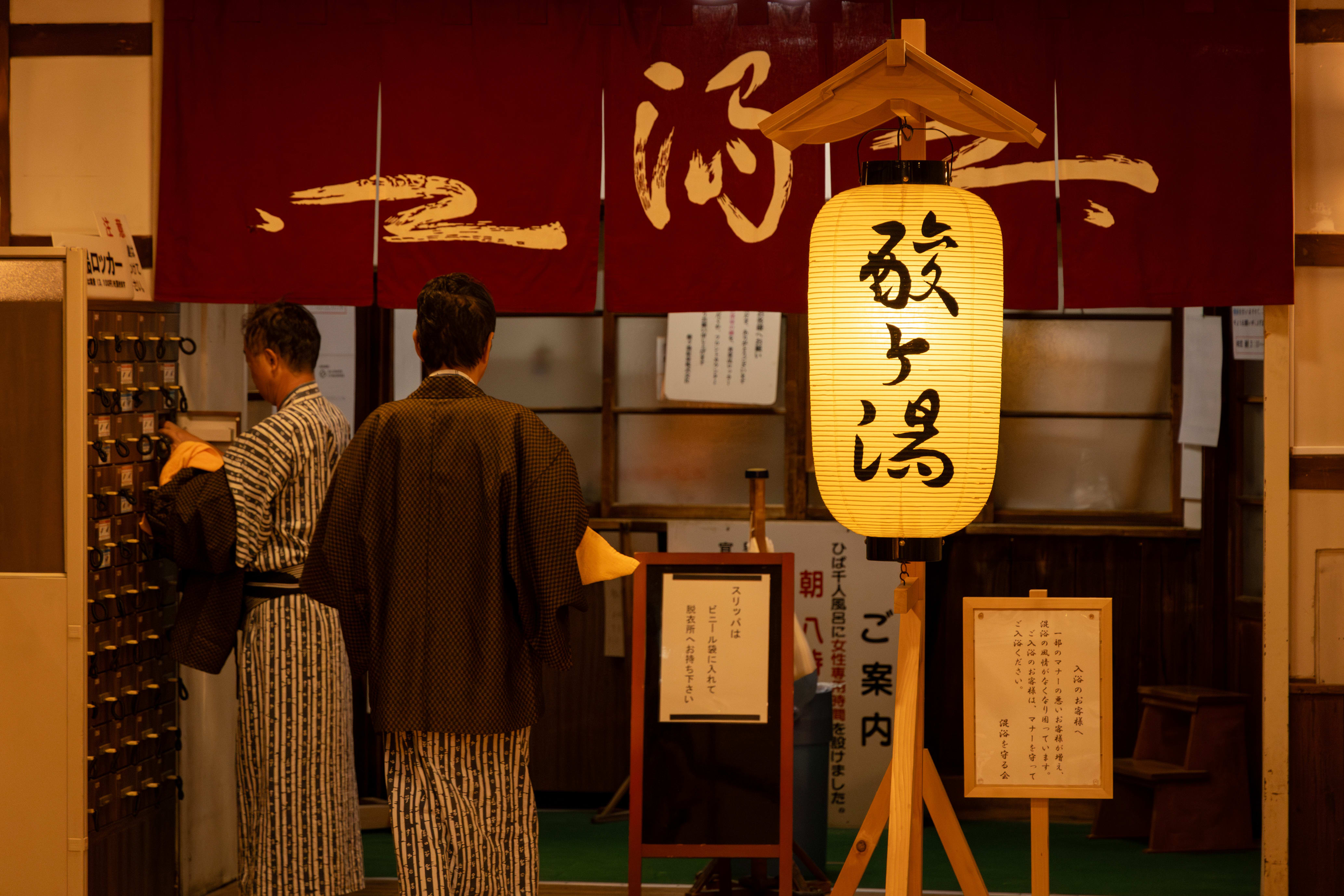
The entrance of the mixed-gender Sennin-buro (Bath of a Thousand) at Sukayu Onsen. ©Masato Sakuma
Goshogake Onsen in Akita Prefecture is a living study of volcanic activity. The inn draws on geothermal heat for the unique feature known as ondoru. This is the practice of lying down on the heated ground caused by geothermal activity. It is an ingenious use of the Earth’s energy that has been part of daily life here for centuries, and is said to offer benefits similar to soaking in hot spring waters. The Goshogake Nature Research Trail just behind the inn leads through a dramatic “hellscape” of steam vents, boiling mud pools, and active fumaroles. Guests can experience both the raw volcanic forces beneath their feet and the soothing waters that rise from them.

The snowy landscape of Goshogake Onsen emphasizes its secluded location. ©Masato Sakuma
Nyuto Onsenkyo in Akita Prefecture is a cluster of seven secluded, historic inns, each with its own spring source and mineral qualities. With the Yumeguri-cho pass, visitors can soak in multiple baths, from rustic mixed-gender pools to elegant wooden tubs. Walking paths link the inns, allowing visitors to enjoy peaceful strolls through ancient beech forests. Nyuto’s oldest inn, Tsurunoyu, dates back over 300 years and remains one of Japan’s most atmospheric toji destinations.

Visitors can purchase the Yumeguri-cho pass, which allows them to visit all seven hot springs of Nyuto Onsen.
© Nyuto Onsenkyo Cooperative Association
Fukenoyu in the Akita-Hachimantai area is known for its rustic open-air baths set directly beside an active fumarole zone—a dramatic setting where steam rises from the earth in swirling plumes. It is located near the Hachimantai Aspite Line and is an ideal stop after trekking on the plateau. The facility closes in winter due to heavy snowfall, a testament to its remote, untouched location.
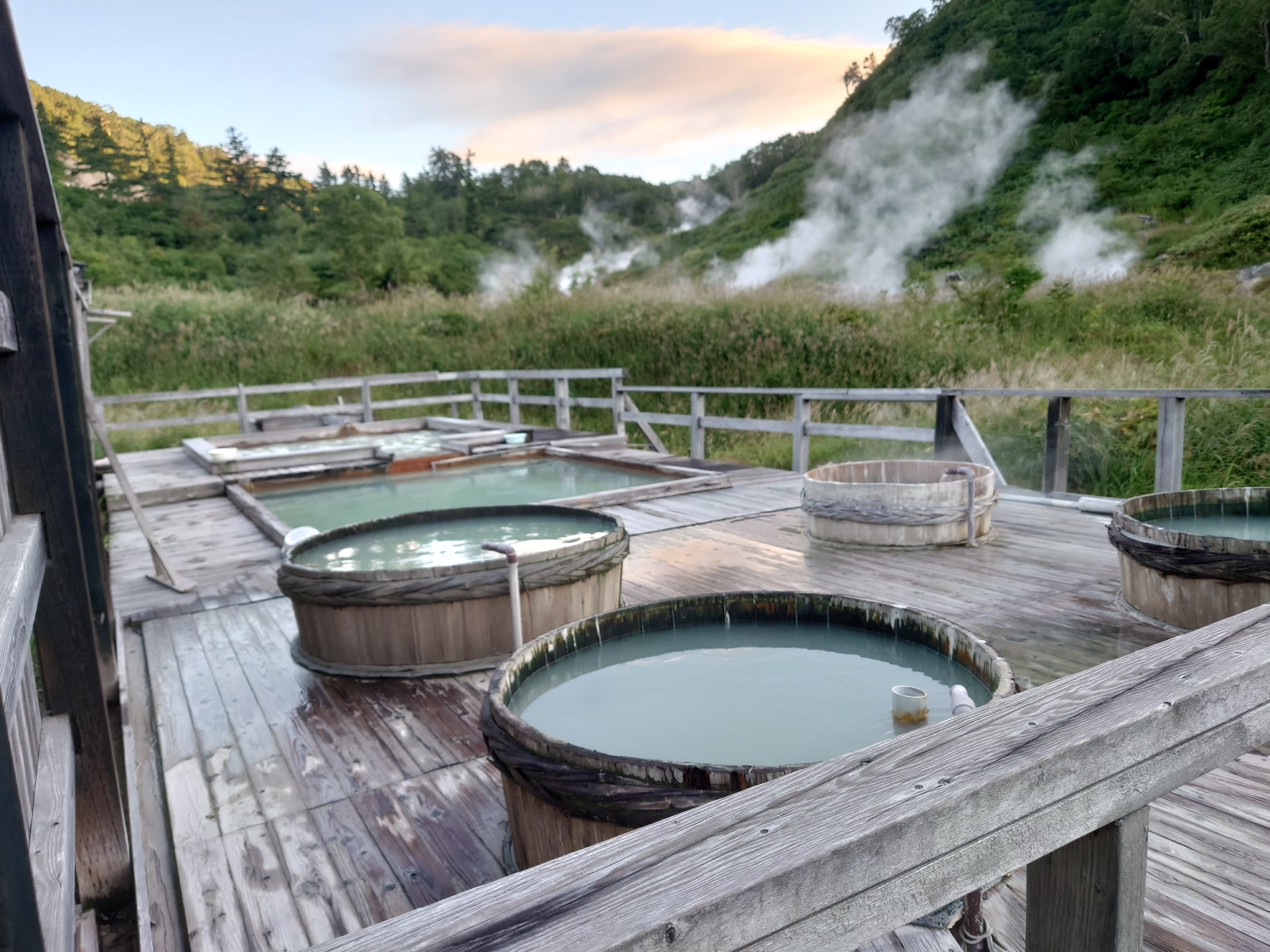
The outdoor barrel baths at Fukenoyu, the oldest hot spring in the area.

The rare emerald-green hot-spring waters of Kunimi Onsen, located in the Iwate Prefecture area of Towada-Hachimantai National Park. Thi onsen resort serves as a base for hiking the nearby mountains.
With thoughtful stewardship and open-hearted adaptation, the hot springs of Towada-Hachimantai National Park will continue as a location of inspiration and welcome, just as they have long done for those who have come seeking rest and recuperation in a land where nature, tradition, and community come together.
Things to Know When Enjoying Toji Hot Springs
A respectful and mindful approach ensures a safe, pleasant experience.
- Check the suitability for your health condition. Mineral compositions vary greatly. Guests with medical conditions should confirm guidelines prior to bathing and before drinking.
- Pace yourself. Mineral-rich waters can feel intense for some people. Avoid excessively long or too frequent baths.
- Stay hydrated. Drink plenty of water before and after bathing to avoid dehydration.
- Cleanse before bathing. Rinse thoroughly to keep the shared baths clean and pleasant.
- Respect shared spaces. In toji-style lodgings, communal kitchens and lounges rely on courtesy and cooperation.
- Observe proper etiquette in mixed baths. Follow posted guidelines; consult the inn in advance regarding the use of modesty garments; and be mindful of others’ comfort.