






























Travel Logs Tokyo’s Wild West: Exploring Okutama’s Nature, Food and Faith


Journey Theme : A journey to learn about mountain worship through a temple stay, and to feel the deep connection between nature and local residents.
Beyond the soaring skyscrapers and milling crowds of central Tokyo, the Okutama region is a wilderness of forests and mountains that stretches along the capital’s western reaches. This is Tokyo’s lesser-known side: a vast natural area that can be reached in two hours or less by train from Shinjuku, making it one of the city’s most accessible escapes.
Okutama has something for every kind of outdoor enthusiast—from forest bathing, hiking and fishing to camping, rock climbing and mountain asceticism. Named after the great Tama River, the source of which is found on Mt. Kasatori (1,953m), a large part of it lies in the Chichibu Tama Kai National Park, 1,200 square kilometers of misty peaks, quiet forests and sparkling gorges. At its heart is Lake Okutama, a reservoir formed by the Tama River, known for its serene vistas.
However, the true value of this region extends beyond its scenic beauty. In some ways, it reflects the hopes and wisdom of the people of ancient Japan. At the heart of its traditional culture stands Mt. Mitake, revered since ancient times as a sacred center of mountain worship (shugendo). Deep within the misty forests, belief in wolf guardians that protect crops endures, while the culture of shukubo pilgrim lodgings is still linked to village life.
I’ve been exploring Okutama for more than 25 years, and have scaled its mountains and ventured into the depths of its limestone complex stretching more than a kilometer. Yet no matter how often I visit, there’s always something new to discover.
My journey this time was about more than just exploring the land. Using an atmospheric shukubo as our base, we paid our respects in the inner sanctum of Musashi-Mitake Shrine, took lessons on making konnyaku (konjac jelly), and went kayaking on the Tama River. We savored the flavors of local products, including wasabi, ayu sweetfish, and sake. Each of these experiences was new to me, and each highlighted the deep connection between the people of Okutama and the spectacular natural environment that surrounds them.
Day 1


We arrived at the edge of Okutama and met our guides, Natsumi Murano and Tatsuya Morooka, at Mitake Station on the JR Ome Line west of Tachikawa. From there, we drove to the Mitake Tozan Railway, a funicular that carried us 424 meters up the slopes of Mt. Mitake. As we climbed at a steep 25-degree angle, the trees seemed to close in and the air grew misty. It felt as though we were entering another world.


At the top station, I came across a plaque dedicated to mountaineer Junko Tabei (1939–2016), the first woman to summit Mt. Everest. When I interviewed her in 2013, she told me that Mt. Mitake was the first mountain she ever climbed—making this a fitting spot for the start of my adventure. The quiet hamlet of Mitake—perched at 831 meters—is like a small Shangri-La, home to flying squirrels and blue-and-white flycatchers. About 20 inns here accommodate pilgrims and other travelers visiting Musashi-Mitake Shrine, a Shinto sanctuary said to have been established in 91 BCE.
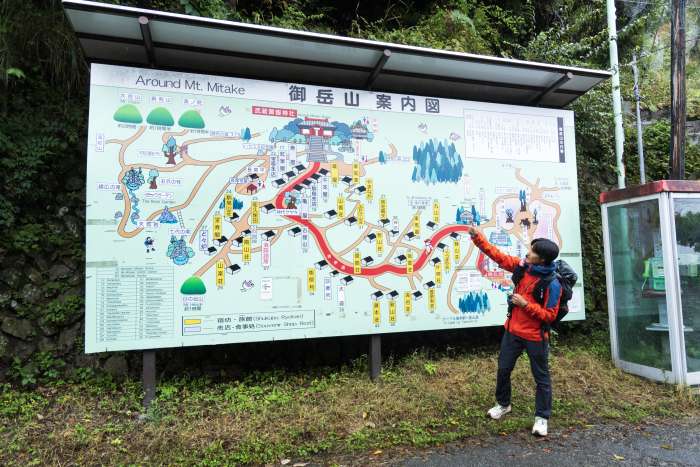


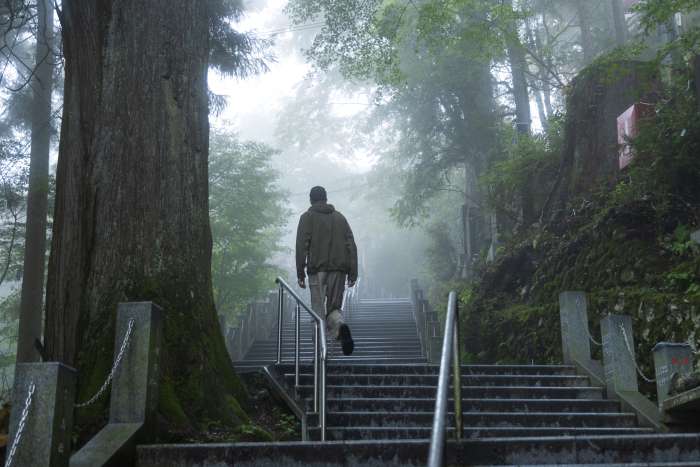
After dropping off our luggage at our inn, we walked up through the village to the shrine entrance. We performed ritual ablutions, bowed before the large torii gate, and began climbing the 330 steps.


I had climbed them several times before, but our guides pointed out something I had never noticed: carved into the steps are the faces of three demons. Tradition says that treading on these demons can drive away one's inner evils.


I also learned the story behind the large stone and concrete monuments lining the stairs. These were erected by groups of farmers and other shrine supporters from the Kanto region known as Mitake-ko who make regular pilgrimages, and maintain long-term relationships with the hereditary priests known as oshi. As Murano explained, the shrine is one of only two places in Japan that still perform an annual divination ritual using stag bones to predict the harvest—evidence of Mitake ancient history as center of agricultural faith. The shrine stands atop the mountain at 929 meters, far above the spire of Tokyo Sky Tree, the city’s tallest structure standing some 60 kilometers to the east.


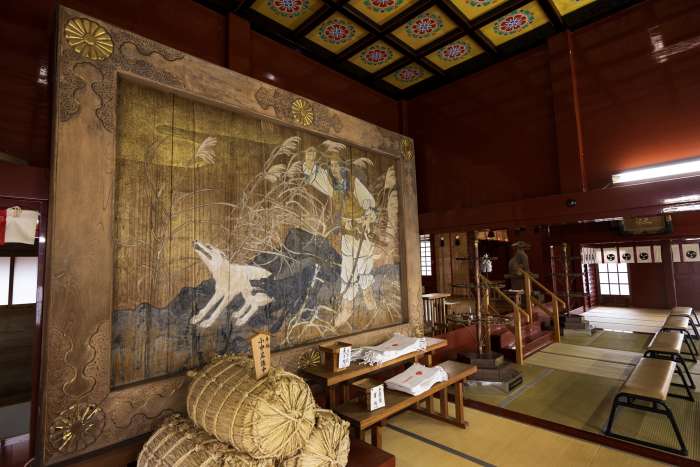
We were welcomed by a priest who recounted the shrine’s founding legend. Long ago, the warrior prince Yamato Takeru became lost in the mist while traveling in the mountains. A pair of wolves appeared and guided him to safety on Mt. Okunoin, where he is now enshrined. The wolves were enshrined at Musashi-Mitake Shrine as guardians called Oinusama. They are the object of believers’ prayers, and talismans featuring them can be seen on local buildings and vehicles. In the colorful Main Hall, decorated with paintings and statues of wolves, we took part in a purification ceremony and presented boughs of sacred sakaki (Cleyera japonica) as part of a ritual offering to the deity. I could sense the power of these rituals that have endured since ancient times.


After descending from the shrine, we enjoyed a refreshing lunch of soba and tempura vegetables at Nishisuzakibo Kuraya, a shukubo (temple accommodation) that has been hosting pilgrims for over 300 years.


The elderly innkeeper, an oshi who has lived in Mitake nearly his entire life, explained the relationship of mutual support between the Mitake-ko pilgrims and the village.

We ended the afternoon back at our lodging, Katayanagiso, where the okamisan (proprietress) taught us how to make konnyaku, a healthy jelly that has virtually no calories. The process was simple—boil, blend, mash and cool—and the results were surprisingly tasty.
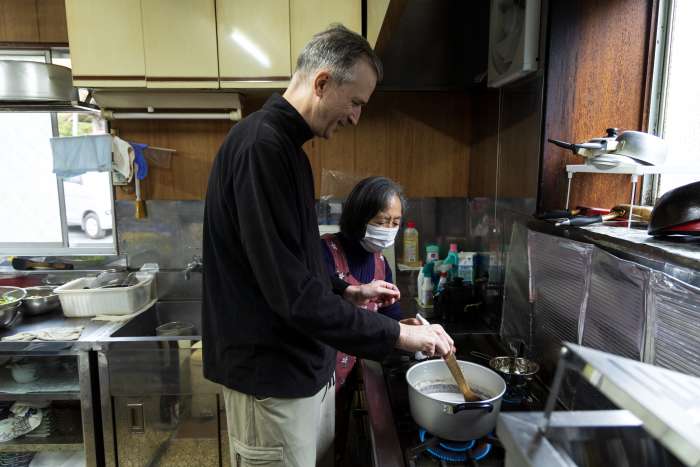

That evening, the jelly was served as konyaku sashimi, along with mountain greens, ginnan ginkgo nuts, grilled ayu sweetfish, and chestnuts covered in fried somen noodles. Enjoyed with local sake, the cuisine was an embodiment of the terroir. The beautiful presentation and delicate balance of tastes, aromas and textures was a full sensory and cultural experience.

Day 2
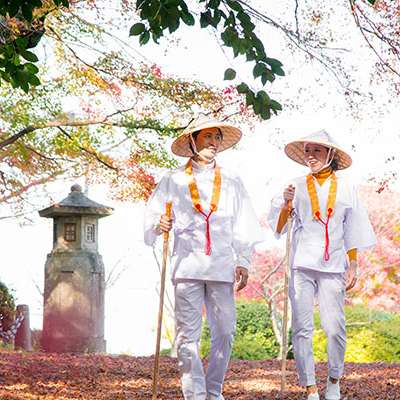
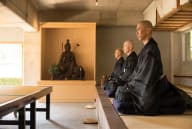
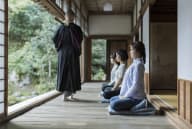
On our second day, we climbed to the shrine again for a morning prayer ceremony. In the Main Hall, I noticed a statue of Zao Gongen, a Buddhist deity also revered as a Shinto kami that is central to shugendo beliefs. Shugendo is a mountain-based tradition that combines esoteric Buddhist practices with ascetic training. Its practitioners, called yamabushi or shugenja, roam the peaks seeking spiritual discipline and special abilities. Dressed in white and blowing conch shells, yamabushi are striking figures who can sometimes be seen around Mitake.

“In mountain worship, kami and Buddhas are combined,” the master of the shukubo Kuraya told me. He explained that Japan was originally a land of kami, yet when Buddhism arrived, people chose a fusion of the religions instead of conflict. It is a philosophy of harmony that transcends boundaries, a rare example of people embracing spiritual differences.

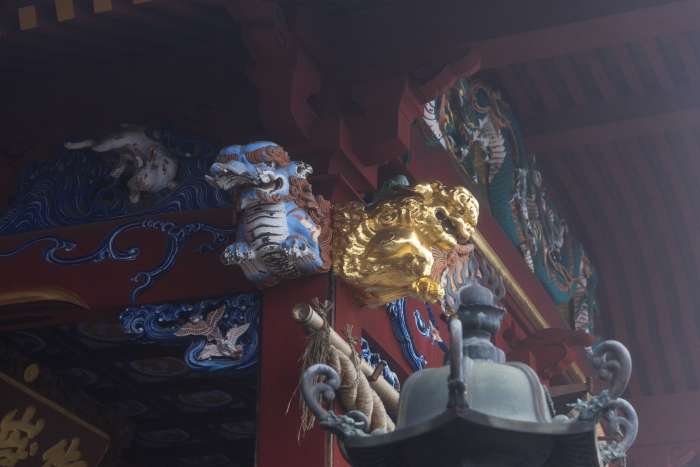
We returned to our inn for a traditional Japanese breakfast of fish, rice, and natto, then set off for some shugendo-style hiking of our own. Near the shrine stairway we found a trailhead and began walking toward Mt. Okunoin, the peak at the heart of Mitake’s legendary origins. During our first visit to the shrine, we had stopped behind the Main Hall at a spot where the view of Mt. Okunoin is perfectly framed by a torii gate and an offertory box—clear evidence of its sacred role in the local belief system.


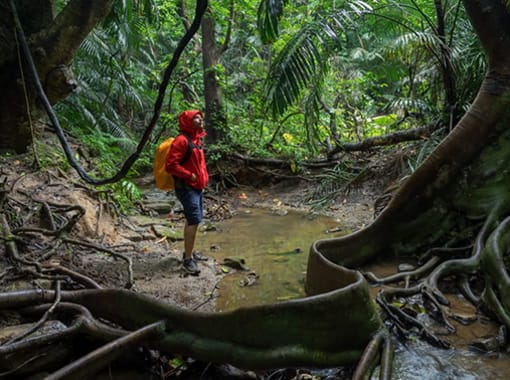
The mist was thick but the rain held off as we walked through strands of planted cedar and cypress and into the natural deciduous forest, exchanging tales about other adventures we’d had in Japan. As we paused near the summit, I noticed I was taking deeper breaths, a signal that I was embracing the peacefulness of the natural surroundings. I recalled a haiku I wrong long ago when ascending Mt. Kumotori:
Trail flows underfoot
climbing Cloudcatcher Mountain
a mind free of thought


After about an hour of easy walking and light climbing, we reached the 1,077-meter summit of Mt. Okunoin, where we paid our respects at a small shrine and posed for a group photo like seasoned alpinists. Our guides told us that some yamabushi spend the night on the mountain, and that festivals connected to the Musashi-Mitake Shrine are held there.


From the summit, one trail continues on to Mt. Nabewari (1,084 meters) and Mt. Otake (1,266 meters), but we descended a long ridge toward a stream below. Moisture in the air had turned spiderwebs in the bushes into jeweled nets, and along the way we spotted clusters of mushrooms, small land crabs, and a large toad.


After a quick bento lunch in a shelter by the stream, we reached Ayahiro Falls, a slender cascade framed by steep rock walls. This is where yamabushi practice takigyo, or waterfall meditation.

The setting felt like the perfect place for breathing in the negative ions prized by Japanese as natural tranquilizers. We then followed the trail downstream to an area of moss-covered boulders known as the Rock Garden It was a place of primeval beauty, like a scene from a Ghibli anime. Breathing in the moist air, I could feel nature’s power acting on me like a giant backrub. It was exactly the wellness experience my mind and body had been craving.


As the trail looped back to Musashi-Mitake Shrine, our guides pointed out the clear line dividing planted forest from natural woods, a legacy of a time when cedar was widely cultivated.

The final highlight was Tengu Rock, a large outcrop said to resemble the nose of a tengu, a mountain goblin from Japanese folklore. A bronze statue of a tengu stood atop it, surveying the forest below.


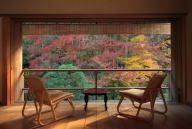
About five hours after we’d set out, we were back in the hamlet of Mitake, settling into Nanzanso, our cozy shukubo lodging for the night. We sunk happily into a restorative bath and feasted on a meal of grilled fish, mountain greens, tofu, persimmon and kurigohan, or rice topped with chestnut. I headed to bed with my body’s reset button firmly pushed.


Day 3
By 9:30 the following morning, we were descending the funicular to Takimoto Station, where we hopped in our car for a 15-minute drive up the Tama River to Lake Shiromaru, in the town of Okutama.

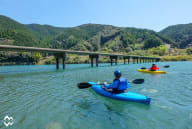
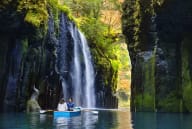
From there, we walked down the forested riverbank to Gravity, a boathouse and café tucked among the trees. Our guide, Megumi Goto, has been teaching kayaking there for 30 years. After giving us a lesson on how to handle and paddle a river kayak, she outfitted us with lifejackets and spray skirts, and we launched onto the lake.


I hadn’t kayaked for years, and at first found myself spinning like a top, but with a lighter touch on the paddle soon found my rhythm. Don't fight the water—stroke it gently.

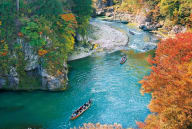
Although Lake Shiromaru is a narrow reservoir formed by the Shiromaru Dam, it lies in a valley carved out eons ago by the Tama River. Goto spoke of her deep affection for the river and explained that the steep surrounding mountains shield the lake from wind and waves, making it ideal for kayaking, canoeing and standup paddleboarding. Its smooth, jade-green surface—broken only by bubbles rising from the decomposing leaves below—perfectly mirrors the trees and sky. While I had hiked along, and swum in the Tama River many times, I was still astonished by the lake’s natural beauty.

Goto led us upstream, under a bridge and into a narrow canyon where rocky banks closed in. This, too, felt like a hidden world. We paddled past overhanging trees, dangling vines and brightly colored ducks perched on massive boulders.
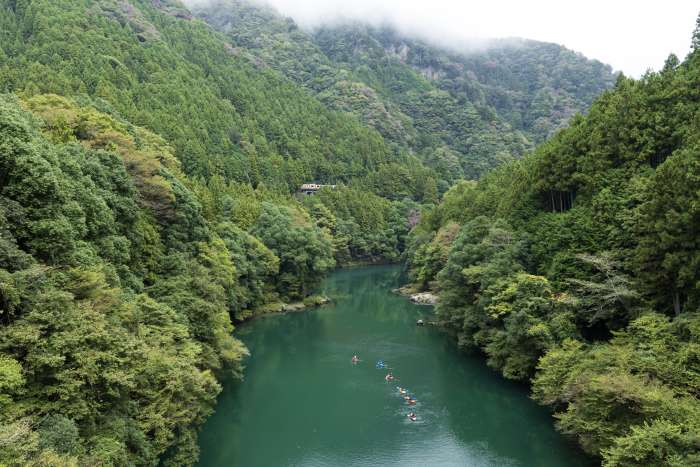

Just past noon, we drifted downstream back to Gravity’s idyllic private café, furnished with comfortable couches, a small library, and a veranda overlooking the lake. We had another healthy lunch of sliced konnyaku, rice, miso soup, mountain greens, and chicken. Enjoying this simple fare under the trees with a view of the lake was deeply soothing.


Our final stop on the tour was a short drive downriver: the Sawanoi Ozawa Shuzo sake brewery by Sawai Station. Founded in 1702, Sawanoi is the oldest sake brewery in the Tokyo region and crafts its products with pure local spring water. As the official provider of sacred sake for Musashi Mitake Shrine, it has a deep spiritual bond with the mountain, something visitors can enjoy through brewery tours, tastings, and riverside dining. I tasted several premium selections, including Koh, a semi-dry daiginjo with a delicate fragrance, brewed from Yamada-nishiki rice.
The porcelain ochoko cup that came with the tasting made a charming souvenir, but I was even more excited to find a local produce and crafts fair at the brewery, where I bought fresh wasabi. Using a calligraphy pen, the farmer sketched the horseradish on the spot, and wrote instructions on how to best store and enjoy it. For me, it was yet another example of the hospitality of the people of Okutama—and of their close connection to nature.


To journey to Okutama is, in many ways, a journey into the past, to a time when people lived closer to the natural world and its rhythms. Life moves at a slower pace. There is time to watch mist rise, water flow and leaves fall. A walk through the forest—or shinrinyoku, forest bathing—calms the mind and cleanses the spirit. Small things come into focus: the spots on a toad’s back, the lacework of a cobweb, the tiny puff of spores from a mushroom. The river is the soul of the land, speaking a language older than memory.
Our tour in Okutama took us to the lofty refuge of Mitake, into the homes of villagers and their ancient shrine, along the old pilgrimage trails, and up the emerald Tama River. I learned about the mountain faith of shugendo, which blends Shinto and Buddhism; the enduring relationships between Mitake’s priests and its parishioners; how to make konnyaku; and how to kayak the river. These insights were shared by the people of Okutama, who clearly take deep pride in their heritage and environment. I left with a renewed appreciation for this enchanting corner of Tokyo—where new discoveries are always waiting.
Links
Tokyo Yamagawa DMC(Guiding and Tour Coordination)