






























2026.09 Japanese Stationery: Thoughtful Design, Playful Ideas, and Regional Craft
Affordable, well-made, and available in a wide variety of styles, Japanese stationery ranges from practical everyday items and playful designs that reflect current trends to products made using skills passed down through generations. Some products rethink familiar tools to solve everyday inconveniences, while others reflect the history and specialist knowledge of the places where they are produced. This broad selection offers travelers an accessible way to experience Japanese design and craftsmanship through objects they can easily take home. Whether used to record a journey, organize tickets and notes, or send a handwritten message home, stationery can serve as both a useful travel companion and a lasting reminder of time spent in Japan.
Why Japanese Stationery Stands Out
Japanese stationery appeals through both what shoppers notice at first glance and what becomes apparent through use. Color and playful design may catch the eye, while the way a product works can reveal a different kind of creativity.
Quality, Variety, and Playful Design

Colorful stationery combines everyday function with kawaii design.
Stationery stores in Japan reveal how much variation can exist within even the most familiar tools. Items made for the same basic purpose may differ in size, material, weight, texture, or design, allowing shoppers to compare subtle differences and choose according to both practical needs and personal preferences. Quality is often reflected in small details, from a comfortable feel in the hand to the smooth, precise way an item works.
Kawaii—the Japanese word for “cute”—is another visible influence. Bright colors, playful patterns, and motifs such as smiling faces and animals can make familiar tools feel friendlier and more cheerful and distinctive. With many items available at accessible prices, this balance of quality, variety, and playful design makes Japanese stationery appealing for everyday use and as souvenirs.
Inventive Approaches to Everyday Tools

Creative thinking can bring new functions and playful forms to familiar stationery tools.
Photo credit: MIDORI/Mini Cleaner https://www.midori-japan.co.jp/ (right)
Beyond its visual appeal, Japanese stationery is known for reconsidering how familiar tools work. Erasable pens challenged the familiar distinction between erasable pencil marks and permanent ink, while multi-cornered erasers rethought the conventional block shape to make it easier to erase small details. These are not minor adjustments, but inventions based on changing the basic premise of an established product.
Practicality can also take a creative form. An eraser dust cleaner, for example, is a small device that collects the debris left behind after erasing. Some are designed to resemble toys, bringing an element of play to the appearance of a practical cleaning tool. These products show how creativity can shape not only the solution to an everyday problem, but also the form that solution takes.
Finding Stationery During Your Trip

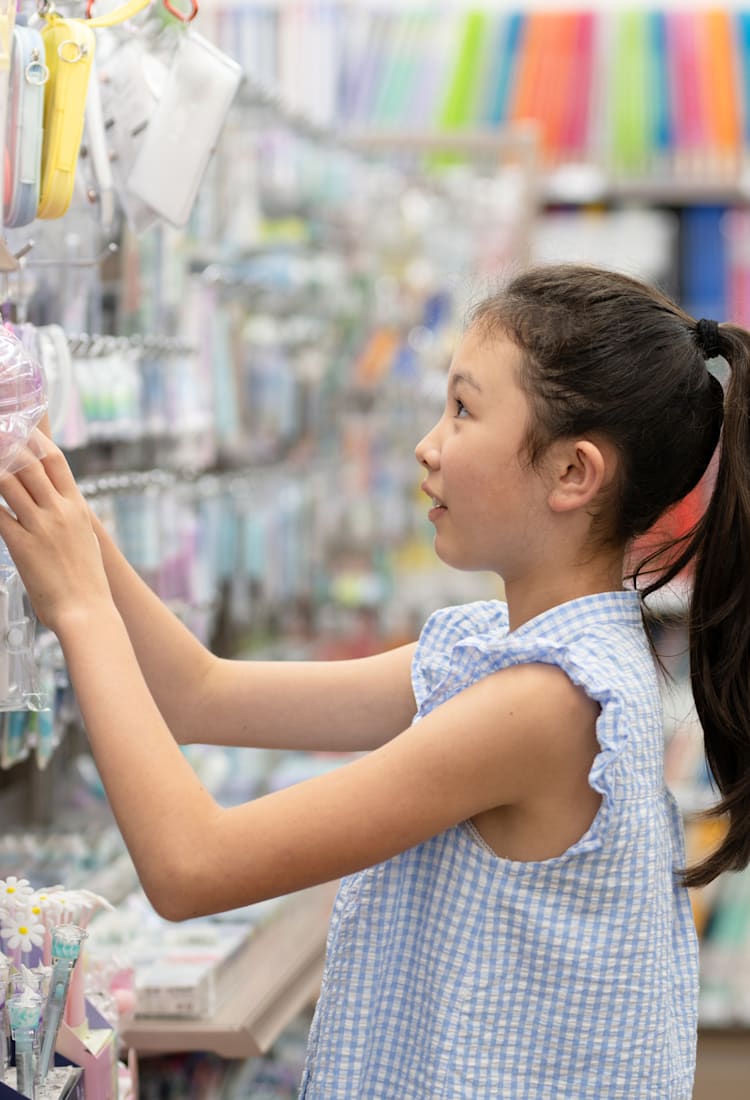
Japan’s colorful stationery aisles can feel like a small world of imagination and discovery.
Stationery shopping can be as quick or as focused as the traveler chooses. Everyday items are easy to find during ordinary shopping, while specialty stores are better suited to visitors who want to compare products in greater detail.
Convenient Options
For travelers looking for a practical item or an easy-to-carry souvenir, large lifestyle stores, department stores, and bookstores often have broad stationery sections. Smaller selections can also be found at retailers around major train stations and in airports, allowing stationery shopping to fit naturally into a day of sightseeing or travel.
Stores with information available in English
Hands and LOFT (lifestyle stores) / Daikanyama Tsutaya Books, Maruzen Marunouchi Main Store, and Kinokuniya (bookstores that also carry stationery)
Specialty Stores

Specialty stores bring together many variations of a single type of writing tool, allowing shoppers to compare the finer differences.
Specialty stores are suited to travelers who enjoy having plenty to choose from. Shoppers can take their time comparing details and narrowing down the possibilities before settling on something suited to their needs.
At some specialty stores and larger stationery departments, designated samples may be available. Availability and testing rules vary by store, so visitors should follow posted guidance or ask staff before testing a product.
Specialty stores with information available in English
Ginza Itoya / Kakimori (custom notebooks and inks) / Haibara (washi and paper goods) / GEKKOSO (art supplies and sketchbooks)
Regional Craftsmanship Behind the Products
Looking beyond everyday design, some stationery is closely connected to particular production areas. These regional stories range from crafts sustained over centuries to products that emerged from modern manufacturing, giving travelers a closer look at how distinctive products developed in different parts of Japan.
Washi and Japan's Paper Traditions

An artisan forms a sheet of washi paper using techniques refined over generations.
Washi is a traditional paper made from plant fibers such as kozo (paper mulberry), mitsumata, and gampi. Valued for its strength and distinctive texture, it has long been used for writing and the arts. Today, washi also appears in contemporary stationery and decorative paper goods.
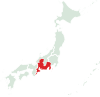
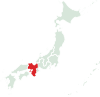
Yoshino in Nara Prefecture has a washi-making tradition dating back around 1,300 years. Some local workshops use locally grown kozo and water from the Yoshino River to produce smooth, strong paper valued by calligraphers and art restorers. Papermaking experiences may also be available with advance arrangements, giving visitors a closer look at the specialist knowledge behind the finished paper.
Craftsmanship Behind Kumano Brushes

Traditional brush-making techniques continue to support calligraphy, art, and contemporary writing tools.
Calligraphy and painting in Japan have long depended on the skills of traditional brush makers. Making a brush requires artisans to select, blend, shape, and finish the hairs by hand, creating the flexibility, resilience, and ink flow required for different forms of writing and art.
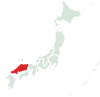
Kumano in Hiroshima Prefecture remains one of Japan’s best-known brush-making centers. Its brush-making tradition spans around 180 years, and about 80 percent of Japan’s domestic brush production takes place there.
At a local facility in Kumano, visitors can watch brush-making demonstrations and take part in the finishing stage under the guidance of a certified traditional craftsperson. This hands-on experience brings visitors closer to the skills that have shaped Kumano for generations.
Kurashiki and the Rise of Decorative Masking Tape

Colorful patterns have helped turn masking tape into a popular Japanese stationery item.
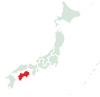
Not every regional stationery story is rooted in a traditional craft. Kurashiki in Okayama Prefecture is the birthplace of decorative Japanese masking tape. Masking tape produced in the area was originally intended for industrial use. Colorful, patterned versions were later developed for consumers, turning the material into a popular stationery item used for decoration and other creative purposes.
Visitors can browse decorative tape in shops throughout Kurashiki’s Bikan Historical Quarter. Some local facilities also offer factory tours and decorating activities, allowing visitors to learn how this modern product became associated with the city.
A Souvenir You Can Keep Using

Stationery used after the journey can continue to recall time spent in Japan.
Unlike display-only souvenirs, stationery can become part of everyday routines through regular use. A notebook may collect new ideas, patterned masking tape can brighten planners and gifts, and a sheet of washi may be used for a letter or kept as a reminder of the craft behind it. Whether practical, playful, or handmade, stationery that continues to serve a purpose can remain a meaningful reminder of time spent in Japan.
Related Links
The Continuous Evolution of Japanese Stationery |
|
https://web-japan.org/niponica/niponica36/en/feature/feature02.html |
Traditional Crafts |
|
https://www.visitnara.jp/lists-and-stories/story/traditional-crafts/ |
Kumano Brush |
Kurashiki Souvenirs |