












































2026.08 A Trail of Cats: Journey Through Culture, Folklore, and Hidden Destinations Let Japan's cats lead the way to a world of unexpected encounters.
Have you ever found yourself stopping in your tracks when you spot a cat?
For many international travelers, anime, manga, and literature provide a first glimpse into Japan's fascination with cats. Yet seeing them woven into streets, shops, and local traditions raises an intriguing question: Why do cats appear in so many forms across Japanese culture?
The answer lies in the place cats have come to hold over centuries. Follow their trail and you'll discover that cats can lead you beyond Japan's famous destinations to uncover regional stories that might otherwise go unnoticed.
The Cat That Beckons: Wishes and Craftsmanship
The trail begins with one of Japan’s most recognizable symbols: the maneki-neko, or "beckoning cat." Although many people outside Japan first encounter these cat figurines in restaurants and shops around the world, the maneki-neko originated in Japan.
Its raised paw is believed to carry different meanings. In Japan, people traditionally beckon with the palm facing downward, unlike the outward-facing gesture common in many other countries. A left paw is believed to welcome people, while a right paw is said to attract wealth and prosperity. Together, these gestures reflect the everyday hopes people have long entrusted to the maneki-neko.
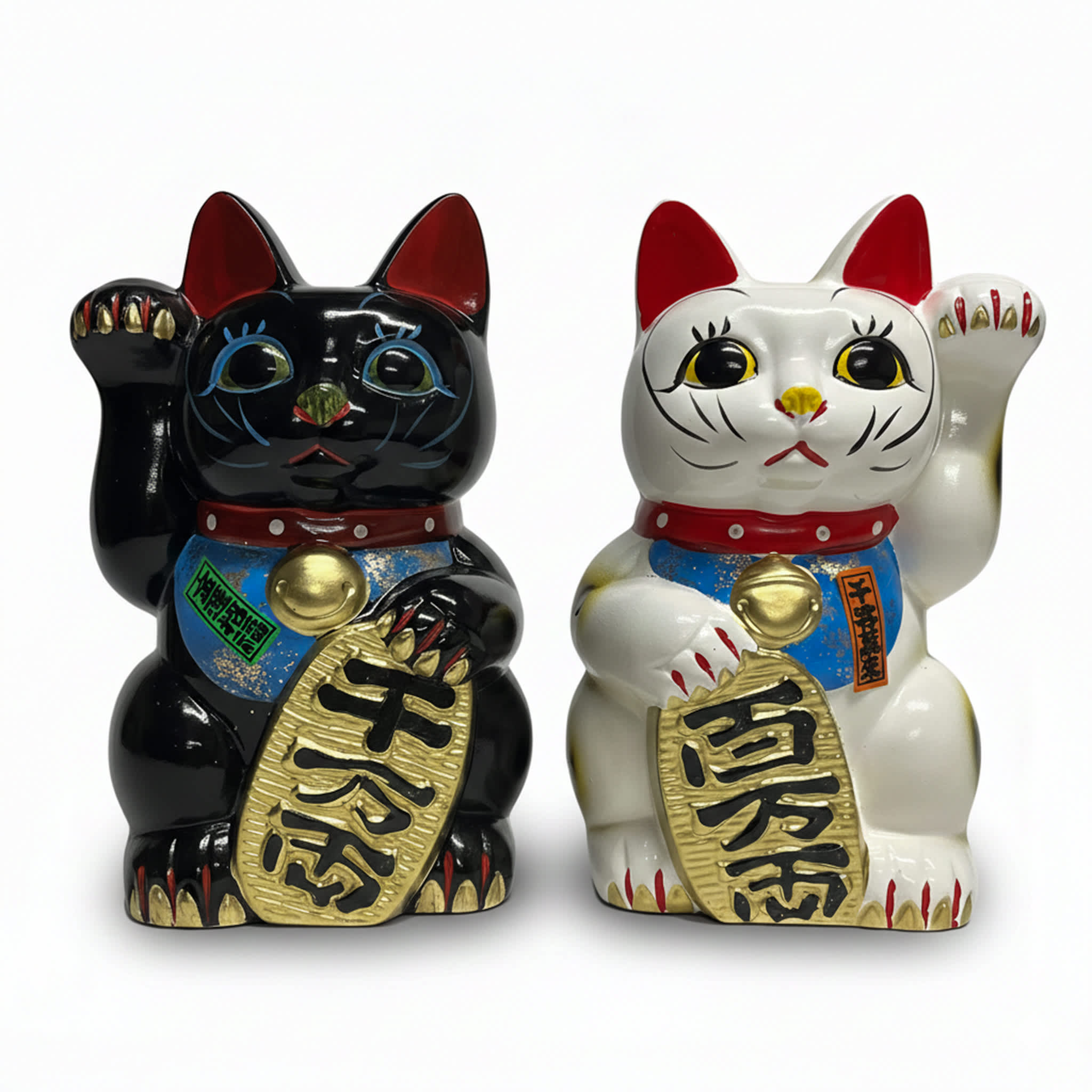
Different maneki-neko raise different paws, each with its own traditional meaning.
That symbolism continues beyond temples and homes into places where the maneki-neko has become part of the local landscape. In Tokoname, Aichi Prefecture—one of Japan's Six Ancient Kilns and one of its oldest pottery towns—visitors walking from Tokoname Station toward the Tokoname Tourist Information Center pass along Maneki-neko Street. There, the giant cat Tokonyan peeks over an embankment while 39 distinctive maneki-neko, each created by an artist connected to Tokoname, line the wall.

Tokonyan watches over Maneki-neko Street.
Yet what makes the town memorable is not only the maneki-neko lining its streets, but also the pottery tradition that surrounds them. With a history of ceramic production stretching back more than 1,000 years, its kilns, workshops, and streets continue to reflect the town’s long relationship with clay.
Walking through the town, the maneki-neko begin to feel less like souvenirs and more like storytellers, reflecting the town’s pottery heritage and the work of the makers who continue that tradition today.
Cats in Art and Folklore: More Than Just Lucky Charms
The maneki-neko is only one way cats have found a place in Japanese culture. Beyond lucky charms, cats have also appeared in Japanese art, folktales, and legends for centuries, portrayed as playful, clever, mysterious—and sometimes even a little unsettling.
From the 17th to the 19th centuries, cats appeared frequently in ukiyo-e, vibrant woodblock prints depicting everyday life, landscapes, and popular entertainment. Some chased mice or curled up beside their owners, while others wore elaborate robes and behaved like people. Artists often portrayed these feline characters with humor and imagination, reflecting everyday life while gently blurring the line between the ordinary and the fantastical.

Utagawa Kunimasa Ⅳ Cats’ Buckwheat-noodle Restaurant (Ota Memorial Museum of Art)
That same sense of mystery found its way into Japanese folklore. Stories of the bakeneko (“changed cat”) and nekomata (“forked-tail cat”) tell of ordinary cats that gradually develop supernatural powers. Sometimes mischievous and sometimes frightening, these feline characters reflect many ways cats have inspired the Japanese imagination.
Together, these artistic portrayals and stories reveal how deeply cats have captured the hearts of Japanese people. That enduring fascination offers travelers a different lens through which to explore destinations and local traditions across Japan.
Following Cats Through Onomichi’s Streets
One town where this connection is especially easy to experience is Onomichi in Hiroshima Prefecture.

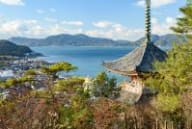
Temples and hillside neighborhoods define the character of Onomichi.
Perched on the hills overlooking the Seto Inland Sea, Onomichi is best explored on foot. Tucked among its winding lanes halfway up Mt. Senkoji is Neko no Hosomichi (Cat Alley), where small painted Fukuishi Neko (Lucky Stone Cats) peek out from stone walls, flowerpots, and hidden corners. Created by local artist Sonoyama Shunji, each cat has its own unique expression, turning a leisurely walk into a quiet treasure hunt where every discovery reveals another corner of the town.

Let these Lucky Stone Cats guide you to unexpected discoveries beyond Onomichi’s main streets.
The journey continues at Hodoji Temple, set along Onomichi’s hillside streets and overlooking the Onomichi Channel. Within the temple grounds, the Kannon Hall provides the setting for a maneki-neko painting experience, where visitors can add their own colors and patterns to a white papier-mache cat. Inspired by the streets and hillside views explored throughout the day, each finished cat becomes a personal reminder of time spent discovering Onomichi through its landscapes, craftsmanship, and quiet encounters with cats.

Inspired by the journey, finished by hand.
Photo Credit: OnomichiKomono ManekinekoKobo
Sanagishima Island: Where Cats and Island Life Coexist
The final stop of the trail leads to Sanagishima Island, part of Tadotsu Town in Kagawa Prefecture, where cats are an unmistakable part of the island’s landscape and daily life. With no traffic lights and little more than the sound of waves against the shore, the island moves at its own gentle pace.
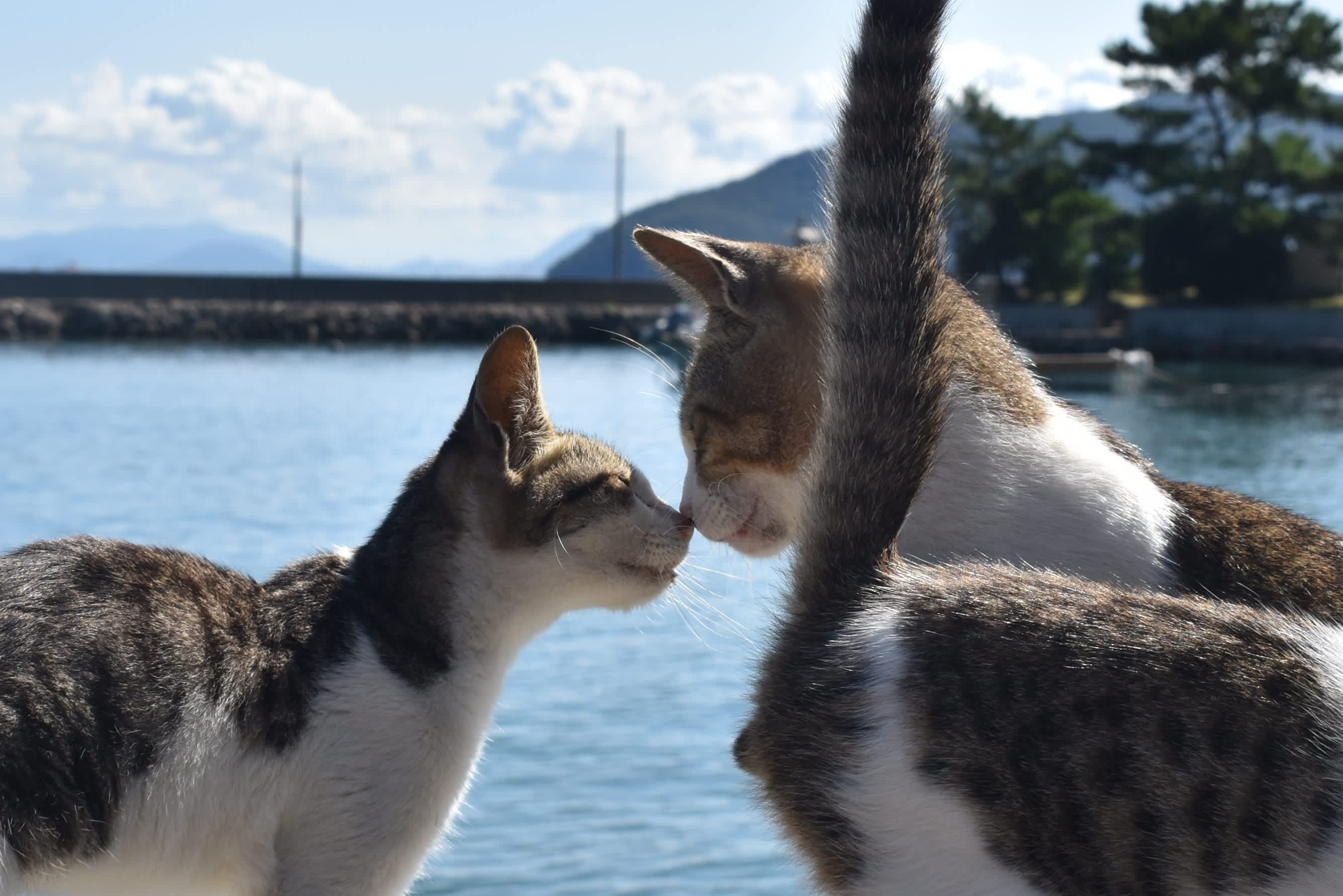
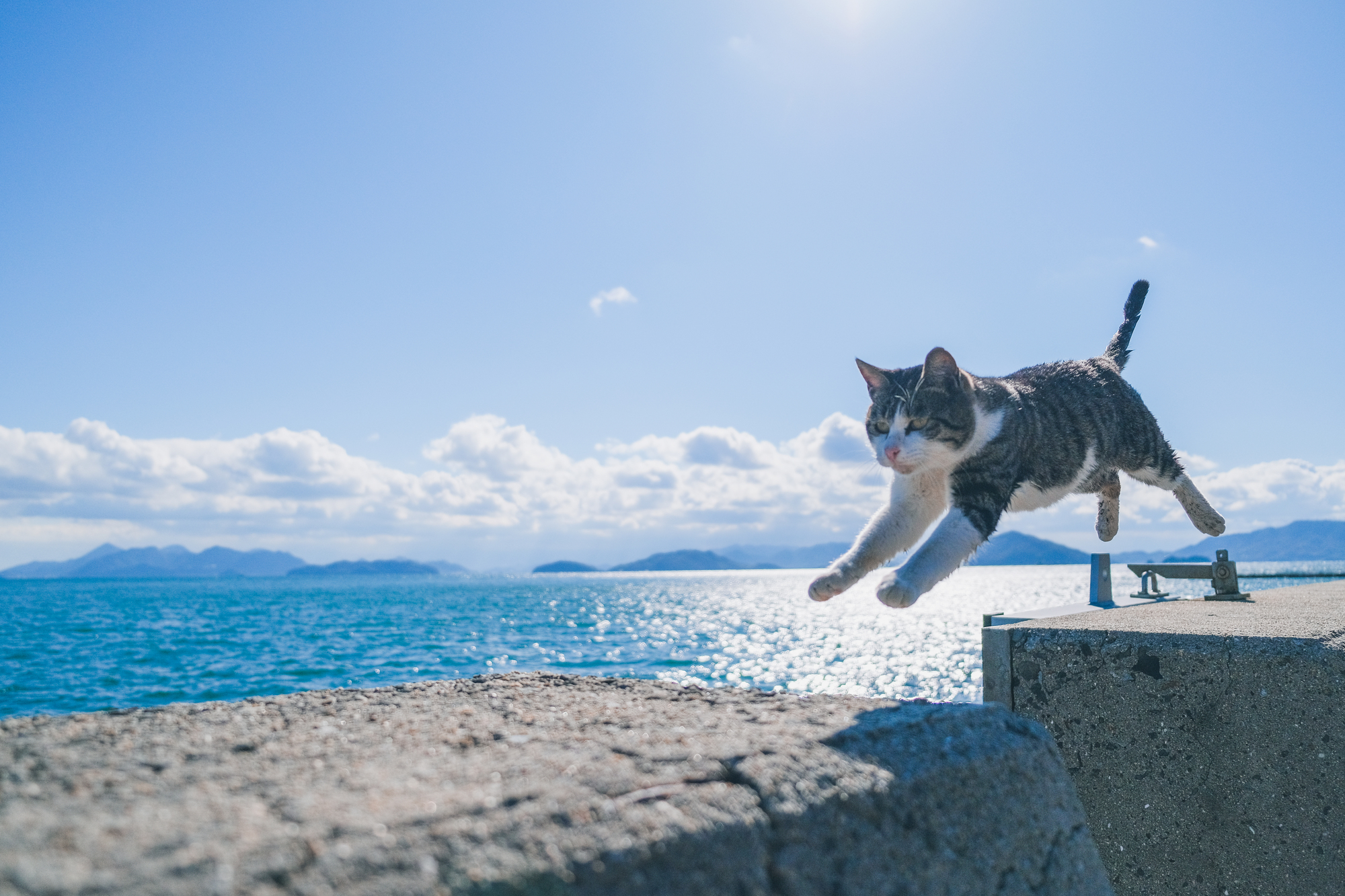
On Sanagishima Island, cats are never far from the sea—or from one another.
Many visitors first meet Sanagishima's feline residents after arriving by ferry at Honura Port, where cats lounge beside the harbor, nap on sea walls, or quietly watch ferries come and go. Although the island has become nationally known for its cats in recent years, they remain a natural part of everyday life, sharing the island with the residents who continue to call Sanagishima home.
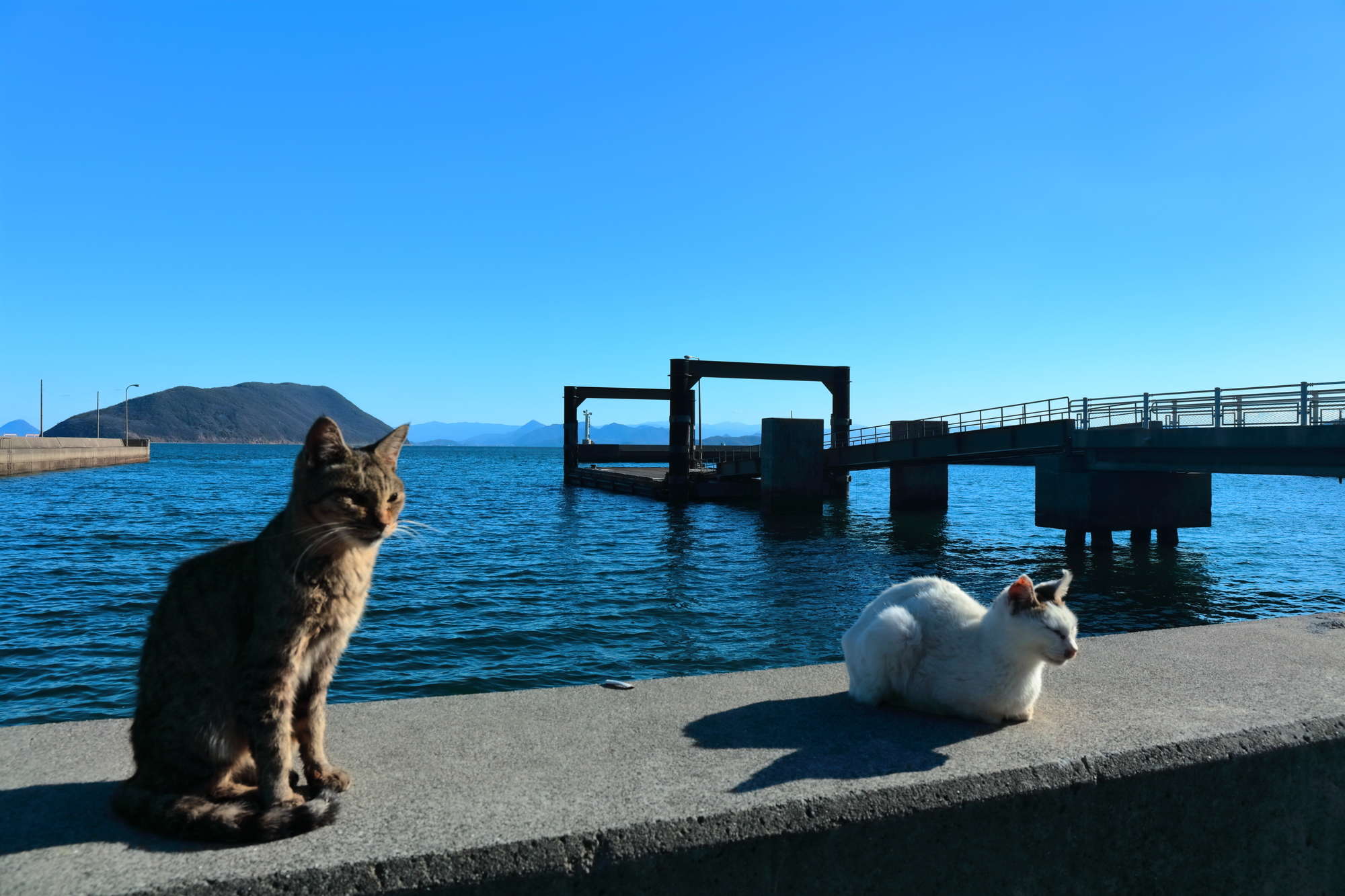
Harbor views are often shared with Sanagishima's feline residents.
Rather than themed attractions or designated photo spots, Sanagishima offers a chance to share the cats’ space while respecting both the animals and the island’s quiet way of life. Visitors are encouraged to watch the cats without feeding or chasing them, and to take care not to disturb residents or everyday life. Tadotsu Town recommends visiting between sunrise and sunset, as some coastal paths may become difficult to access depending on the tide. As the ferry pulls away from the island, it is often the quiet rhythm of island life—rather than any single cat—that stays with visitors most.
Beyond the Cats

An unexpected encounter may reveal a different side of Japan.
At first glance, Japan's cats may seem like charming travel encounters. Yet following their trail reveals something much deeper. From pottery towns and folklore to hillside alleys and quiet fishing islands, cats offer a window into the stories, traditions, and communities that have shaped Japan over centuries.
So the next time you spot a cat perched on a stone wall, watching over a shop, or sleeping beside a harbor, pause and take in the scene around it. You may discover that the most memorable journeys are the ones you never expected to take. Sometimes, they begin simply by following a cat.
Related Links
Tokoname |
Lucky Cat Painting Experience in Onomichi |
Sanagishima Island |