






























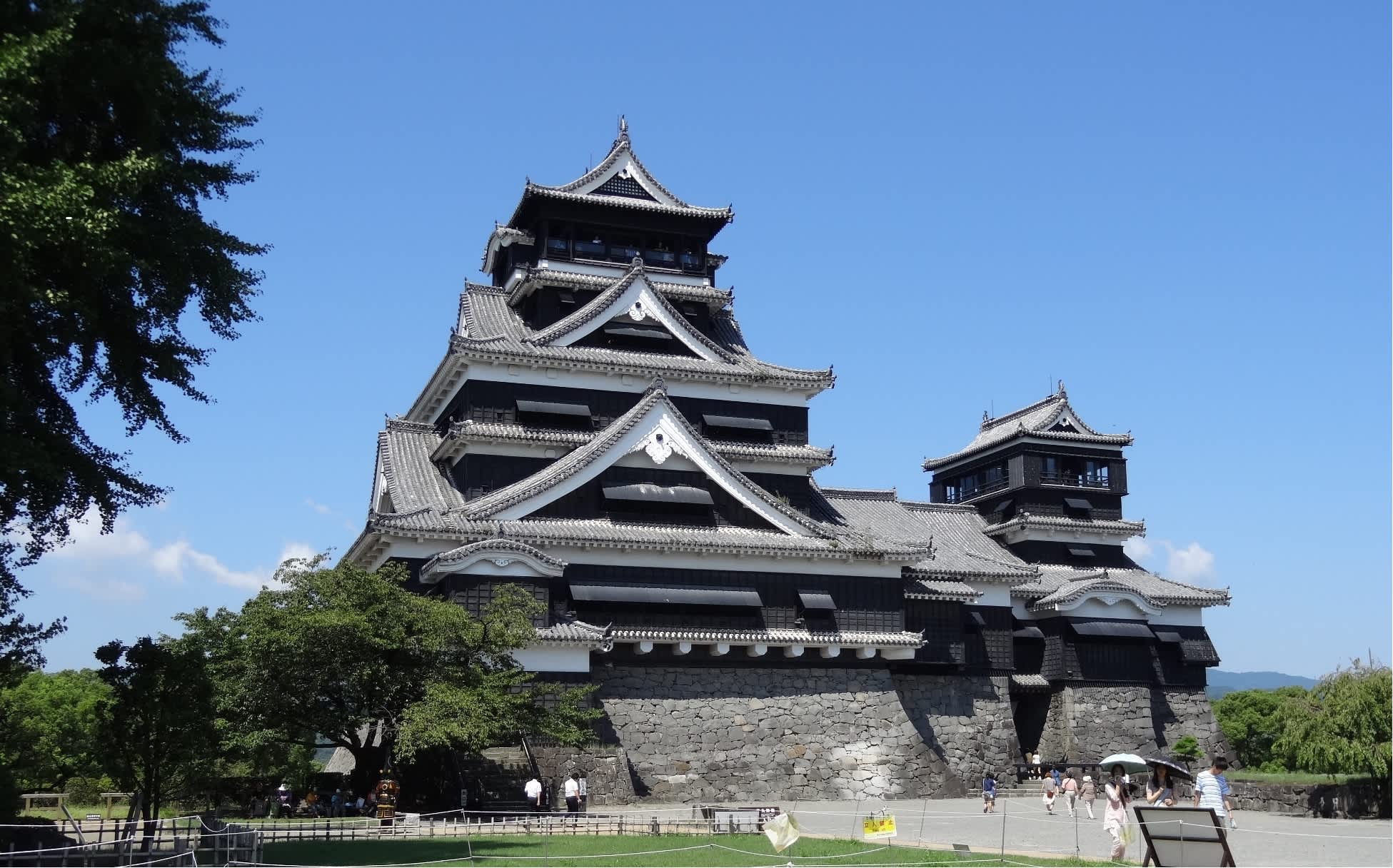
Kumamoto Castle is a natural place to begin exploring the city’s samurai history. In 1632, Hosokawa Tadatoshi moved from the Kokura domain in present-day Fukuoka Prefecture to Higo, a historical province corresponding to present-day Kumamoto Prefecture. His arrival began more than two centuries of Hosokawa rule in Kumamoto. The Hosokawa were a prominent samurai family, but their legacy was shaped by more than warfare and political power. Across generations, they also cultivated poetry, tea, art, and craftsmanship.
Following traces of that legacy through Kumamoto today reveals a more layered view of samurai culture. Centuries-old aesthetics and traditions live on in works of art and craft, in skills passed from person to person, and in landscapes that visitors can still walk through and experience.
In this article
- The Hosokawa: Samurai with a Passion for the Arts
- From Arms to Arts: The Aesthetics of the Hosokawa Samurai
- Traditions Carried Forward by Hand
- Enter the Hosokawa Landscape at Suizenji Jojuen
- Seeing Kumamoto in Greater Depth
The Hosokawa: Samurai with a Passion for the Arts
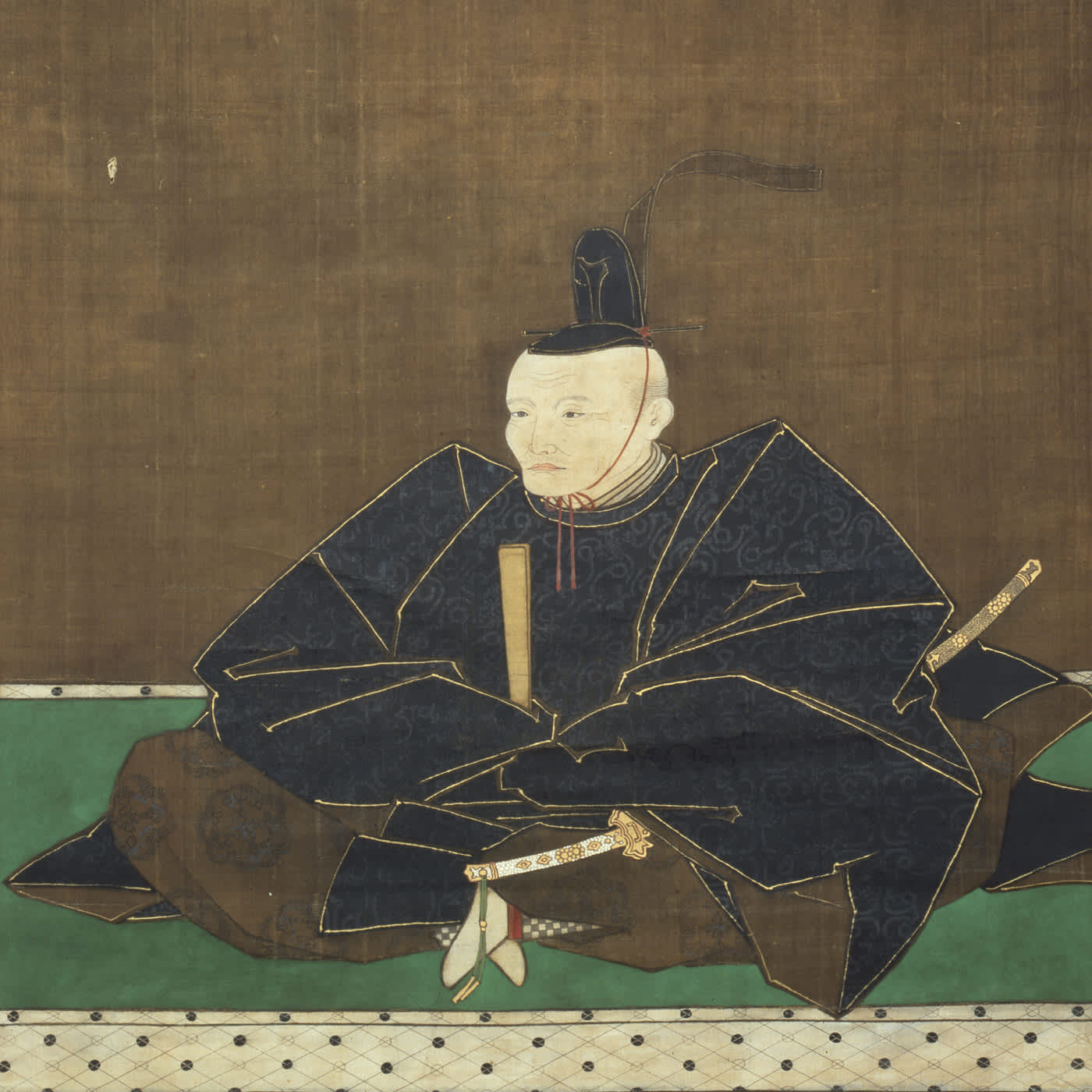
Photo Credit: Eisei Bunko Museum
The Hosokawa were warriors and rulers, but they were also known for a strong tradition of learning and the arts that continued across generations. Tadatoshi’s grandfather, Hosokawa Fujitaka, was a celebrated poet and scholar. He was a leading authority on the Kokin Wakashu, an important early collection of classical Japanese waka poetry, and helped pass down knowledge used to interpret its poems through a tradition known as Kokin Denju. Tadatoshi’s father, Hosokawa Tadaoki, was equally devoted to another art: tea. He studied under one of the most influential figures in the history of Japanese tea culture.
Their involvement went beyond simply appreciating or supporting the arts. Poetry, tea, and scholarship were pursuits in which members of the family actively participated, creating a cultural tradition that had developed before their arrival in Kumamoto and continued under later generations there. Much of that story can still be traced through the works and objects the family left behind.
From Arms to Arts: The Aesthetics of the Hosokawa Samurai
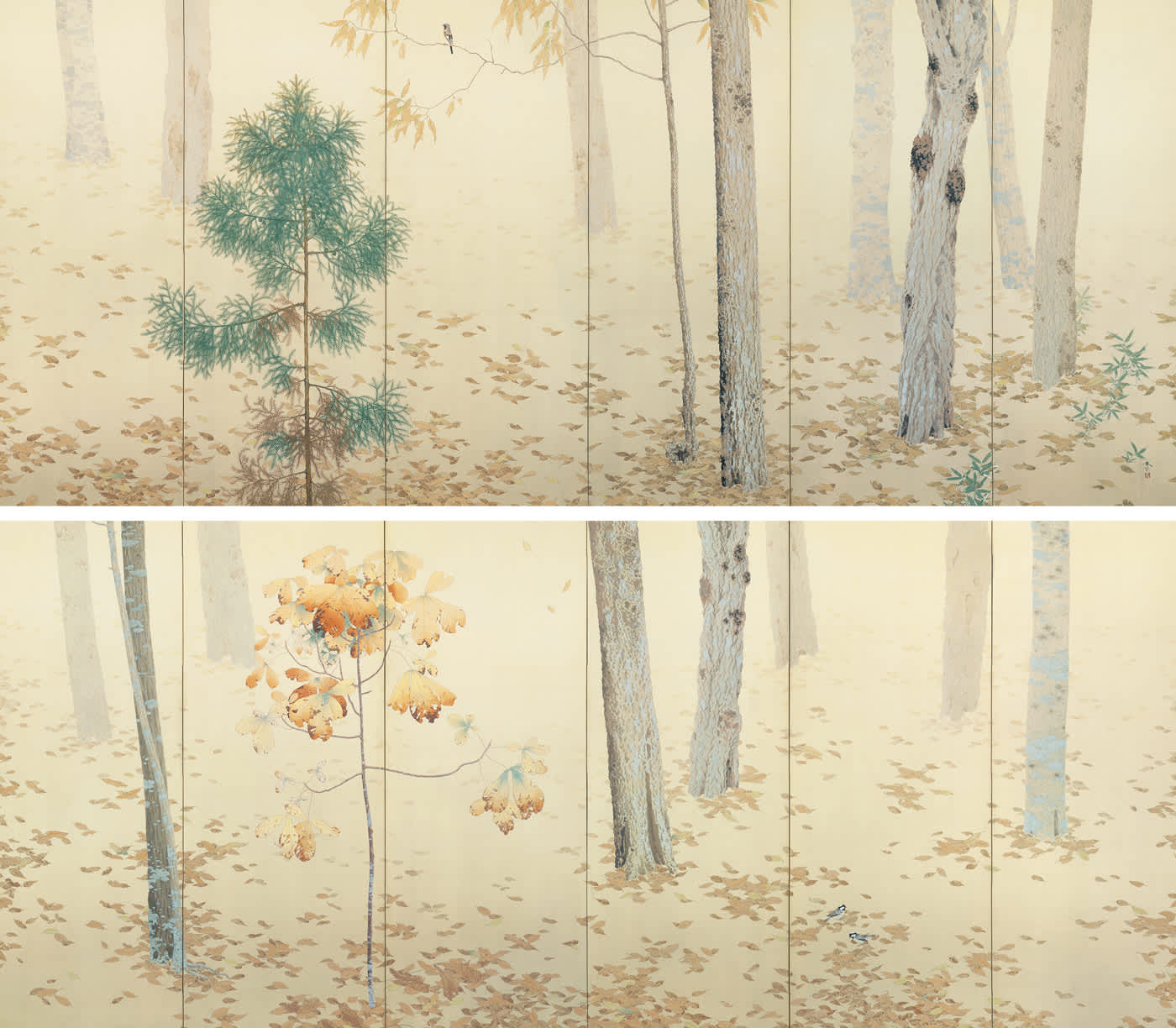
Photo Credit: Eisei Bunko Museum (Entrusted to Kumamoto Prefectural Museum of Art)
The Hosokawa family's cultural legacy can still be encountered through the works and historical materials that survive today. The Tokyo-based Eisei Bunko Museum is the only museum in Tokyo dedicated to the collection of a former daimyo (feudal lord) family. Its holdings include works of art and historical materials passed down through the Hosokawa family, as well as pieces collected by its founder, Hosokawa Moritatsu (1883–1970), the 16th head of the family. The collection comprises approximately 6,000 artworks and 88,000 historical materials, including paintings, arms and armor, ceramics, and historical documents. It includes eight National Treasures and 35 Important Cultural Properties. At the Kumamoto Prefectural Museum of Art, at the northwest corner of the castle grounds, the Eisei Bunko exhibition room displays rotating selections from the collection.
Hosokawa Fujitaka (1534–1610), also known as Yusai and regarded as the first head of the early modern Hosokawa family, was an accomplished cultural figure versed in waka poetry, court traditions and ceremonial practices, tea, and Noh theater. His successor, Hosokawa Tadaoki (1563–1645), also known as Sansai, was one of the Seven Disciples of Sen no Rikyu, a group of distinguished tea practitioners, and was also fond of Noh theater. Later Hosokawa lords pursued interests ranging from scholarship and natural history to collecting and creating paintings. The objects they left behind therefore reflect not only what the family owned, but also what its members studied, practiced, and valued.
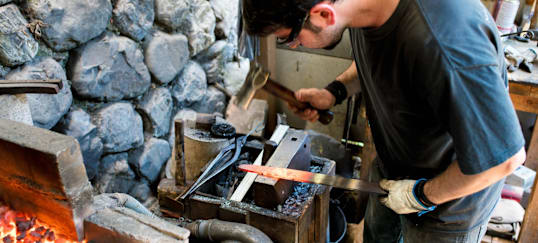
Beyond the collection, Kumamoto is also home to Higo inlay, or Higo Zogan, a traditional craft dating back to the Edo period (1603–1867). The technique involves cutting designs into iron and setting gold or silver into the surface. Against the darkened iron, the gold and silver patterns create a subtle contrast. Historically, Higo inlay was used to decorate gun barrels, sword guards, and other objects associated with samurai.
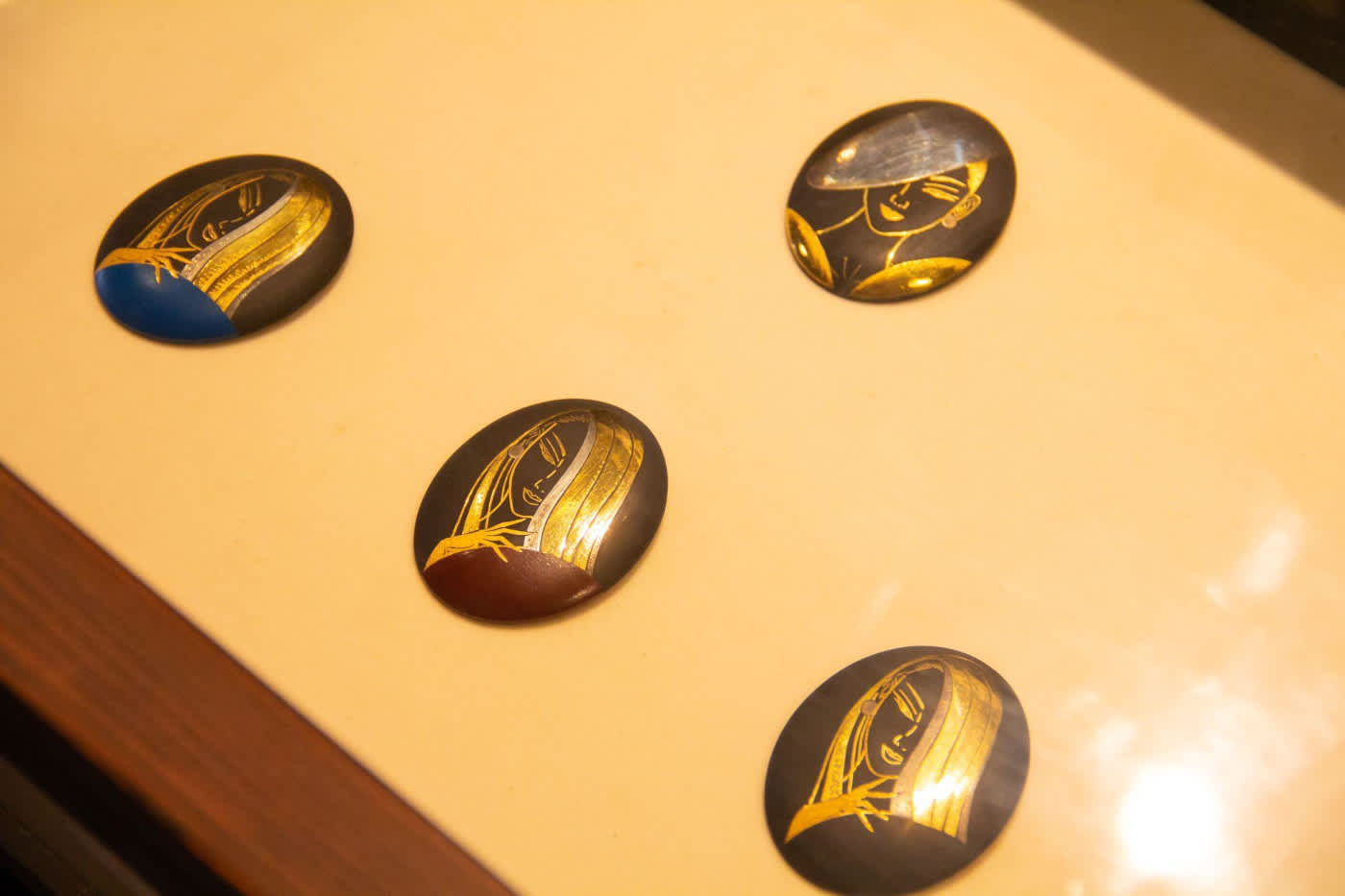
Photo Credit: Kumamoto City Travel Guide
A sword fitting could therefore serve a practical purpose while also displaying careful craftsmanship and design. Higo inlay offers a tangible example of how artistry could find expression even in objects made for a warrior’s use.
Traditions Carried Forward by Hand
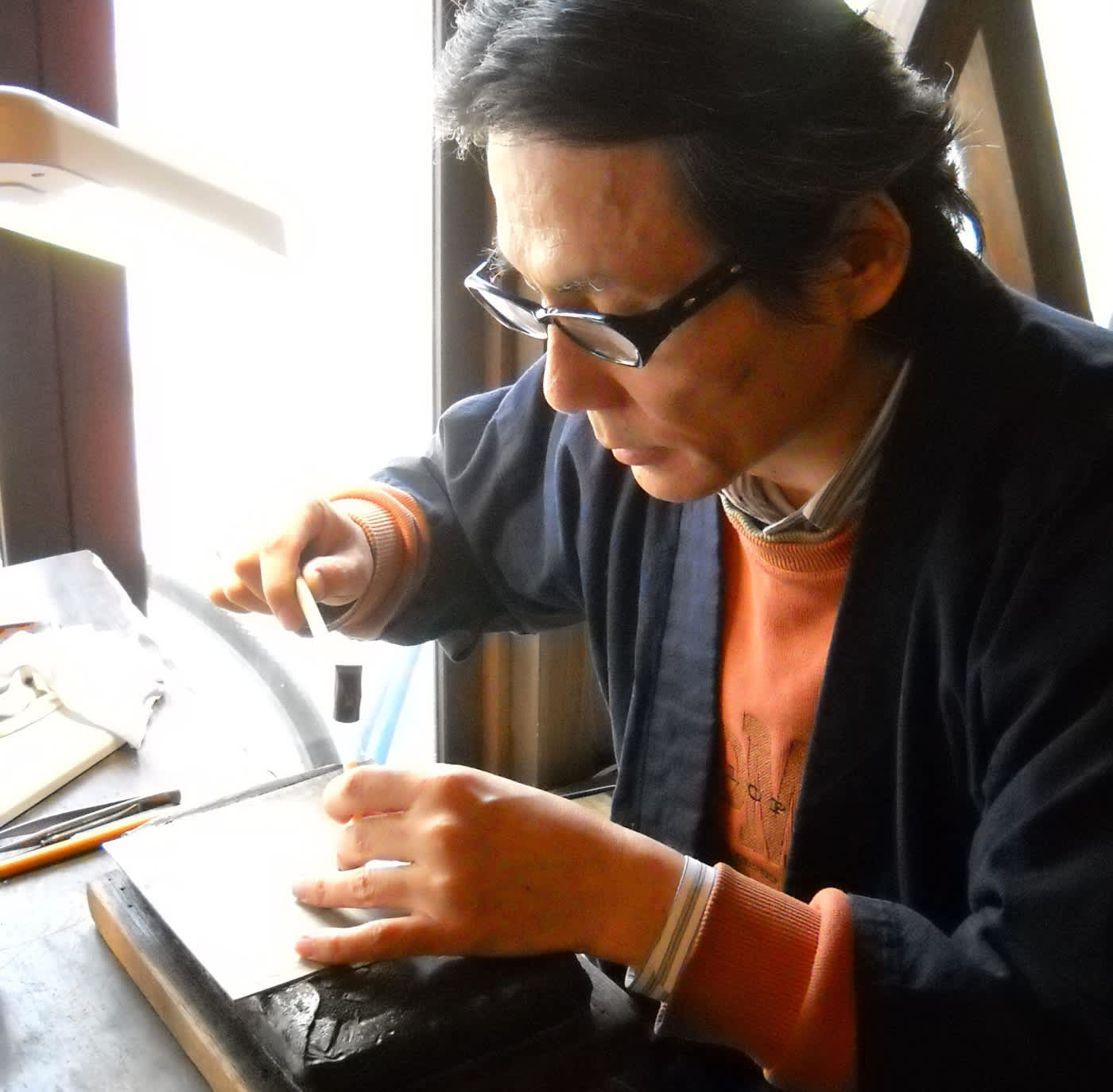
Photo Credit: Kumamoto City Travel Guide
The story of Higo inlay did not end with the samurai era. When the wearing of swords was prohibited in 1876, craftspeople lost an important market for objects on which their techniques had traditionally been used. The craft adapted. Today, Higo inlay can be found on contemporary objects including pendants, cufflinks, tie pins, and pens.
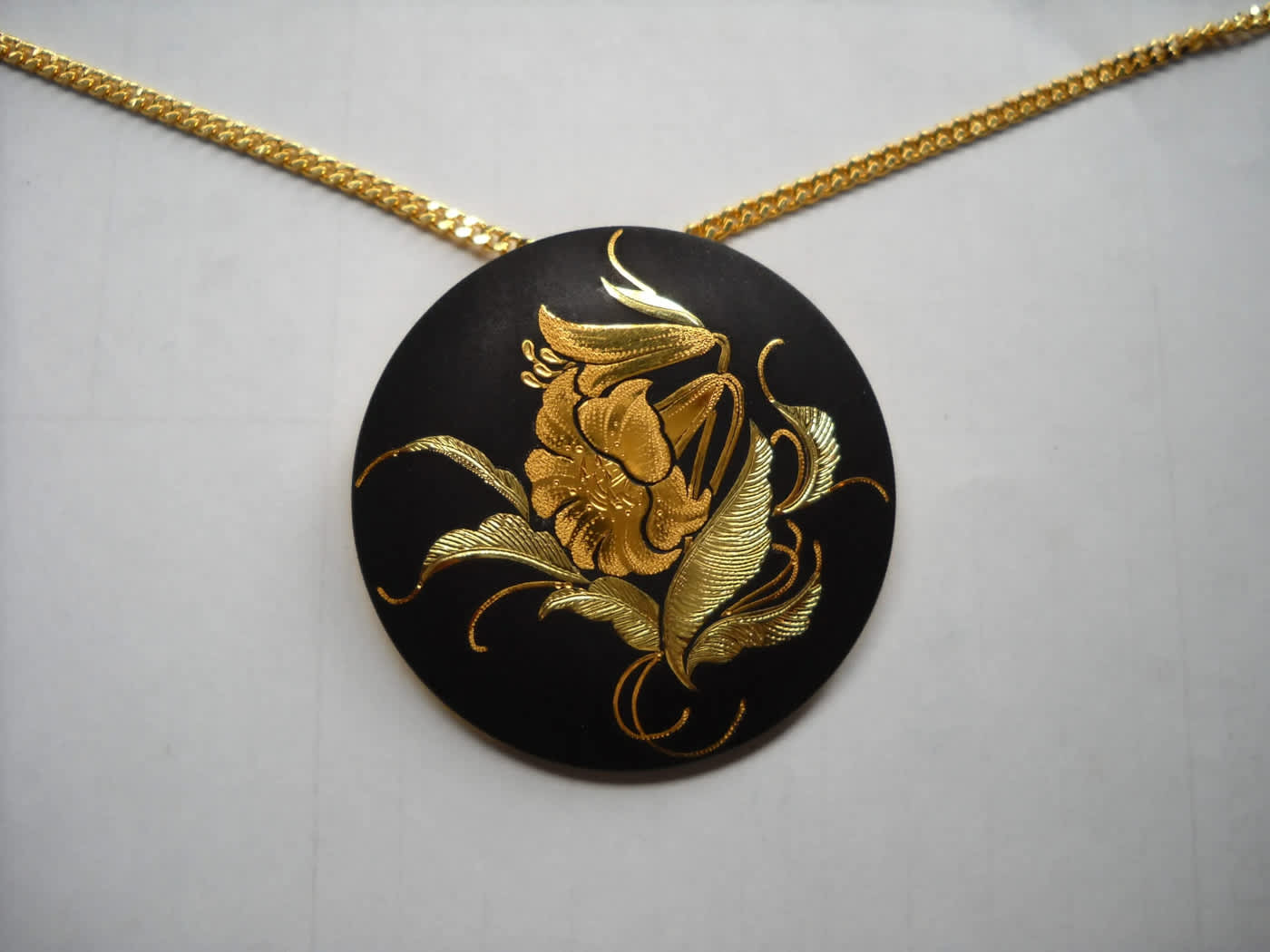
This continuity can be seen at workshops such as Higo-Zogan “Mitsusuke” in Kumamoto’s Shinmachi district, where fourth generation artisan Yuji Osumi applies inherited techniques to objects suited to contemporary life, from accessories to custom-made eyeglasses and watches.
Travelers can also try the technique for themselves at the workshop. Participants work metal into a prepared iron surface before the craftsperson completes the remaining finishing stages.
Trying the technique offers a different perspective from viewing a finished object in a museum. Creating the fine metallic patterns requires deliberate, precise work, and even a brief experience draws attention to the skill behind each piece.
That reliance on knowledge passed from person to person is not limited to craftsmanship. It can also be found in Higo Koryu, a school of tea with close ties to the Hosokawa family. Its roots can be traced to Sen no Rikyu, the influential 16th-century tea master who helped shape the Japanese tea ceremony into the art form known today. Tadaoki, whose son Tadatoshi was the first lord of the Kumamoto domain, was one of Rikyu’s disciples and devoted himself to preserving the spirit of the tea ceremony. Since 1625, Higo Koryu has preserved this tradition through practice, with its procedures and movements passed from one practitioner to another.

Production: Kumamoto City / Source: Tea Ceremony (Fired Up! Kumamoto, Japan)
Higo inlay and Higo Koryu are different traditions, yet both demonstrate how cultural knowledge can endure through continued practice. One is carried through metalworking and the hands of craftspeople; the other through the practiced movements of tea. Together, they show how traditions rooted in Kumamoto's samurai culture continue through the people who practice them, even as the world around them changes.
Enter the Hosokawa Landscape at Suizenji Jojuen
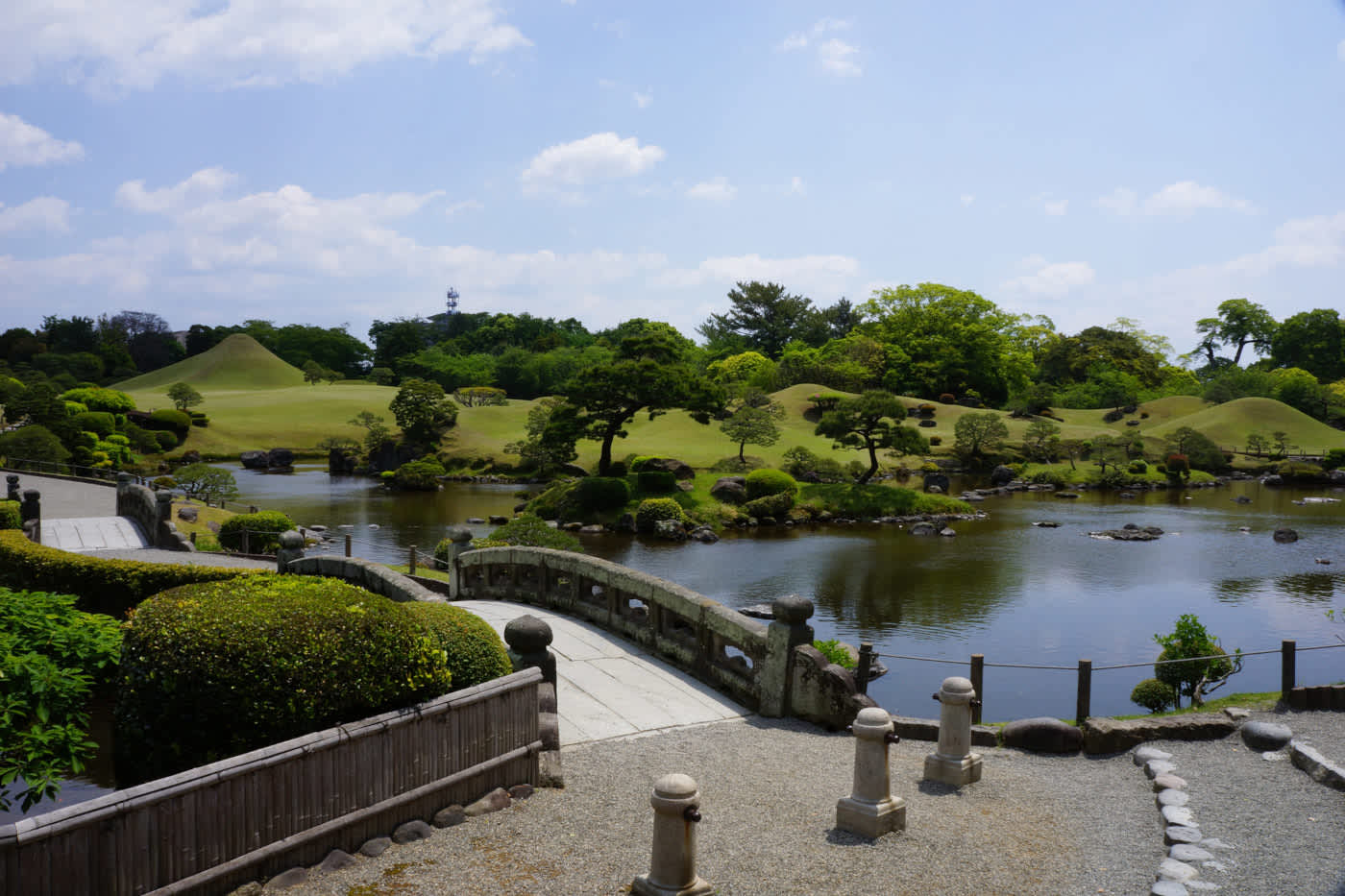
Photo Credit: Kumamoto City Travel Guide
At Suizenji Jojuen, cultural threads encountered elsewhere in Kumamoto come together in the landscape itself.
The garden traces its beginnings to Hosokawa Tadatoshi, who was drawn to the area’s clear spring water and had a teahouse built there. Later Hosokawa lords continued to develop the grounds, and the strolling garden was completed in 1671.
Water remains at the heart of the experience. Groundwater from the Aso region fills the pond, reflecting trees, stones, carefully shaped terrain, and traditional architecture. Following the paths around the water allows the garden to reveal itself gradually: views open across the pond, buildings appear beyond the trees, and the relationship between water, architecture, and cultivated landscape shifts with each turn.
Among the buildings in the garden is Kokin Denju no Ma, a former study with a remarkable connection to Hosokawa Fujitaka, or Yusai. Originally built in Kyoto for Prince Hachijo Toshihito, it was here in 1600 that Yusai passed on Kokin Denju, the teachings used to interpret the classical waka of the Kokin Wakashu, to the prince. The building later came into the possession of the Hosokawa family and was reconstructed at Suizenji in 1912. Today, it offers a tangible link to the literary tradition introduced earlier in the Hosokawa story.
Seeing Kumamoto in Greater Depth
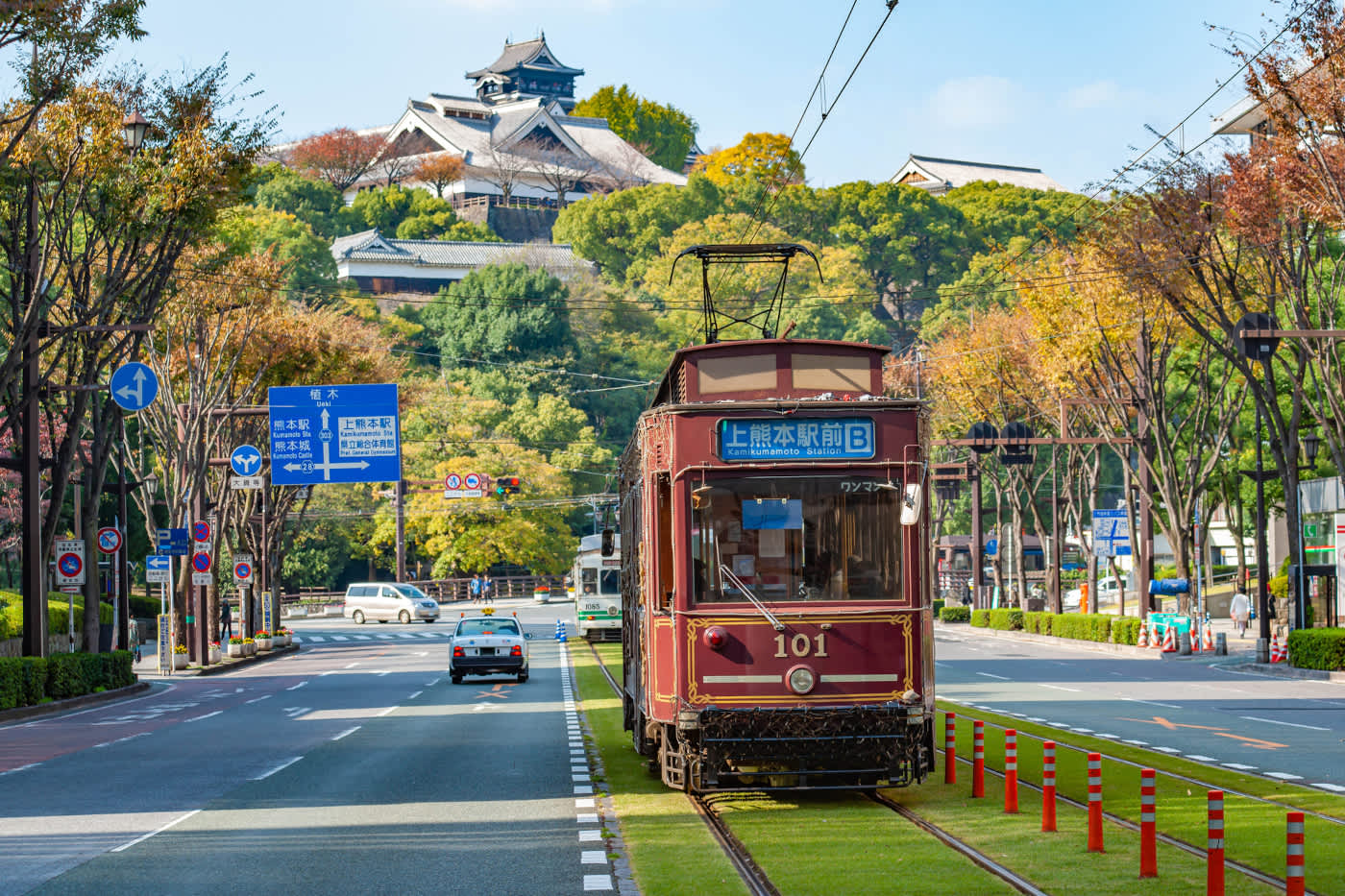
The Hosokawa legacy is not confined to the past. It can still be encountered across Kumamoto, sometimes in obvious landmarks and at other times in details that are easy to overlook without knowing the history behind them.
Beginning at Kumamoto Castle opens the door to that history, but following the Hosokawa story beyond its walls reveals a broader cultural world. A decorative detail on metalwork, the practiced movements of tea, or a historic building within a garden can all take on new meaning once their connections become clear.
Seen this way, Kumamoto becomes more than a collection of samurai-related sites. Understanding the connections between them offers travelers a deeper way to experience the cultural legacy of the city's samurai past.
Related Links:
Kumamoto Castle
Kumamoto Prefectural Museum of Art|Kumamoto City Official Guide
Higo Inlay|Kumamoto City Official Guide
Make Higo Inlay Accessories|Kumamoto City Official Guide
Suizenji Jojuen
Recommended For You

-
About the author
Author: Shem S.
Shem is an English copywriter, editor, and translator from the Philippines who enjoys bringing cultural and travel stories to international audiences. Curious about how people live, eat, create, and celebrate, she enjoys experiencing different cultures through their food, art, traditions, and everyday life. Her work gives her the perfect excuse to keep exploring and occasionally fall down a research rabbit hole along the way.