





























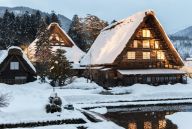




Nestled in the mountains of southwestern Toyama Prefecture, Gokayama is known for its gassho-style houses with steep thatched roofs. Together with Shirakawa-go in the neighboring Gifu Prefecture, Gokayama forms part of the UNESCO World Heritage Site Historic Villages of Shirakawa-go and Gokayama. More than a scenic heritage destination, Gokayama is a living mountain community where traditional architecture, local food culture, and folk performing arts remain closely connected to everyday life.
Through overnight stays in traditional houses and opportunities to experience Kokiriko, a folk performing art passed down in the region, visitors can encounter a quieter side of Japan shaped by mountain life, local traditions, and everyday culture.
Why Visit Gokayama?
- World Heritage villages shaped by everyday life
- Overnight stays in historic gassho-style houses
- Traditional folk performing arts still practiced today
- Local crafts and food shaped by life in a snowy mountain region
A World Heritage Village Where People Still Live

Photo Credit: © Gokayama Nanto Tourism Organization
Gokayama is made up of around 40 villages, including Ainokura and Suganuma, the two villages inscribed as part of the World Heritage Site. Their value lies not only in the well-preserved gassho-style houses, but also in the way architecture, landscape, and local life developed together in response to the region’s snowy mountain environment.
Close enough to visit together, Ainokura and Suganuma each offer a different sense of place. In Ainokura, clusters of gassho-style houses spread across a mountain slope among fields and narrow pathways. Suganuma, set in the Shogawa River valley, is smaller and more compact, with houses that sit quietly within the surrounding landscape.
Seen up close, the steep roofs, sunken hearths known as irori, exposed beams, and wooden interiors reveal the ingenuity of generations who adapted to life in a snowy mountain region. Built to withstand heavy snow and strong winds, the houses were assembled without nails and used efficiently for both daily life and local livelihoods, with spaces for sericulture, washi paper-making, and saltpeter production. These buildings are more than historic architecture; they reflect a practical way of life that has continued for centuries.
Overnight Stay in a Gassho-style House

Photo Credit: © Gokayama Nanto Tourism Organization
One of the most rewarding ways to experience Gokayama is to stay overnight in one of its traditional gassho-style houses. The official Kokiriko experience program offered by the Gokayama Nanto Tourism Organization includes an exclusive stay in a private house with dinner and breakfast, as well as opportunities to watch and take part in Kokiriko performances.

Photo Credit: © Gokayama Nanto Tourism Organization
By day, the villages reveal the beauty of their architecture. After sunset and in the early morning, they take on a quieter, more intimate atmosphere. Inside, exposed wooden beams, an irori, and traditional interiors offer a glimpse into how local families lived through generations of snowy winters.
Experiencing Kokiriko

Photo Credit: © Gokayama Nanto Tourism Organization
Gokayama’s cultural identity is closely linked to Kokiriko, a traditional folk performing art passed down through generations. Often described as one of Japan’s oldest folk songs, Kokiriko is rooted in prayers for bountiful harvests, gratitude for the blessings of nature, and hopes for the community to flourish for generations to come.
Its songs, dances, and instruments offer another way to understand life in Japan’s mountain villages.

Photo Credit: © Gokayama Nanto Tourism Organization
As part of the official Nanto City program, visitors can watch Kokiriko performances, try traditional instruments, and learn simple dance movements with guidance from local performers. Through these exchanges, the experience offers insight into how the tradition continues to be passed down today.

Photo Credit: © Gokayama Nanto Tourism Organization
Crafts, Food, and Mountain Scenery
Walking through Ainokura and Suganuma adds further depth to the experience. The houses, fields, roads, and mountains are not separate attractions; together, they show how people have lived alongside the landscape for generations.

Photo Credit: © Gokayama Nanto Tourism Organization
Traditional crafts such as Gokayama washi paper-making and sasara-making connect folk performing arts with everyday knowledge and skilled handwork. Food also offers an accessible way to experience local culture. Soba noodles and Gokayama tofu are simple, distinctive flavors that reflect the character of the mountain landscape.

Photo Credit: © Gokayama Nanto Tourism Organization
For travelers seeking a more active experience, outdoor activities such as E-bike tours provide a pleasant way to explore the villages and surrounding scenery. Whatever form the journey takes, Gokayama’s appeal lies in the natural connections between landscape, craftsmanship, food, performing arts, and everyday life.

Photo Credit: © Gokayama Nanto Tourism Organization
The Quiet Appeal of Gokayama
Whether visited as part of a trip through Toyama Prefecture, a side trip from Kanazawa, or a broader journey through rural Japan, Gokayama offers more than the chance to see World Heritage architecture. By spending time in a living mountain community, tasting local food, and listening to traditions that continue today, visitors can experience regional culture as something still connected to everyday life.
Getting to Gokayama
- From Tokyo Station: Approximately 4 hours via Hokuriku Shinkansen to Shin-Takaoka Station, followed by bus or car
- From Kanazawa Station: Approximately 1 hour by highway bus
- From Shirakawa-go: Approximately 30–40 minutes by World Heritage Bus
- From Toyama-Takayama Sushi Airport: Approximately 1 hour by car
Please check the latest information with transportation providers and official tourism websites before your trip.
Related Links:
Kokiriko Experience / Gokayama Nanto Tourism Organization
GOKAYAMA Official Travel Guide
Ainokura Village
Suganuma Village
Recommended For You


-
About the author
Author : Stephanie M.
Stephanie M. is a translator and writer living in Japan. Raised in Okinawa with family roots in Hawaii, she grew up surrounded by island culture and traditions shaped by many influences. After tasting Kagawa udon on one of her first work trips, she became fascinated by how much food can change from region to region, and now loves exploring the local flavors and traditions that give each place its own character.

