









Use the
Planning a Trip to Japan?
Share your travel photos with us by hashtagging your images with #visitjapanjp
From breathtaking spring landscapes awash with flowers to the art and island scenery of Setouchi, this journey brings together historic culture, regional cuisine, and the natural beauty of western Japan. Traveling from Nagasaki through Fukuoka and onward into the Setouchi region, the route traces landscapes where nature and culture intertwine. Follow spring as it unfolds across scenes colored by cherry blossoms and rapeseed flowers, dramatic terrain shaped by volcanoes, and tranquil coastal views.

Kyushu Region—Spectacular Spring Scenery Shaped by Flowers and Nature
Day 1, Nagasaki: Spring on the Volcanic Shimabara Peninsula
Begin your journey in Nagasaki, on the western edge of Kyushu. Blessed with abundant natural beauty, Nagasaki is also home to a distinctive culture and atmosphere shaped by centuries of exchange with other countries, along with historic sites that include World Heritage properties.
Shirakimine Plateau

About a 45-minute drive from Nagasaki Airport, the gateway to the prefecture, Shirakimine Plateau spreads across rolling hills overlooking the Ariake Sea. In spring, it becomes a popular destination as cherry blossoms and rapeseed flowers bring color to the landscape. Enjoy a leisurely walk or hike surrounded by flowers. The cherry blossoms usually reach peak bloom between late March and early April. Around April, they can be seen alongside a vast carpet of yellow rapeseed flowers.
Shimabara Hand-Stretched Somen

Drive south from the flower-filled highlands toward the Shimabara Peninsula. Long known as a “city of water,” Shimabara is dotted with abundant natural springs. For lunch, try Shimabara hand-stretched somen, a local specialty made using the area’s clear water. The exceptionally thin, smooth noodles have a pleasantly firm texture.
Yamanotera Yukyo, for example, is a restaurant surrounded by greenery in Unzen-Amakusa National Park. Try nagashi somen—Shimabara somen served in a stream of cool water—alongside simple dishes prepared with local ingredients.
Shimabara Hibaruyama Flower Park

Spend the afternoon at Shimabara Hibaruyama Flower Park. From the park, you can see Heisei Shinzan, the highest peak of Mt. Unzen, at close range. The combination of cherry blossoms and the magnificent volcanic landscape creates a scene unique to this region.
Throughout spring, the park presents a succession of seasonal flowers, beginning with cherry blossoms and rapeseed flowers before giving way to poppies. Well-maintained walking paths make it easy to enjoy a leisurely stroll through the changing scenery.
https://shimabaraonsen.com/en/guide/hanamatsuri
Stay overnight at Shimabara Onsen, a hot spring area along the coast, and take time to unwind after the day’s travels.
https://shimabaraonsen.com/en/guide/onsen
Day 2, Nagasaki to Fukuoka: Spectacular Flowers and Art
From Isahaya Station, take the West Kyushu Shinkansen and a limited express train to Fukuoka, Kyushu’s largest city. Known as one of Japan’s leading culinary destinations, Fukuoka also offers a diverse range of attractions, from historic and cultural sites such as Dazaifu Tenmangu Shrine to coastal scenery.
Uminonakamichi Seaside Park

From Hakata Station, make your way to Uminonakamichi Seaside Park. Seasonal flowers fill this vast park throughout the year, while its seaside location creates an open and refreshing atmosphere.
In spring, approximately one million nemophila flowers, also known as baby blue eyes, blanket Flower Hill in blue. Around early April, the display overlaps with the cherry blossom season, creating a beautiful landscape of pale pink and blue. It is one of Fukuoka’s best-known destinations for spring scenery.
https://www.crossroadfukuoka.jp/en/spot/12408
teamLab Forest Fukuoka – SBI SECURITIES Co., Ltd

From Uminonakamichi Seaside Park, consider taking a ferry across Hakata Bay to central Fukuoka. teamLab Forest Fukuoka is an interactive digital art facility where light, imagery, and sound come together. Fantastical scenes unfold in every direction, making you feel as though you have stepped into another world.
https://gofukuoka.jp/spots/detail/257499
In the evening, sample local favorites at the yatai food stalls of Tenjin or Nakasu and experience Fukuoka’s lively nightlife.
Setouchi Region—Coastal Scenery and Seasonal Flavors
Day 3, Fukuoka, Yamaguchi, and Hiroshima: Art and Scenic Beauty Along the Seto Inland Sea
Iwakuni in Yamaguchi Prefecture is approximately 90 minutes from Hakata by Shinkansen. The city is known for scenery that retains the atmosphere of a historic castle town, including the five graceful wooden arches of Kintaikyo Bridge and Iwakuni Castle standing high above the city. From there, cross the prefectural border into Hiroshima.

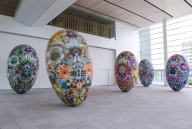
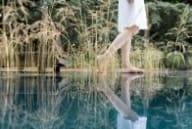
Overlooking the Seto Inland Sea, this art complex brings together a museum, villas, and a restaurant. Its concept is “Admire art, inside art.” Designed to harmonize with the sea and its many islands, the site features colorful movable galleries that appear to float on a reflecting pool, creating an unforgettable architectural landscape.

Stay overnight at the adjacent Simose Art Garden Villa. Art, nature, and architecture come together to create a refined resort experience, complemented by French cuisine showcasing local ingredients. Together, the museum, villas, and restaurant form an art-centered destination designed to be experienced as a small luxury art resort.
Day 4, Hiroshima: Miyajima and Hiroshima Cuisine
Hiroshima is approximately one hour from Iwakuni Station by local train, or just 15 minutes by Shinkansen from Shin-Iwakuni Station. Known for the World Heritage-listed Atomic Bomb Dome and Hiroshima Peace Memorial Park, it is one of the Chugoku region’s major cities and attracts visitors from around the world.
Kayaking Around Miyajima

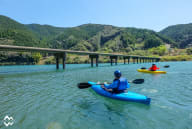
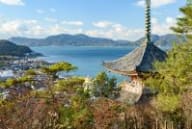
Take a train and ferry to Miyajima. After arriving, set out on a kayak trip to enjoy the island’s scenery from the water. Paddling across the calm Seto Inland Sea, you can see the great torii gate of World Heritage-listed Itsukushima Shrine at close range.
This popular activity offers a chance to appreciate Miyajima’s natural beauty and historic scenery from an entirely different perspective than you would on land.
https://dive-hiroshima.com/en/feature/feature-24097/

Hiroshima-style okonomiyaki, one of the city’s best-known specialties, is characterized by generous layers of cabbage, noodles, and assorted savory ingredients cooked on a hot griddle. In central Hiroshima, Okonomimura is a popular destination that brings together more than 25 okonomiyaki restaurants under one roof. Gathered around the hot griddles, diners can enjoy the lively atmosphere of Hiroshima’s okonomiyaki culture.
Hassho, located on the second floor, is a well-known restaurant that often draws long lines. Its okonomiyaki is distinguished by noodles grilled until fragrant and a paper-thin layer of batter, offering an authentic taste of Hiroshima-style okonomiyaki.
Day 5, Hiroshima to Okayama: The Flavors of Spring in Okayama
Okayama is around 40 minutes from Hiroshima by Shinkansen. A popular sightseeing destination, it is known for Korakuen Garden, one of Japan’s three most celebrated landscape gardens, and the historic Kurashiki Bikan Historical Quarter. Blessed with a warm climate, Okayama is also renowned for its fruit.
Strawberry Picking

Japan grows many varieties of strawberries prized for their rich sweetness and aroma. Strawberry picking, where visitors can enjoy the fruit immediately after harvesting it, is a popular way to experience the flavors of spring.
At Yamada Bee Farm, approximately 90 minutes by car from Okayama Station, visitors can pick and compare several different strawberry varieties.
https://www.okayama-japan.jp/en/spot/10725
Savor Sushi
Sushi is now loved around the world, but experiencing it in its country of origin is something special. Fresh seafood, the deft movements of a chef working before your eyes, and delicately balanced flavors come together in a distinctly Japanese dining experience that engages all five senses.
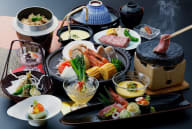
For dinner, visit Sushi Haru, which is easily accessible from Okayama Station. The restaurant serves carefully crafted sushi that makes the most of seasonal ingredients and refined aging techniques.

Day 6, Okayama, Hyogo, and Osaka: Himeji during Cherry Blossom Season
Himeji in Hyogo Prefecture is around 20 minutes from Okayama by Shinkansen, but first make a detour to Ako. Facing the calm Seto Inland Sea, Ako is home to a renowned, long-established Italian restaurant that draws food lovers from across Japan.
Savor the Bounty of the Seto Inland Sea

The seafood nurtured by these rich waters is not to be missed when visiting the region. For a different take, why not enjoy it through Italian cuisine?
For lunch, visit the popular Italian restaurant Sakuragumi. The restaurant carefully selects its ingredients, importing some directly from Italy, and attracts a steady stream of diners. Its sweeping views of the Seto Inland Sea are another highlight. Enjoy a memorable meal accompanied by beautiful scenery.
https://ako-kankou.jp/en/dining/sakuragumi.html

In the afternoon, visit Himeji Castle, one of Japan’s most celebrated castles and a UNESCO World Heritage Site. Explore the interior of its surviving main keep and experience the ingenuity and beauty of Japanese castle architecture.
The cherry blossoms usually reach peak bloom between late March and early April, framing the magnificent white keep in a scene of striking beauty.

Also worth visiting is Koko-en, a traditional Japanese garden beside Himeji Castle. With the castle as its backdrop, the garden presents elegant spring scenery colored by cherry blossoms.
After strolling through the grounds, take a break at the garden’s Soujuan teahouse with matcha and traditional Japanese sweets. Take time to experience the calm of Japanese culture as you bring your spring journey through western Japan to a close.
Himeji is around 30 minutes from Osaka by Shinkansen and offers convenient access to Kansai International Airport.